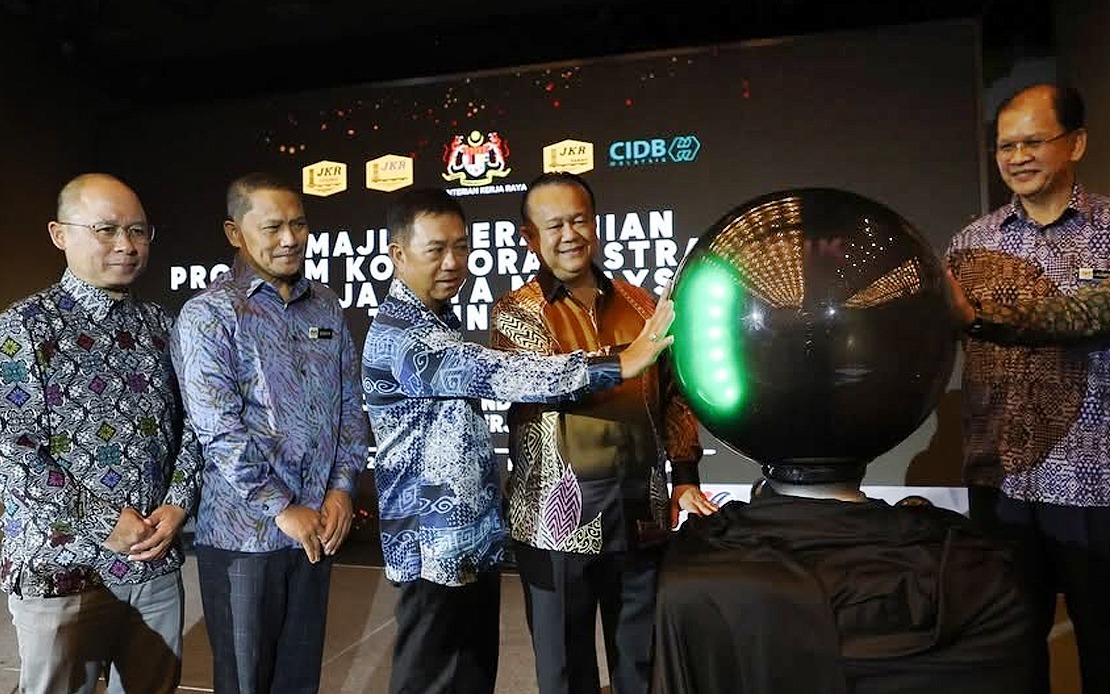
Malaysia's infrastructure delivery challenges are being tackled through a deepened strategic partnership between the federal Public Works Department and its counterparts in Sabah and Sarawak. Works Minister Datuk Seri Alexander Nanta Linggi underscored the critical importance of this trilateral coordination framework during an official ceremony in Kota Kinabalu, emphasizing that unified action across these implementing agencies represents the most practical pathway toward eliminating persistent project delays that have plagued the nation's development agenda.
The scope of Malaysia's ongoing construction portfolio is substantial, with billions of ringgit committed to major undertakings including the Pan Borneo Highway, extensive road networks, and government infrastructure. The sheer financial investment and complexity of these projects demand seamless coordination between different tiers of the public works hierarchy. Nanta acknowledged that despite previous collaborative efforts yielding improvements, fundamental obstacles still impede timely project completion, necessitating continuous refinement of working relationships and problem-solving mechanisms among JKR Malaysia, JKR Sabah, and JKR Sarawak.
Central to Nanta's remarks was the recognition that coordination deficiencies have historically contributed to delays across the construction sector. Rather than attributing failures to isolated technical issues or individual agency shortcomings, the minister framed the collaboration platform as an institutional response designed to create transparent forums where agencies can candidly discuss obstacles and develop joint solutions. This approach reflects a shift toward systemic problem-solving rather than assigning blame, potentially fostering greater transparency and accountability within Malaysia's infrastructure delivery ecosystem.
The strategic collaboration programme represents more than symbolic gesture politics. By establishing formal mechanisms for inter-agency dialogue, the framework aims to create shared accountability for project outcomes. Nanta emphasized that once problems are identified and addressed collaboratively, implementation efficiency should improve markedly. This suggests that many delays stem not from technical impossibility but from coordination breakdowns that formal dialogue structures can help remediate. For Malaysian taxpayers and regional observers, this distinction carries significant implications for evaluating whether infrastructure spending translates into tangible development progress.
A notable aspect of the collaboration involves technical standard-setting and safety protocols. When addressing questions about U-turn construction along the Pan Borneo Highway, Nanta stressed that each location undergoes rigorous technical evaluation considering road geometry, sightlines, and safety factors rather than arbitrary placement decisions. This emphasis on evidence-based infrastructure design demonstrates awareness that public confidence in major projects depends on demonstrable technical rigor and transparent decision-making processes. For a nation where highway safety concerns periodically dominate public discourse, such assurances may help legitimize large-scale transport infrastructure investments.
Deputy Chief Minister I and Sabah's Works and Utilities Minister Datuk Seri Dr Joachim Gunsalam introduced a broader developmental philosophy, framing infrastructure investment as a catalyst for economic competitiveness and improved public service delivery. This positioning reflects regional aspirations to leverage structural improvements for tangible economic benefits beyond the immediate construction phase. For Sabah and Sarawak particularly, infrastructure quality and reliability directly influence whether East Malaysian regions can attract investment and talent, making these projects strategically significant for long-term regional development trajectories.
The collaborative framework extends beyond administrative coordination into technical capacity-building initiatives. Memoranda of agreement signed during the ceremony authorize the establishment of MyBIM laboratories utilizing Sabah and Sarawak government facilities. Building Information Modeling represents cutting-edge construction management technology that can enhance project planning precision and reduce delays through better visualization and coordination. By positioning East Malaysian states as hosts for these technological hubs, the collaboration acknowledges that infrastructure modernization requires distributed expertise and capabilities rather than concentration within federal agencies.
Another significant component involves road asset data management. The road asset data declaration signed between the federal Works Ministry and Sabah's relevant departments establishes standardized information frameworks for tracking and managing infrastructure stocks. Consistent data architecture across jurisdictions facilitates identification of maintenance needs, performance bottlenecks, and resource allocation priorities. For a nation managing diverse infrastructure networks across geographically dispersed regions with varying administrative capacities, such data standardization creates foundations for evidence-based asset management and long-term fiscal planning.
The Malaysian context for this collaboration carries particular weight given the substantial federal and state revenue commitments involved. East Malaysian states, despite contributing significant natural resource wealth to federal coffers, have historically faced infrastructure deficits relative to peninsular regions. The explicit inclusion of Sabah and Sarawak within the JKR coordination framework, rather than treating them as peripheral actors, represents recognition that equitable regional development requires centering Borneo states within infrastructure governance structures. This potentially signals broader recalibration of center-state relationships in infrastructure planning and implementation.
For private sector participants and construction industry stakeholders, the collaboration framework creates both obligations and opportunities. Enhanced inter-agency coordination may streamline permitting processes and reduce project uncertainties that contribute to cost overruns. Conversely, standardized expectations across JKR entities and increased transparency requirements may impose higher compliance burdens on contractors. The involvement of the Construction Industry Development Board within the strategic collaboration suggests deliberate efforts to align public works practices with industry best practices and professional standards.
The practical effectiveness of this collaboration will ultimately depend on institutional capacity, political will, and resource allocation at implementation levels. Nanta's characterization of the framework as creating space for problems to be "solved" implies confidence that obstacles are resolvable through better coordination rather than fundamentally intractable constraints. Whether this optimism proves justified will become apparent through observable changes in project completion rates, cost management, and delivery timelines across major infrastructure undertakings in coming months.
Regionally, Malaysia's approach to coordinating multi-jurisdictional infrastructure delivery may offer instructive models for other ASEAN nations managing complex construction portfolios across diverse administrative boundaries. Southeast Asian infrastructure development is increasingly critical for regional competitiveness as the bloc competes for investment flows and economic influence. Malaysia's efforts to strengthen institutional coordination mechanisms could contribute to broader sectoral learning about managing large-scale development programs across decentralized governance structures.
Looking forward, the success of this collaboration framework will shape investor confidence in Malaysia's infrastructure sector and influence long-term development trajectories for both peninsular and East Malaysian regions. The commitment articulated by Nanta and Gunsalam to transparent governance and efficient resource utilization speaks to broader aspirations for accountable development administration. As Malaysia navigates evolving infrastructure demands and budget constraints, whether these collaborative platforms deliver measurable improvements in project delivery will remain a key indicator of institutional effectiveness and governmental capacity.

