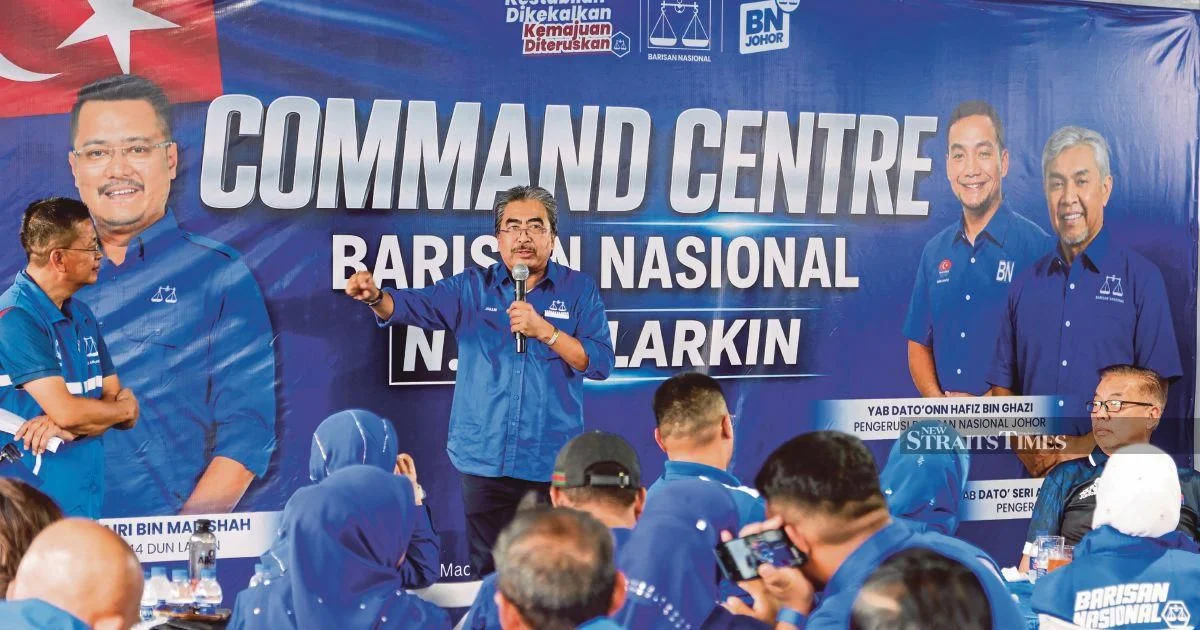
The leadership of Barisan Nasional faces mounting pressure to maintain organisational discipline as the coalition gears up for the Johor state election, with veteran politician Datuk Seri Johari Abdul Ghani cautioning party machinery and candidates against allowing themselves to be drawn into public disputes with political opponents.
Johari's remarks underscore a recurring challenge for the long-established coalition, which has historically relied on grassroots organisation and voter connectivity as core electoral strengths. His intervention signals concern within BN's senior ranks that the campaign period could become derailed by personality clashes, ideological disagreements, or tactical missteps that divert attention from the coalition's positive messaging and policy platform.
The emphasis on avoiding engagement with opponents reflects a strategic calculation that BN's path to electoral success in Johor depends on demonstrating unity, competence, and a voter-centric agenda rather than becoming consumed by the spectacle of political theatre. Election campaigns in Malaysia often witness escalating rhetoric and personal attacks between parties, yet such developments can undermine a candidate's credibility and exhaust campaign resources that might be better deployed elsewhere.
For Johor specifically, the stakes carry particular weight. The state holds substantial symbolic importance within Malaysia's political landscape, with its electoral fortunes influencing perceptions of BN's broader viability as a national force. A weakened performance would ripple across other states, potentially emboldening opposition parties and complicating BN's efforts to strengthen its position ahead of potential federal-level contests.
Historically, BN's electoral machinery has proven effective when operating with cohesion and discipline. The party's ground presence, volunteer networks, and established administrative structures provide tangible advantages, but these benefits can evaporate if senior figures and candidates spend energy on internal power struggles or public bickering rather than systematic voter engagement. Johari's message appears designed to redirect focus toward fundamentals: door-to-door canvassing, community outreach, and articulate communication of BN's development record and future vision.
The challenge extends beyond mere optics. In contemporary Malaysian politics, voters increasingly exhibit volatility in their electoral preferences, shifting support between elections based on perceived competence, local grievances, and national sentiment. This fluidity demands that political parties maintain consistent messaging and demonstrate genuine responsiveness to community concerns. When campaign cycles become dominated by intra-party or inter-party disputes, voters may perceive leadership as distracted or lacking focus on substantive governance issues.
Johari's intervention also carries implications for how BN manages its internal coalition dynamics. The umbrella structure encompassing UMNO, MCA, MIC, and smaller component parties requires careful navigation, as divergent interests and leadership ambitions can create friction. A concerted emphasis on voter outreach rather than internal disputes provides a unifying framework that channels diverse party interests toward a common objective.
The directive comes amid broader competitive pressures in Malaysian electoral politics. Opposition parties have invested heavily in grassroots mobilisation techniques and social media engagement, eroding traditional BN advantages in organisation and access to resources. BN's path to victory therefore requires maximising its existing strengths while adapting to evolving campaign dynamics. Scattered focus on internal conflicts plays directly into opposition hands by fragmenting BN's message and diverting campaign momentum.
For Malaysian voters more broadly, the injunction toward disciplined, voter-focused campaigning carries relevance beyond Johor. Electoral contests increasingly benefit candidates and parties that can articulate coherent policy positions, address bread-and-butter concerns, and avoid appearing consumed by factional positioning. Johari's message, if heeded across the coalition's ranks, could elevate the quality of political discourse and shift voter attention toward governance issues and developmental priorities.
The upcoming Johor state election will serve as a crucial test of whether BN's senior leadership can enforce such discipline across its sprawling organisational structure. Success in maintaining a cohesive, voter-focused campaign would demonstrate institutional capacity and strategic maturity, potentially reshaping perceptions of the coalition's direction. Conversely, if disputes continue to surface publicly or candidates engage in counterproductive exchanges, Johari's warning will stand as an early indication that internal divisions remain difficult to manage, regardless of leadership appeals for unity.
Ultimately, Johari's call reflects a recognition that in contemporary Malaysian politics, elections are won not through spectacle or conflict but through sustained engagement with voters' practical concerns, transparent communication of policy objectives, and demonstrated commitment to local development. The coalition's ability to channel its energies toward these fundamentals will significantly influence both the Johor outcome and perceptions of BN's viability in future electoral contests across Malaysia.

