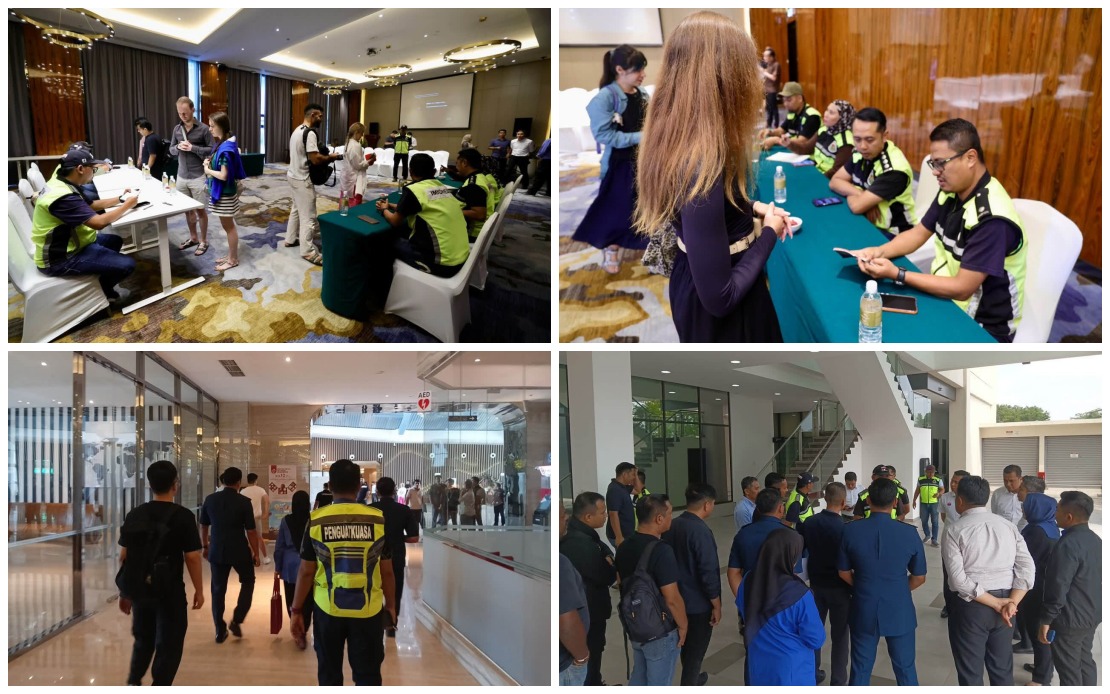
The Iskandar Puteri City Council (MBIP) has moved decisively to halt operations at Network School's premises in Forest City after determining that the institution had violated fundamental licensing requirements and misappropriated its business premises. Johor Menteri Besar Datuk Onn Hafiz Ghazi announced the enforcement action on Wednesday, confirming that local authorities had uncovered multiple regulatory infractions during their investigation into the school's operational framework.
The enforcement action reveals a troubling pattern of non-compliance spanning several areas of municipal regulation. During their inspection, MBIP officials discovered that Network School maintained operations across two separate locations, creating a fragmented business structure that circumvented proper oversight. One facility possessed a valid business office licence, satisfying basic registration requirements. However, the second location operated entirely without any MBIP business licence whatsoever, despite being registered under a Malaysian citizen's name—a fundamental violation of local government regulations that govern commercial activity across Johor's urban zones.
Beyond the simple absence of appropriate licensing, the investigation uncovered a more substantive misuse of permitted premises categories. The company had obtained business office licences for its facilities, which typically authorise administrative and commercial work conducted within standard office environments. Instead, MBIP found that the premises were being utilised for classroom instruction and business promotional activities—uses entirely outside the scope of the original licensing approval. Critically, Network School had never submitted the detailed application documentation necessary to seek permission for converting office-licensed space into an educational facility, a procedural oversight that compounds the regulatory breach.
In response to these findings, MBIP formally issued Stop-Business Notice IP012N260714001 against the unlicensed premises, effectively prohibiting further commercial operations at that location. The council simultaneously issued an Advertisement Licence Notice (6103) under Section 107(2) of the Local Government Act 1976, targeting signage that did not comply with established licensing standards and contradicted the original permit authorisations. This dual-notice approach demonstrates the comprehensive nature of the regulatory failure and the council's determination to bring all aspects of the operation into compliance with municipal ordinances.
Onn Hafiz's public statement underscores the Johor state government's resolve in enforcing local authority regulations, particularly regarding commercial premises utilisation. The Menteri Besar emphasised that MBIP will persist in investigating all matters within its administrative jurisdiction and is prepared to escalate enforcement measures should additional legal violations emerge. This messaging signals to the business community that state authorities take licensing compliance seriously and will not tolerate attempts to circumvent regulatory frameworks—a crucial signal given Malaysia's ongoing concerns about illicit business operations and adequate municipal oversight.
However, the enforcement action has revealed jurisdictional boundaries that extend beyond Johor's authority. Onn Hafiz clarified that questions concerning foreign nationals associated with Network School fall exclusively within the purview of the Home Ministry rather than state-level government. This delineation reflects Malaysia's federal structure, where immigration status, foreign resident permits, and the legal right of non-citizens to conduct certain business activities remain centralised matters. The Menteri Besar appealed to the federal ministry to reach a prompt and conclusive determination regarding the immigration status of individuals involved and the broader operational status of the institution, highlighting potential concerns about foreign involvement that may extend beyond simple licensing violations.
The Network School case gained public attention through social media commentary that made unsubstantiated allegations linking the institution to purported Israeli investments and cryptocurrency operations. These claims, circulating without official verification, suggested shadowy financial motives behind the educational enterprise. While such allegations remain unverified and fall outside MBIP's enforcement mandate, they underscore growing public vigilance regarding the funding sources and true objectives of educational institutions establishing operations in Malaysia's premium developments. Forest City, being a high-profile mixed-use development in Johor, naturally attracts scrutiny regarding the nature and credentials of businesses operating within its premises.
For Malaysian educational stakeholders and parents considering private schooling options, this episode illustrates the importance of verifying that institutions maintain proper licensing and regulatory standing with relevant authorities. The discovery that one facility operated without any business licence whatsoever raises fundamental questions about insurance coverage, health and safety compliance, and regulatory accountability—all matters that directly impact student welfare and institutional legitimacy. Education operators must navigate complex licensing frameworks that vary across different local authority jurisdictions, and the Network School case demonstrates that failing to secure appropriate permits constitutes a serious breach with significant operational consequences.
The enforcement action also reflects evolving regulatory approaches to Malaysia's property developments, particularly those with international investment components or foreign resident populations. As premium developments like Forest City expand their commercial and educational offerings, local authorities must balance attracting legitimate businesses with preventing regulatory arbitrage—instances where operators deliberately exploit unclear licensing standards or jurisdictional gaps. MBIP's action sends a clear message that such exploitation will not be tolerated and that all commercial activity, regardless of whether it occurs in exclusive developments or traditional commercial zones, remains subject to identical municipal oversight and licensing requirements.
The case carries implications for how Malaysia manages foreign investment and presence within its borders, particularly concerning sensitive sectors like education. The involvement of foreign nationals and the federal government's interest in their immigration status reflect broader policy considerations about who should be permitted to establish educational institutions and the scrutiny applied to such ventures. As Malaysia continues developing its reputation as a regional education hub, balance must be maintained between openness to quality international education providers and vigilance regarding institutional credibility and regulatory compliance.

