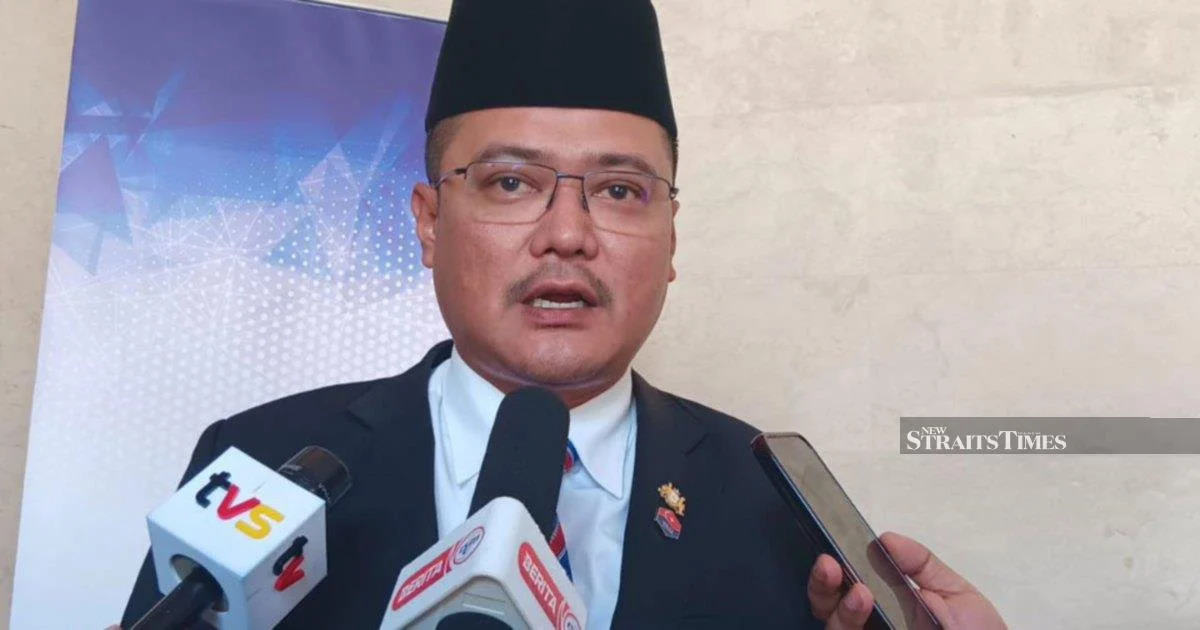
Johor's Barisan Nasional coalition has launched a forceful rebuttal against allegations levelled by Datuk Dr Mohd Puad Zarkashi, the former speaker of the state legislative assembly, characterising his statements as baseless, grave, and fundamentally irresponsible. The organisation moved swiftly to contain what senior figures view as a damaging attempt to undermine institutional confidence and blur the constitutional boundaries between the sultanate's ceremonial role and partisan political machinations.
The escalating dispute stems from Puad's recent public assertions that have implicated Johor's palace in decisions affecting the state's political landscape. These remarks have sparked considerable tension within Johor's political establishment, with BN leadership perceiving them as an egregious breach of the implicit understanding that governs the separation between the constitutional monarchy and day-to-day governance. Such allegations, if left unchecked, could corrode public trust in both the institution of the palace and the integrity of elected representatives.
Meanwhile, Umno Youth, the youth wing of the dominant party within the Barisan Nasional coalition, has claimed that hundreds of party members and sympathisers have filed formal police reports in response to Puad's statements. This figure, if substantiated, would represent an unusually coordinated grassroots reaction and signals the depth of displeasure within Umno's younger cadre. The filing of multiple reports suggests an attempt to create a legal record and demonstrate collective disapproval of Puad's conduct.
Puad, who previously held the speaker's position in Johor's state legislature, occupies a position of some standing within political circles, making his public pronouncements particularly consequential. His transition from this respected office to making allegations that implicate the palace represents a significant departure from convention. Former speakers typically maintain measured rhetoric and refrain from making statements that could be construed as questioning institutional propriety.
The allegations concerning palace involvement in political decisions touch upon particularly sensitive constitutional terrain. Malaysia's federal and state constitutions establish clear protocols governing the powers and prerogatives of the sultans, who serve as constitutional monarchs. While sultans retain ceremonial authority and certain specific constitutional powers, the notion that they would directly influence partisan political outcomes contradicts fundamental constitutional principles and the convention of political neutrality that has historically characterised the institution.
For Malaysian readers unfamiliar with Johor's specific political dynamics, context is essential. Johor has historically been a stronghold for Umno and the Barisan Nasional, though electoral fortunes have fluctuated in recent years. The state's politics intersect with national developments, and controversies within Johor frequently reverberate across Malaysia's broader political landscape. The solidarity demonstrated by Umno Youth through the police reports underscores how completely party machinery can mobilise when institutional stakes appear high.
The timing of this confrontation acquires additional significance within the current trajectory of Malaysian politics. The country continues navigating the aftermath of significant political realignments in recent years, including the unexpected defeat of Umno-led governments at the federal level and shifts in coalition dynamics. Within this volatile context, allegations that call into question the propriety of palace involvement in politics carry heightened risk of destabilising confidence in foundational institutions.
BN's forceful response indicates determination to protect what leadership perceives as non-negotiable boundaries. By characterising Puad's statements as irresponsible rather than merely mistaken, BN signals that it views the allegations not as a good-faith policy disagreement but as a transgression against institutional norms. This rhetorical framing carries implications for how Puad might be treated within political and social circles going forward.
The broader Southeast Asian context adds another dimension. While monarchical institutions across the region maintain varying levels of political influence, Malaysia's system has traditionally emphasised constitutional propriety and institutional separation. Allegations that challenge this principle invite scrutiny not only from domestic constituencies but from the international community, particularly among observers monitoring democratic health and constitutional governance in the region.
Umno Youth's coordinated police reporting represents a calculated escalation beyond mere public criticism. By translating political disagreement into legal action, the organisation creates documentary evidence of formal complaints while simultaneously amplifying the narrative that Puad's conduct has transgressed acceptable boundaries. Whether these reports ultimately result in legal consequences remains uncertain, but their filing itself constitutes a form of institutional pressure.
The unfolding situation raises questions about whether dialogue between Puad and BN leadership remains possible, or whether the breach has become too substantial for reconciliation. The personal and political implications for Puad could be considerable, potentially affecting his standing within Umno and his future trajectory in Johor politics. Conversely, if Puad's allegations contain substance that BN refuses to address substantively, the organisation risks appearing defensive rather than transparent.
Looking ahead, this dispute will likely influence how Johor's political actors navigate questions concerning palace prerogatives and institutional roles. The precedent established through BN's forceful response may discourage future public discussion of palace-political connections, though it could equally embolden those who believe institutional accountability demands greater transparency. For Malaysian stakeholders monitoring constitutional governance and political ethics, the resolution of this confrontation will merit careful observation.

