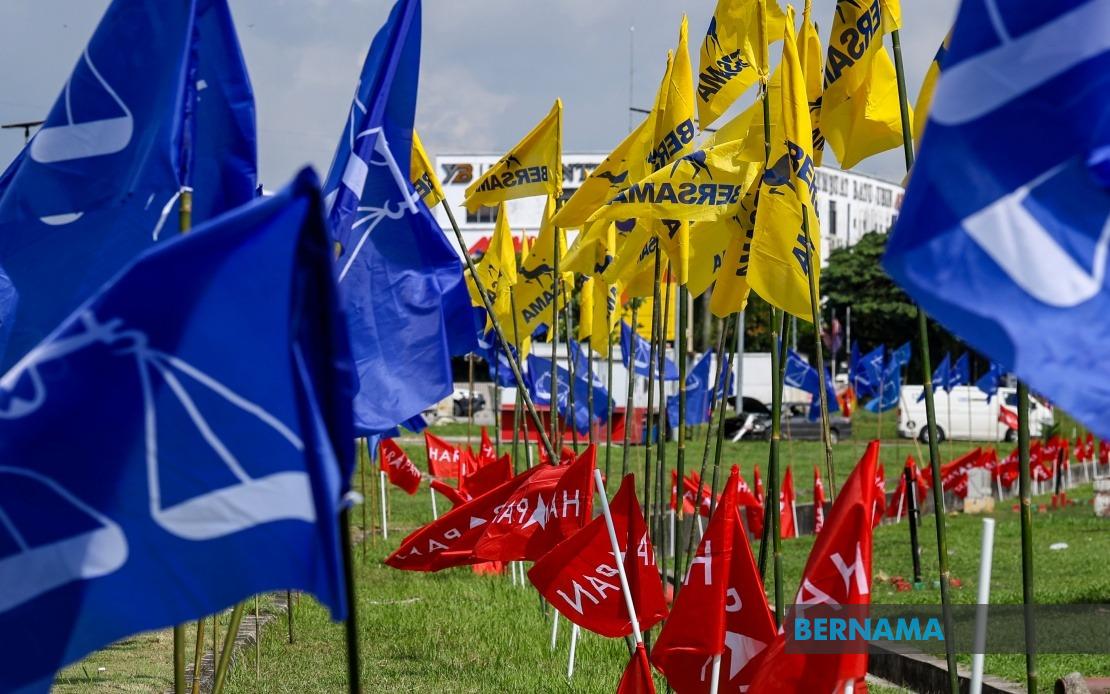
The opening phase of campaigning for Johor's 16th state election has unfolded with notably measured intensity, with political parties prioritizing direct voter engagement over the grand-scale rallies that have traditionally characterised Malaysian electoral contests. Rather than flooding constituencies with mass gatherings, contenders have opted for a more granular approach centred on intimate community interaction and personalised voter contact throughout the state's 56 assembly seats.
This strategic pivot reflects a broader evolution in how Malaysian political organisations now conduct election campaigns. Political analysts argue that parties have recognised the efficacy of house-to-house visits, small discussion groups, and localised community activities in reaching and persuading voters. According to Prof Datuk Dr Sivamurugan Pandian, Senior Lecturer in Political Sociology at Universiti Sains Malaysia, this methodology offers candidates the dual advantage of establishing direct communication with constituents while simultaneously strengthening party organisational capabilities on the ground. The approach allows campaign teams to gather intelligence about voter concerns and preferences whilst deploying limited campaign resources more efficiently during what analysts describe as the foundational phase of the contest.
Sivamurugan emphasises that the initial week functions primarily as a period of infrastructure construction for each party's electoral machinery. The targeting approach, he argues, enables candidates to reinforce their positional strength within their respective constituencies without requiring the substantial logistical and financial investments demanded by traditional mass rallies. He anticipates a marked escalation in campaign intensity during the second week, when senior national leadership will move from behind-the-scenes coordination to visible public engagement, complemented by expanded rally schedules and amplified digital outreach directed at undecided voter segments.
The transformation in campaign methodology extends beyond venue and scale considerations. Geostrategist Dr Azmi Hassan, Senior Fellow at the Nusantara Academy for Strategic Research, highlights how contemporary election contests have become fundamentally data-driven operations. Campaign teams now deploy targeted deployment strategies that categorise voters into distinct segments—traditional supporters, neutrals, and opposition sympathisers—and tailor messaging accordingly. This represents a departure from historical practices where campaigns relied on broad-based public events designed to mobilise large gatherings. Modern strategies instead leverage sophisticated voter databases and social media platforms to deliver customised communication pathways that attempt to convert undecided constituencies whilst consolidating existing support bases.
Content analysis of campaign messaging during the initial week reveals that competing parties have coalesced around three primary narrative frameworks: assertions regarding demonstrated governance track records, announcements of future policy pledges, and claims of unique capacity to deliver political stability to Johor's electorate. However, Mujibu Abd Muis, a researcher at the Ilham Centre and political science lecturer at Universiti Teknologi MARA, observes that these narrative structures have not yet crystallised into sufficiently powerful themes capable of fundamentally reshaping the overall campaign landscape. The effectiveness of any political messaging, he contends, ultimately depends upon translation into concrete issues that connect with voters' material circumstances—cost-of-living pressures, employment availability, local infrastructure development, and public service delivery standards.
Geographic concentration of campaign activity during the opening week has proven revealing about how parties assess competitive probabilities across different constituencies. Campaign machinery has concentrated predominantly in northern Johor, encompassing districts including Muar, Tangkak, and Segamat alongside portions of Batu Pahat and Kluang. According to Mujibu, this geographical prioritisation reflects strategic resource optimisation whereby parties concentrate efforts on constituencies regarded as genuinely competitive or potentially decisive for overall electoral outcomes. Northern Johor encompasses multiple assembly seats anticipated to be closely contested, meaning deployment of senior national leaders serves not merely to generate public attention but to communicate strategic importance signals to internal party structures and to constituencies themselves.
The bifurcated nature of campaign competition has become increasingly apparent in territorial assessments offered by electoral analysts. Associate Professor Dr Mazlan Ali, Director of the Faculty of Social Sciences and Humanities at Universiti Teknologi Malaysia, characterises the contest fundamentally as competition between two primary coalitions: Barisan Nasional and Pakatan Harapan. These coalitions possess distinctly different geographical strongholds within Johor. Pakatan Harapan is anticipated to exercise substantial influence across southern and western constituencies, whilst Barisan Nasional is expected to demonstrate electoral strength particularly in eastern coastal districts including Mersing and Kota Tinggi. This territorial division substantially influences how each coalition deploys its campaign machinery and allocates senior leadership resources, as parties direct concentrated efforts toward constituencies where electoral outcomes remain genuinely uncertain.
The strategic significance of particular geographic zones in Johor reflects broader patterns within Malaysian electoral geography. Constituencies designated as competitive represent the critical battlegrounds where electoral outcomes will genuinely be determined. Parties therefore concentrate campaign resources, leadership visibility, and messaging intensity disproportionately in these areas, as opposed to constituencies regarded as safely controlled by either coalition. This resource allocation strategy emerged distinctly during the initial campaign week, with senior party figures making strategic appearances precisely in northern Johor constituencies where uncertainty regarding electoral outcomes remains highest.
Across professional electoral analysis, one consensus has emerged with near-unanimity: voter turnout will constitute the single most consequential variable determining the 16th Johor state election outcome. Political analysts emphasise that parties must prioritise persuading eligible voters to actually participate in the electoral process through either early voting scheduled for July 7 or on the primary polling day of July 11. Turnout dynamics have demonstrably altered electoral results in previous Malaysian contests, as differential participation rates between constituencies and voter demographics can substantially reshape seat distributions despite relatively modest shifts in voter preference patterns.
The electoral contest encompasses 172 candidates contending for 56 state assembly positions, reflecting the competitive intensity characterising contemporary Malaysian state-level elections. The compressed campaign schedule—with early voting occurring July 7 and primary polling day scheduled for July 11—provides limited time for parties to implement campaign strategies and persuade undecided constituencies. This temporal constraint renders the initial week's quiet, grassroots-focused approach somewhat paradoxical; whilst parties build organisational foundations through community engagement, they simultaneously confront time pressure that ultimately necessitates escalation toward higher-visibility, higher-intensity campaign activities during the closing contest phase. The intersection of this evolving campaign methodology with traditional Malaysian electoral dynamics will ultimately determine whether targeted voter outreach produces anticipated advantages for participating parties.

