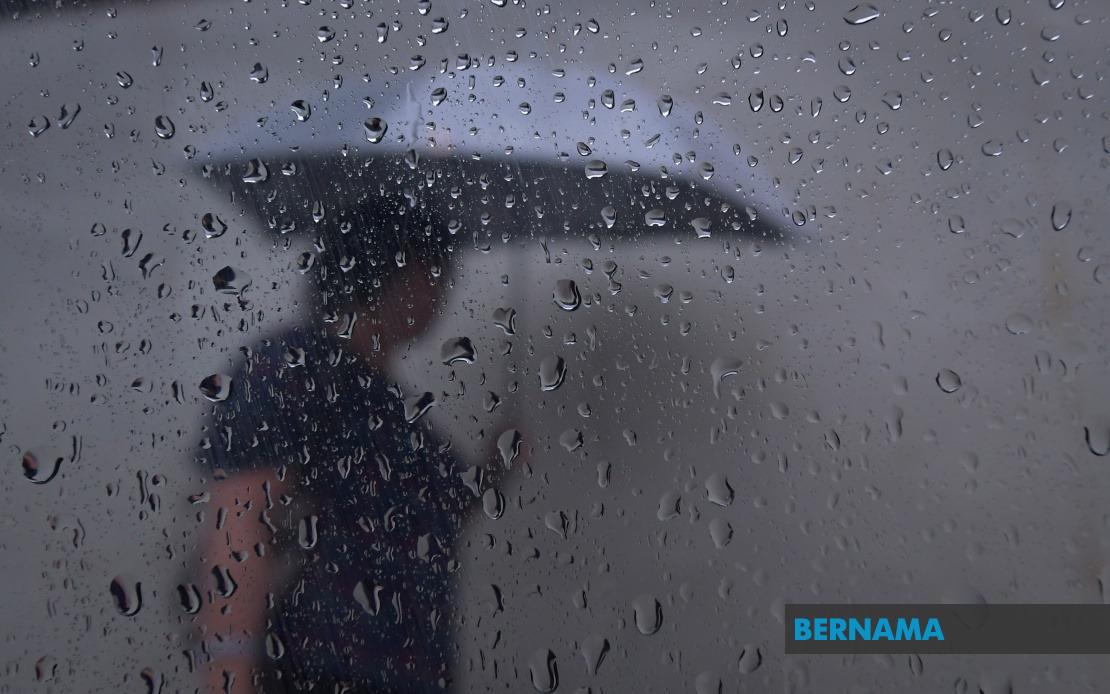
Nearly 25,000 early voters in Johor will navigate uncertain weather conditions tomorrow as the state proceeds with early polling for its 16th election, with the Johor Meteorological Department warning of localised morning showers across selected districts before broader deterioration in afternoon conditions.
According to MetMalaysia's Johor office director Azlai Ta'at, four districts face the highest probability of precipitation during the morning hours when early voting commences at 8 am across 64 designated stations. The affected areas are Batu Pahat, Muar, Pontian, and Tangkak, where residents and election-related personnel should prepare for wet conditions that could impact travel and accessibility to polling stations.
Meanwhile, six other districts—Johor Bahru, Segamat, Kluang, Kota Tinggi, Mersing, and Kulai—are expected to enjoy clearer skies during the morning period, offering more favourable conditions for early voting participants in those areas. This geographic variation underscores the localised nature of Johor's weather patterns during the pre-monsoon period, a pattern familiar to voters and election administrators in the state.
However, Azlai's forecast takes a concerning turn for the afternoon, as thunderstorm activity is predicted to develop across all ten districts without exception. This widespread deterioration means that voters who delay casting their ballots until later in the day may encounter more significant weather obstacles, potentially leading to congestion at polling stations or reduced turnout during peak hours.
In light of these conditions, Azlai publicly encouraged early voters to prioritise morning participation, urging them to complete the voting process before atmospheric conditions become unfavourable. This advisory carries practical significance, as delayed voting could strain the operations of the 64 early voting centres, which operate on staggered schedules closing between noon and 6 pm depending on location and registered voter numbers.
The early voting cohort comprises two distinct population segments integral to Malaysia's electoral framework: 12,041 personnel from the Malaysian Armed Forces and their spouses, alongside 12,710 members of the Royal Malaysia Police and General Operations Force together with their spouses. These groups represent approximately 24,751 eligible participants whose voting rights are facilitated through the early polling mechanism, recognising the operational constraints of military and law enforcement personnel.
The broader 16th Johor state election represents a significant electoral exercise, with 2,727,926 registered voters dispersed across 1,140 ordinary polling centres scheduled to participate in Saturday's main voting day. This electorate will determine representation across 56 state assembly seats, with 172 candidates contesting the available positions across various constituencies and political affiliations.
The staggered closure times for early voting centres reflect administrative flexibility designed to accommodate variations in voter density and geographic distribution. While some centres may close as early as noon, others will remain operational until 6 pm, allowing election officials to manage queuing and processing delays that might arise from unexpected turnout surges or weather-related disruptions.
Johor's electoral significance extends beyond mere participation numbers. As Malaysia's second-largest state by population and a historically important political battleground, the results carry implications for national political dynamics and coalition building at federal level. The conduct and logistics of voting, including weather management and accessibility, therefore merit careful attention from both election administrators and the broader public.
For voters in the four weather-affected districts, the meteorological warning serves as practical advance notice warranting preparation. Waterproof identification documentation, umbrellas, and allowances for extended travel times become prudent precautions. Election officials managing these stations have similarly been made aware, enabling them to implement contingency measures such as additional protective coverings at queuing areas and enhanced crowd management protocols should weather-induced delays develop.
The timing of weather forecasts relative to voting day represents a critical element of election administration, allowing authorities to communicate preparation guidance to stakeholders—voters, election workers, and transport providers alike. In Malaysia's tropical context, where sudden rainfall remains commonplace throughout the year, such advance meteorological intelligence enables adaptive management rather than reactive crisis response during the voting process itself.
Looking forward to Saturday's main election day, the current forecast uncertainty underscores the importance of robust contingency planning across all 1,140 polling locations. While early voters tomorrow experience localised morning showers and universal afternoon thunderstorms, the broader electorate participating two days later will similarly require operational readiness accounting for seasonal weather variability characteristic of Johor's July climate patterns.

