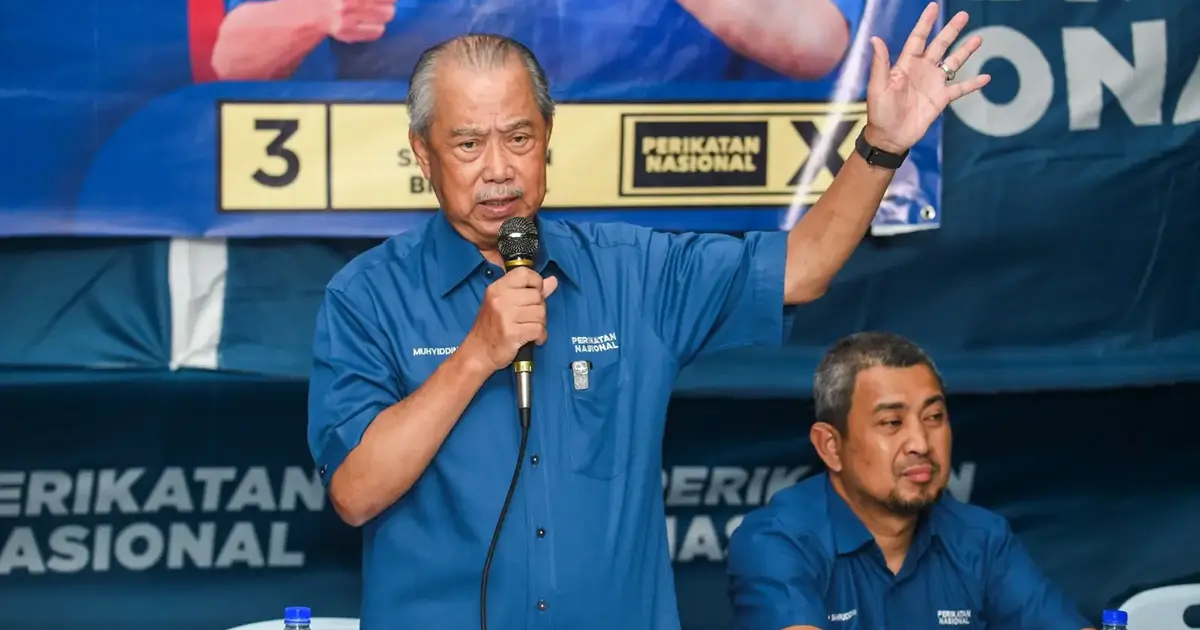
Political observers have been scrutinizing potential links between the scheduled Johor state election and speculation surrounding former Prime Minister Najib Razak's release, but Bersatu party president Muhyiddin Yassin has moved to distance these two separate developments. Speaking on the matter, Muhyiddin emphasized that no credible connection exists between electoral processes in Johor and questions about Najib's status as a convicted individual, seeking to dispel what he characterizes as unfounded conjecture.
Muhyiddin's statement reflects broader concerns within Malaysian political circles about the intersection of legal outcomes and electoral politics. The former Prime Minister remains a central figure in national discourse following his convictions, and periodic discussions about potential clemency or sentence modifications have generated considerable public and political debate. By asserting that these matters operate in distinct domains, Muhyiddin appears intent on defending the integrity of Malaysia's legal system against insinuations that judicial decisions might be influenced by or coordinated with political events.
Najib's legal situation has become increasingly complex over recent years. His conviction on multiple corruption charges related to 1Malaysia Development Berhad (1MDB) transactions marked a watershed moment in Malaysian politics, signaling that even former heads of government could face accountability through the courts. The subsequent appeals process and discussions about potential sentence reductions or royal pardons have maintained his case in the public consciousness, creating a backdrop against which various political developments are now being interpreted.
The timing of Muhyiddin's clarification carries significance within the fractious landscape of Malaysian coalition politics. Bersatu has occupied a pivotal position in recent governments, and its leadership has frequently found itself navigating complex relationships with other components of ruling coalitions. By explicitly separating the Johor election from Najib's legal circumstances, Muhyiddin may be attempting to preempt narratives that could damage Bersatu's credibility or suggest that party interests are driving discussions about legal matters affecting prominent figures.
Elections in individual Malaysian states have increasingly become testing grounds for broader political shifts and coalition dynamics. The Johor contest carries particular weight given the state's population size, economic significance, and historical importance as a stronghold for various parties across different political eras. Any electoral outcome carries ramifications for how coalitions position themselves ahead of the next federal election, and it is in this context that some observers have speculated about whether legal developments affecting high-profile figures might be timed to influence voter sentiment.
Muhyiddin's intervention also speaks to ongoing tensions within Malaysia's political establishment regarding the rule of law and its perceived independence from electoral considerations. Malaysia's transformation toward greater accountability has been irregular and contested, with skepticism persisting about whether legal processes operate free from political influence. For the Bersatu president to forcefully assert the separation of these spheres suggests an awareness that public confidence in institutional integrity requires explicit and repeated affirmations.
The conviction of Najib himself represented a milestone in this trajectory, as it demonstrated that Malaysia's judicial system could prosecute cases against individuals occupying the highest office despite their continued prominence in political affairs. However, the subsequent phases of his legal journey—appeals, potential sentence modifications, and speculation about clemency—have maintained ambiguity about the ultimate trajectory of his case and have provided fodder for claims that political considerations might yet influence outcomes.
Within the context of Malaysia's deeply competitive party system, Muhyiddin's comments also reflect intra-coalition considerations. UMNO, with which Bersatu has maintained an uneasy relationship, maintains historical and organizational ties to Najib as a former party president. Any suggestion that electoral outcomes might be coordinated with legal developments affecting Najib could exacerbate existing tensions within governing coalitions that have proven fragile in recent years.
For Malaysian voters and observers of Southeast Asian politics more broadly, Muhyiddin's clarification underscores the ongoing challenges facing the region's democracies in maintaining institutional credibility amid rapid political change. The ability of political leaders to convincingly argue that electoral processes and legal proceedings operate independently represents a crucial test of institutional maturity. Whether the public finds such assurances persuasive often depends on accumulated patterns of conduct and demonstrated commitment to institutional boundaries over longer periods.
The Johor election itself remains significant as both a test of current coalition strength and as a potential indicator of public sentiment ahead of future federal contests. Depending on outcomes and their interpretation, the result could either reinforce or further complicate existing coalition arrangements, potentially creating new pressures or opportunities for reshuffling that might indirectly affect discussions about figures such as Najib. Yet Muhyiddin's assertion that these two developments remain categorically distinct serves notice that Malaysian political leadership, at least publicly, continues to insist upon maintaining barriers between electoral politics and legal accountability.

