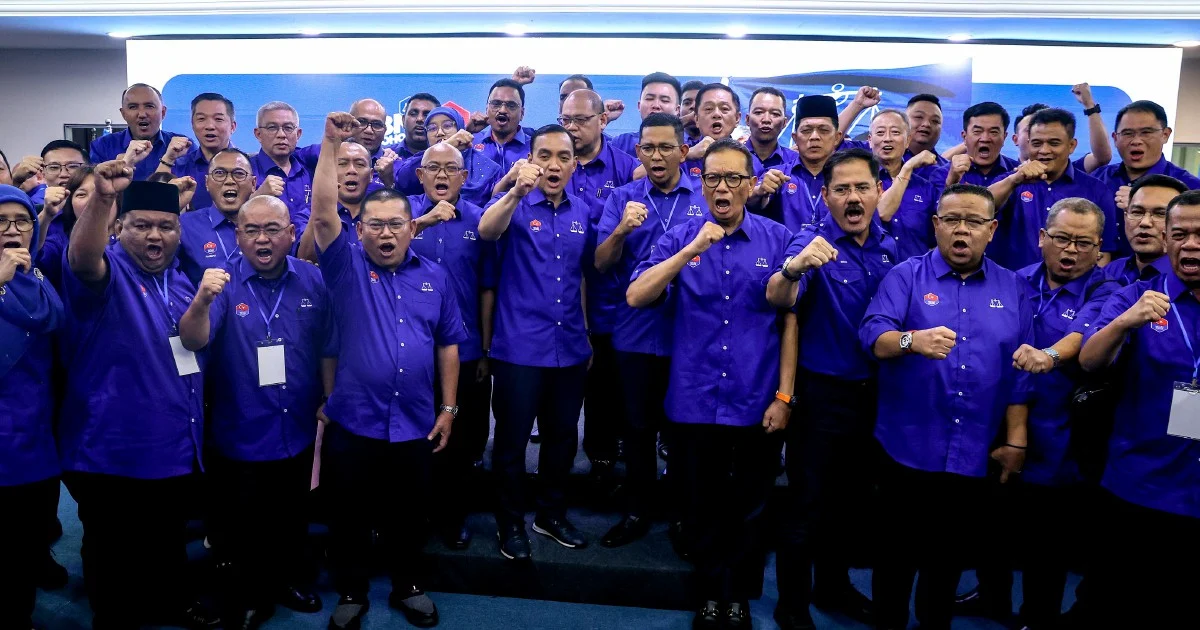
Barisan Nasional has moved decisively forward with its Johor state election campaign, announcing a candidate lineup that contains no representation from Parti Wawasan Negara and signals the end of months of coalition negotiation talks. The disclosure of BN's complete roster comes as a significant turning point in the lead-up to the polls, effectively shutting the door on a proposed tripartite arrangement that had generated considerable discussion within political circles.
The emergence of this candidate list represents a clear strategic pivot for the BN coalition in Johor. Prior to the announcement, persistent speculation about possible cooperation between Barisan Nasional, PAS, and Wawasan had dominated political commentary in the state. Such an arrangement would have marked an ambitious attempt to consolidate anti-opposition support across multiple political machines, pooling the grassroots networks and electoral machinery of three established parties. The absence of any Wawasan representatives among the candidates now presented to voters suggests that negotiations around such an alliance ultimately could not reach a successful conclusion.
Paiti Wawasan Negara, a relatively newer entrant to Malaysian politics, has been positioning itself as a centrist alternative capable of attracting voters from various demographic segments. The party's potential inclusion in a BN coalition arrangement would have represented a significant strategic gain, offering access to voter bases that traditional BN component parties may have found difficult to penetrate. The party's founder and leadership have been active in articulating a distinct political vision, making it a potentially valuable coalition partner despite its more modest organisational footprint compared to established players such as UMNO or MCA.
The decision to proceed without Wawasan involvement reveals important truths about the delicate dynamics of coalition politics in Malaysia. Negotiations between parties often falter over questions of seat allocation, ministerial portfolios, and the degree of autonomy each partner retains in policy formulation and implementation. The absence of Wawasan candidates in the BN lineup strongly suggests that discussions broke down over these fundamental issues, with neither side willing to concede sufficient ground to make an arrangement viable. For BN component parties, incorporating a new partner would have meant reducing the number of seats available to UMNO, MCA, MIC, and other existing coalition members—a politically difficult proposition that carries significant implications for party morale and internal stability.
PAS, which was also mentioned in reports about potential cooperation, appears to have pursued its own electoral strategy in Johor. The Islamic party's relationship with BN has historically been complex, oscillating between cooperation at the federal level and competition at state and local contests. The absence of a formal three-party arrangement does not necessarily indicate that PAS and BN will mount competing campaigns in all constituencies; instead, such parties frequently negotiate seat-sharing agreements on a more localised or informal basis without announcing comprehensive coalition partnerships.
For Malaysian voters in Johor, the presentation of a conventional BN candidacy—drawing exclusively from the coalition's established membership base—offers clearer ideological and organisational frameworks upon which to make electoral judgments. The decision removes the complexity that would have accompanied a three-way partnership, allowing voters to assess the coalition's proposals based on the track records and policy positions of UMNO, MCA, MIC, and other familiar political entities. This clarity may serve BN's electoral interests by avoiding internal confusion about party identities and reducing the likelihood of coordination failures between partners unfamiliar with long-standing operational arrangements.
The collapse of coalition talks with Wawasan also carries implications for the broader Malaysian political landscape beyond Johor. Parti Wawasan Negara's relatively limited presence in other states means that this setback in the Johor arena represents a significant disappointment for the party's efforts to establish itself as a legitimate coalition partner capable of influencing outcomes in major state contests. Future cooperation discussions involving the party may proceed with greater caution from all sides, particularly given the public nature of these failed negotiations and their visibility to potential coalition partners in other electoral contests.
The timing of BN's candidate announcement is strategically significant, arriving at a point when the election landscape has become sufficiently clear to allow voters time to absorb the lineups while maintaining campaign momentum. By presenting its full roster without Wawasan participation, Barisan Nasional has signalled confidence in its existing coalition structure and its capacity to compete effectively drawing from its traditional power base. The decision effectively neutralises months of speculation that had created uncertainty among both party members and the broader electorate regarding coalition stability and electoral strategy.
Looking forward, the absence of Wawasan candidates in BN's lineup shapes the competitive terrain for the Johor election significantly. Opposition coalitions can structure their messaging knowing precisely which parties they will face, while other political entities must determine their own strategic responses to BN's conventional approach. The outcome of this election will provide valuable indicators regarding voter appetite for established coalition politics versus newer political options, offering data that will inform coalition negotiations and electoral calculations across Malaysia in subsequent contests.