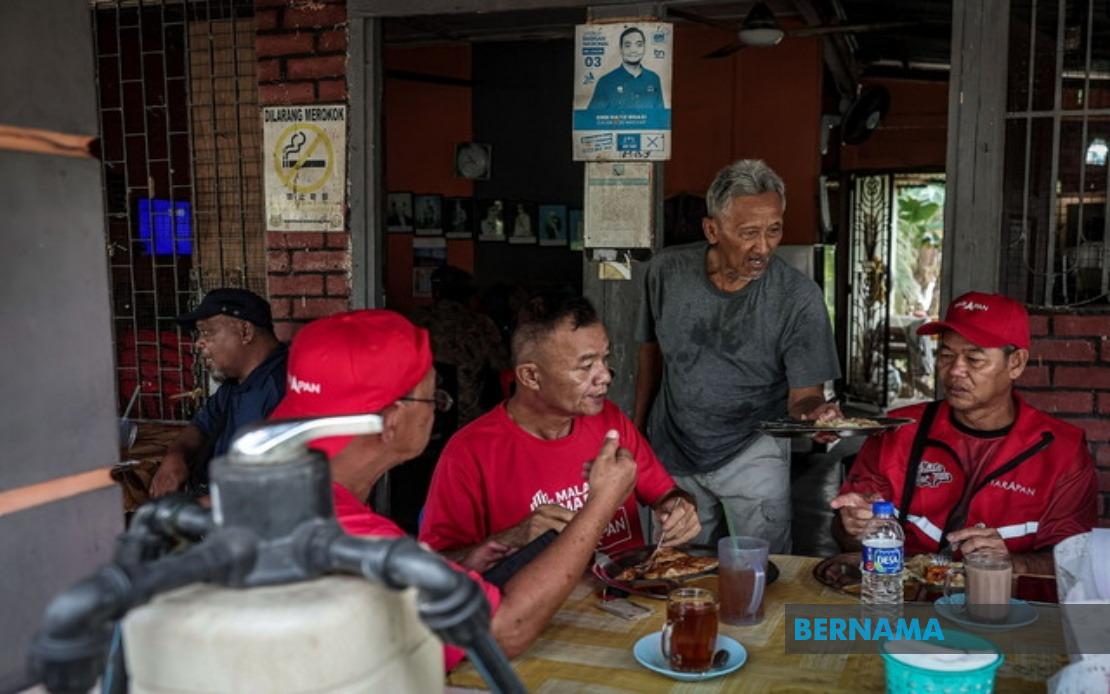
The Johor state election campaign has created an unexpected economic windfall for small-scale traders and food vendors operating in communities across the state, transforming what is fundamentally a political exercise into a period of heightened commercial activity. In the Felda Layang-Layang settlement and surrounding areas like Simpang Renggam, petty traders have witnessed a marked uptick in customer numbers and sales volumes since campaigning commenced, providing relief to businesses that typically operate on thin profit margins throughout the year.
Noorma Zafmeeden, a 70-year-old stall operator in Felda Layang-Layang, has observed a dramatic shift in her daily earnings since the election campaign began. Operating her breakfast establishment alongside her 76-year-old husband Bahari Madiran, Noorma typically earns less than RM400 during morning trading hours on ordinary days. Since the campaign intensified, however, her revenue figures have climbed substantially, reflecting the surge in customers visiting the Felda settlement during this politically active period. The couple, who have maintained their warung business in the settlement since 1987, maintain a disciplined routine of preparing traditional Malaysian breakfast dishes from pre-dawn hours, transitioning to fried dishes and other offerings during evening service.
Beyond the straightforward financial metrics, Noorma and Bahari view their establishment as something more significant within their community. The stall has evolved into a gathering space where individuals from different ethnic and religious backgrounds converge in a cordial environment, reflecting the inclusive character that the proprietors have cultivated over decades of operation. Bahari particularly values the expanded social interaction that the election period brings, appreciating opportunities to engage with campaign workers and visitors arriving from different regions of Malaysia. This dimension of their business experience suggests that the economic stimulus carries social value as well, fostering cross-community connections during a period of heightened civic participation.
The pattern is not unique to Layang-Layang. In Simpang Renggam, Ahmad Ridzuan Awang, a 45-year-old nasi campur trader, has experienced a doubling of his sales volume during the campaign season. His experience illustrates how the election cycle can dramatically alter the commercial landscape for food businesses. Under normal circumstances, Ahmad Ridzuan's inventory of dishes persists until evening hours before selling out. During the election campaign, however, demand has accelerated dramatically, with his entire stock frequently exhausted by early afternoon, sometimes as early as 1.30 pm. The acceleration stems partly from bulk purchases made by various political organisations and their representatives, who source meals for their campaign workers and supporters gathering in the area.
Ahmad Ridzuan's observations extend beyond his personal business performance to encompass broader economic ramifications within the local economy. He characterises the temporary influx of campaign-related visitors as generating a multiplier effect throughout the surrounding business ecosystem. The increased foot traffic benefits not only food vendors but also creates opportunities for local suppliers, service providers, and complementary businesses that service both the traders and their newly expanded customer base. This spillover effect demonstrates how concentrated political activity in specific geographic areas can generate economic activity that extends well beyond the direct participants in the electoral process.
The 16th Johor state election represents a significant democratic exercise with 172 candidates competing across 56 constituencies statewide. Scheduled polling is set for July 11, with early voting permitted on July 7. The scale of this electoral activity creates the conditions for precisely this type of economic stimulation at the grassroots level, as campaign machinery requires logistical support including meals, accommodation, transportation, and various services that small traders and service providers can supply.
For economies in Southeast Asia where informal sector businesses constitute a substantial proportion of employment and income generation, this phenomenon carries particular significance. Many Malaysian traders, particularly in rural and semi-rural areas like Felda settlements, operate without substantial financial reserves or consistent income streams. Seasonal or cyclical events that drive temporary increases in customer volume can provide crucial cash flow during periods when such liquidity would otherwise be constrained. The election campaign thus functions as an informal stimulus mechanism that benefits vulnerable economic participants without requiring direct government intervention or subsidy programmes.
The experience of traders in Johor also highlights the interdependency between political processes and grassroots economic activity. Elections require large movements of personnel, necessitate gathering places, and generate demand for sustenance and services. These requirements create demand that benefits local vendors who might otherwise struggle to maintain profitability. While the boost is temporary, extending only through the campaign and polling period, the concentrated nature of the activity allows traders to accumulate reserves and manage cash flow challenges that may extend beyond the election itself.
Malaysian policymakers focused on supporting small business growth might observe the natural economic stimulus that electoral campaigns generate and consider whether similar conditions could be replicated through other mechanisms during non-election periods. The success of traders during campaign season suggests that concentrated foot traffic, reliable demand, and business activity clustering can achieve profitability for small vendors even in relatively modest communities. Understanding these conditions might inform strategies to support informal sector resilience and sustainability beyond the episodic boost that elections provide.
The election period also demonstrates how political participation at scale engages communities in ways that extend beyond voting and campaigning into everyday economic transactions. When campaign workers, supporters, and interested citizens gather in areas like Layang-Layang and Simpang Renggam, they sustain the local food economy, create employment for family members assisting vendors, and generate demand for supply chain participants. This grassroots economic activation, though temporary, illustrates the deep connections between civic participation and local economic vitality that often receive insufficient attention in discussions of electoral politics.

