The battle for control of Johor has entered its decisive final phase, with party machinery across the political spectrum mobilising supporters in the waning hours before the campaign period formally concludes tonight. The 16th Johor State Election represents a closely watched contest that extends beyond the state's borders, offering insights into voter sentiment across Malaysia at a time of shifting political coalitions and renewed competition for the peninsula's southernmost state.
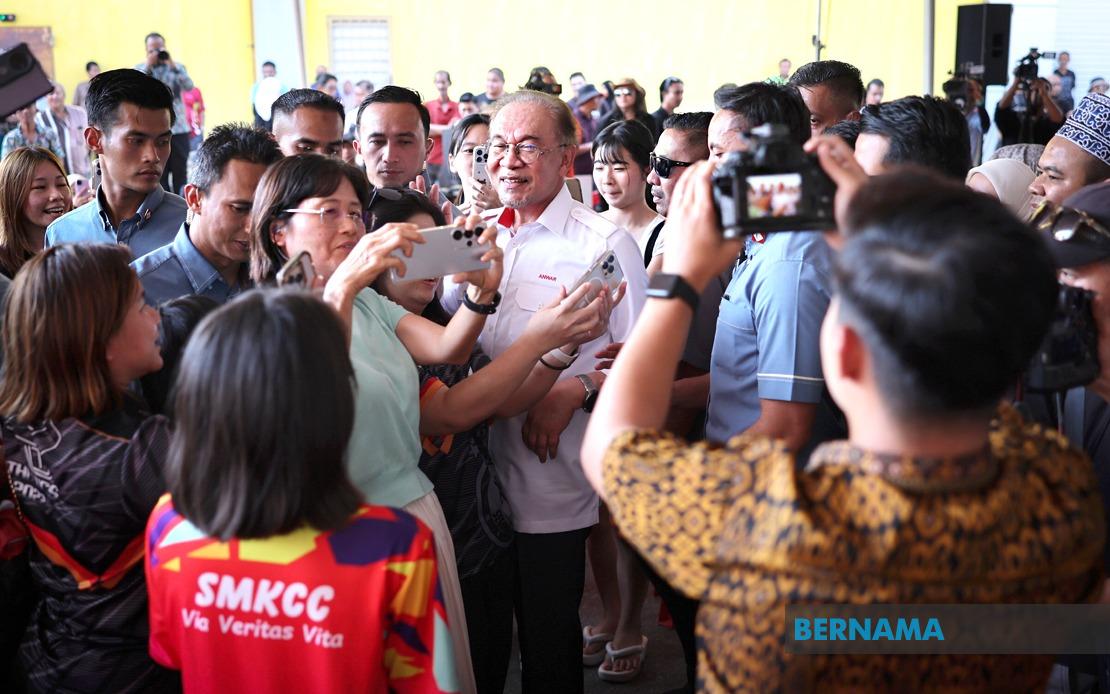
Pakatan Harapan has deployed its highest-profile campaigner in the closing stretch, with Prime Minister Datuk Seri Anwar Ibrahim personally leading a five-location tour designed to energise the coalition's grassroots apparatus. The itinerary demonstrates the strategic importance attached to specific constituencies, starting in Bukit Gambir before progressing through Bukit Batu and Layang-Layang, and culminating with a major rally branded as the 'Johor Ke Depan, Undi Harapan Grand Finale Programme' in the Pasir Gudang industrial district. This geographically dispersed approach suggests PH's assessment that the competition remains fluid across multiple seats rather than concentrated in any single area.
The coalition's ground-level operations reflect a determined attempt to convert final contact into votes. In the Larkin constituency, candidate Suhaizan Kaiat has adopted a retail politics strategy, conducting walkabouts at shopping venues where everyday voters congregate. His partnership with Parti Amanah Negara Vice President Datuk Seri Dr Dzulkefly Ahmad highlights the ongoing collaboration between component parties within Pakatan Harapan, emphasising how campaign decisions at the constituency level embed broader coalition dynamics. Suhaizan's public framing of campaign feedback as a mandate-dependent responsibility attempts to shift the conversation toward accountability and performance.
Barisan Nasional's approach reveals different strategic calculations reflecting its position as the incumbent coalition. Party Chairman Datuk Seri Dr Ahmad Zahid Hamidi's choice to headline a spiritual event rather than conventional campaign rally in Kulai district suggests BN's messaging has shifted toward moral and religious dimensions. This pivot merits close observation, as it may indicate either confidence in existing support levels or an attempt to mobilise segments of the electorate potentially responsive to appeals beyond conventional policy discussion.
The tone adopted by incumbent Johor Menteri Besar Datuk Onn Hafiz Ghazi provides perhaps the most revealing indicator of how the campaign has unfolded from BN's perspective. His public apology for perceived shortcomings throughout his administration signals awareness that voter satisfaction cannot be assumed despite holding the chief minister's office. In Malaysian state politics, such explicit acknowledgments of administrative lapses remain relatively uncommon, suggesting either genuine assessment of ground sentiment or strategic positioning to preempt criticism by acknowledging it first.
Bersatu's participation in the election showcases the fragmentation that has characterised Malaysian politics since 2020. Party President Tan Sri Muhyiddin Yassin's appeal to voters to synthesise campaign-period information into voting decisions frames the election as an exercise in comparative analysis rather than simple incumbent rejection or acceptance. This framing acknowledges that sophisticated voters have engaged with multiple parties' positions, reflecting the maturation of electoral competitiveness in the state.
The emergence of Bersama and MUDA as competing forces in Johor reflects broader trends toward political pluralisation. Bersama's 'Ceramah Finale' event, led by Datuk Seri Rafizi Ramli and Nik Nazmi Nik Ahmad, demonstrates how newer parties leverage articulate leadership to challenge established narratives. Rafizi's explicit intention to synthesise and counter issues raised throughout the campaign suggests recognition that final messaging must engage substantively with the contested terrain of the election rather than simply restating positions.
MUDA's participation through AMIRA Aisya Abd Aziz emphasises voter agency and individual decision-making power, reflecting generational messaging that appeals to voters seeking alternatives to established political structures. The visibility of female leadership across multiple parties—from Amanah's involvement in Larkin to MUDA's campaign direction—indicates that gender representation in campaign messaging has become strategically significant in Johor's electoral contests.
The sheer number of candidates contesting the 56 state seats underscores how competitive this election has become. With 172 individuals seeking office across 56 constituencies, the average constituency attracts over three candidates, fragmenting the vote in ways that reward efficient mobilisation and ground organisation. This candidate density suggests that traditional dominance assumptions held by either major coalition cannot be safely maintained, requiring intensive campaign activity precisely to the conclusion.
Weather considerations add a practical dimension often overlooked in political analysis. The Malaysian Meteorological Department's forecast for afternoon thunderstorms across much of Johor tomorrow creates logistics challenges for both voters and electoral officials, potentially affecting turnout patterns in unpredictable ways. Voters' ability to reach polling stations, the security of ballot materials, and the speed of counting operations could all be influenced by meteorological conditions.
For Malaysian observers beyond Johor, this election functions as a testing ground for coalition viability and voter preferences amid economic uncertainty and ongoing questions about political stability. The result will provide data points for understanding whether Pakatan Harapan's federal governance has strengthened its state-level appeal, whether Barisan Nasional's organisational machinery remains effective without the dominance it once enjoyed, and whether emerging parties have established sustainable electoral footholds. The intensity of final campaign activity across all political entities suggests internal polling has produced competitive projections, leaving the outcome genuinely uncertain heading into tomorrow's polls.

