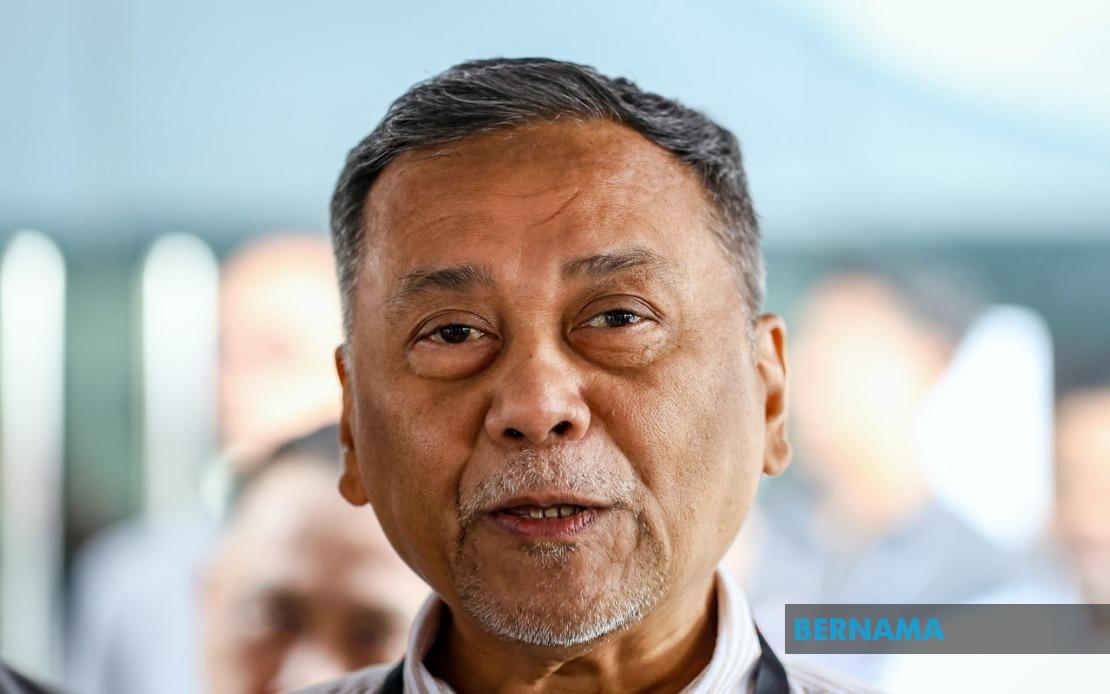
The Election Commission has signalled confidence in strong public participation for the Johor state election, with officials projecting that turnout could climb to approximately 70 per cent. This optimistic forecast reflects what commission leadership characterises as notably elevated enthusiasm among voters, particularly evident during the campaign phase leading into polling day. The expectation, outlined by Election Commission chairman Datuk Seri Ramlan Harun, suggests that Malaysians in Johor are approaching this electoral contest with genuine commitment to the democratic process, a sentiment that carries implications for future engagement in the country's political system.
Ramlan's assessment rests on observable patterns gathered throughout the campaign period, during which commission officials monitored voter sentiment and participation indicators. The chairman emphasised that this elevated interest reflects not merely superficial curiosity but a substantive desire among constituents to exercise their fundamental rights and responsibilities. The projection of a 70 per cent turnout, should it materialise, would represent a meaningful engagement level for a state election—a barometer of democratic vitality that extends beyond simple procedural participation to suggest genuine public investment in electoral outcomes.
The dynamics underlying this anticipated turnout encompass multiple reinforcing factors. Beyond the visible vibrancy of campaign activities across constituencies, the Election Commission attributes the positive trajectory to a broader public consciousness regarding the significance of electoral participation. In an era where voter apathy presents a challenge to democratic systems across Southeast Asia, the Johor findings suggest that targeted awareness efforts and energetic campaigning can successfully mobilise populations. For Malaysian observers of political trends, such momentum indicates that when electoral machinery operates effectively and candidates engage substantively with voters, public response follows accordingly.
The electoral context in Johor carries particular weight within Malaysia's political landscape. As the second-largest state by population and a crucial battleground in the nation's competitive two-party system, outcomes here reverberate through national politics. A 70 per cent turnout would represent a decisive statement of electoral engagement, suggesting that voters across the state regard this contest as sufficiently consequential to warrant participation. This becomes especially significant given Malaysia's experience with variable turnout rates across different electoral cycles, where enthusiasm can fluctuate based on perceived relevance and campaign intensity.
Practically speaking, the Election Commission has mobilised substantial resources to accommodate the projected participation. Approximately 2.7 million registered voters across Johor are entitled to cast ballots, a figure that underscores the scale of the electoral exercise. To manage this volume, the commission has deployed 43,036 election workers throughout the state, ensuring adequate staffing at polling stations and supporting logistics. This deployment reflects institutional readiness to process anticipated demand efficiently, though it also signals the operational complexity inherent in conducting elections across a geographically diverse state encompassing both urban centres and remote island communities.
The geographical spread of Johor's voting infrastructure presents distinctive logistical challenges that have received explicit attention from electoral authorities. Polling stations open uniformly at 8 am statewide, but closing times vary considerably depending on location accessibility. Remote island polling centres, such as those on Pulau Besar near Mersing, close as early as 11 am, accounting for travel time required for officials to transport completed ballots securely. In contrast, the overwhelming majority of mainland polling stations—1,114 facilities—maintain voting until 6 pm. This tiered approach demonstrates how the Election Commission calibrates procedures to accommodate Johor's topographical realities while maintaining electoral integrity across dispersed communities.
Postal voting arrangements further reflect institutional sophistication in managing participation across varied circumstances. The commission issued 24,677 postal ballots to voters unable to cast ballots in person, a mechanism particularly relevant for Malaysians working outside their constituencies or those with mobility constraints. These postal ballots must reach Election Commission offices by 6 pm on polling day, establishing a clear deadline that requires voters to plan participation in advance. Such provisions, now established practice in Malaysian elections, represent cumulative institutional learning about removing barriers to participation while preserving ballot security.
Coordination with law enforcement and military authorities underscores the multi-agency approach to ensuring electoral integrity and logistical success. The Malaysian Armed Forces have committed resources, particularly for transporting ballot boxes from island polling stations where regular road infrastructure proves inaccessible. Police involvement addresses security considerations throughout the process. These partnerships, established through detailed contingency planning, reflect a recognition that election management in contemporary Malaysia requires seamless coordination across government institutions. Should unforeseen circumstances arise—weather disruptions, transportation difficulties, or security concerns—predetermined protocols involving these agencies enable rapid response without compromising electoral procedures.
The 70 per cent turnout projection carries implications extending beyond Johor itself. Electoral turnout rates function as indicators of democratic health and public confidence in political institutions. Strong participation suggests that Malaysian voters view elections as meaningful opportunities to influence governance, a perception that benefits democratic consolidation. Conversely, were turnout to underperform projections, it would signal either that campaigning failed to sustain initial enthusiasm or that underlying voter scepticism persisted despite apparent campaign vigour. Either outcome would merit analysis regarding what factors drive or suppress electoral engagement in Malaysia's specific context.
For regional observers, the Johor election provides a lens through which to assess democratic participation patterns in Southeast Asia. Malaysia, despite its competitive political environment and periodic democratic stresses, has maintained functioning electoral institutions that continue organising contests. The Election Commission's operational readiness and apparent public responsiveness to campaigning suggest that democratic infrastructure, whilst sometimes contested, retains capacity to mobilise participation. As other Southeast Asian nations grapple with democratisation, voter apathy, and institutional legitimacy, Malaysian experiences—including whether Johor achieves its projected 70 per cent turnout—offer instructive lessons about what sustains electoral engagement.
The coming weeks will reveal whether the Election Commission's optimistic projection materialises into actual turnout figures. Should 70 per cent of eligible Johor voters participate, it would represent a validated forecast and evidence of successful mobilisation. If actual participation falls short, subsequent analysis would examine which demographic groups, geographic areas, or voting blocs exhibited lower engagement. Either way, the Johor election outcome will contribute to understanding Malaysian electoral behaviour and the factors that encourage or inhibit voter participation in competitive democratic systems.

