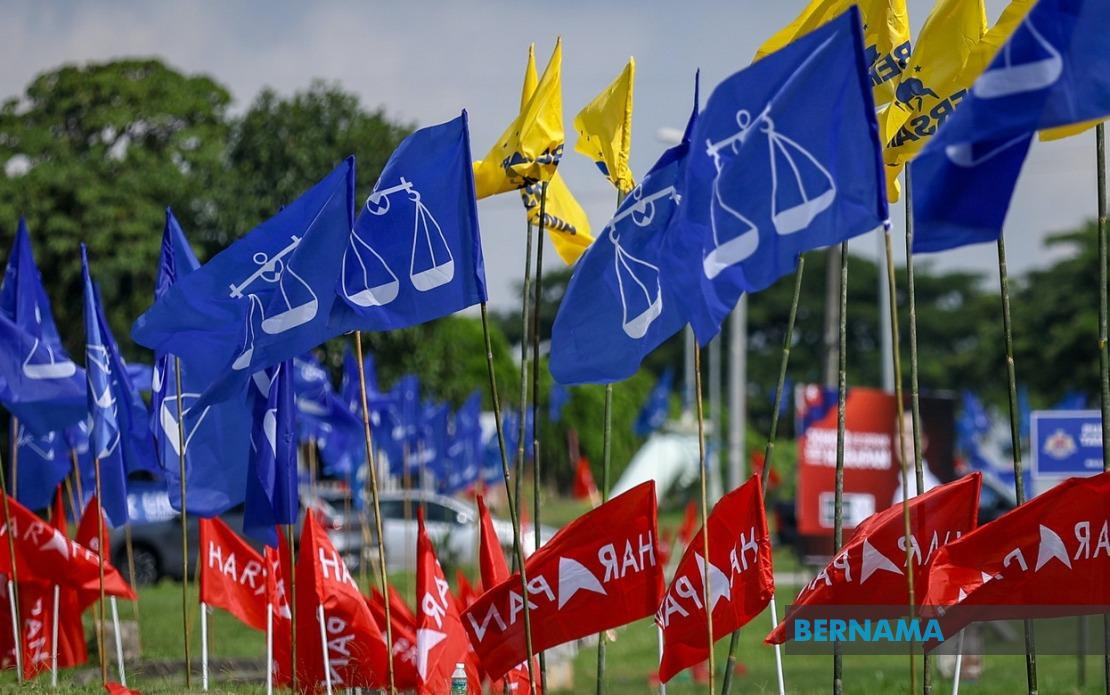
The highly anticipated Johor State Election Dialogue is set to proceed on schedule next Tuesday despite the notable absence of Menteri Besar Datuk Onn Hafiz Ghazi, who faces competing demands on his calendar. The televised forum, being jointly mounted by RTM, Astro AWANI and Sinar Harian, will convene at the RTM Auditorium within the Johor Broadcasting Department starting at 8 pm, providing a significant platform for key political figures to address the state's electorate just days before voting begins.
Confirmation of the Menteri Besar's non-attendance came directly from his office, with an aide stating plainly that Onn Hafiz was not included in the event's programme itinerary. The decision underscores the careful choreography surrounding campaign activities in the final stretch before the July 11 poll. Despite initial invitations extended to both the state's chief executive and his opposition counterpart, organisers have determined the dialogue will move forward with other senior representatives participating in place of the absent leader.
Communications Minister Datuk Fahmi Fadzil is confirmed to attend the session, lending federal-level representation to the proceedings. His participation signals continued engagement from Kuala Lumpur's political establishment in shaping the narrative around Johor's electoral contest. Alongside the minister, Dr Maszlee Malik—the Pakatan Harapan nominee for the Puteri Wangsa state constituency—will present the opposition's vision and policy platform. This pairing is intended to offer voters a contrasting perspective on governance priorities and solutions to pressing local concerns.
The one-hour dialogue framework is specifically designed to grant both representatives equal opportunity to articulate their respective visions, policy commitments, priorities and responses to issues affecting Johor's population. Such structured platforms have become routine in Malaysian electoral campaigns, allowing candidates and party officials to reach mass audiences through established media channels. The event's architecture reflects efforts by broadcasters to maintain editorial balance, though the absence of the sitting Menteri Besar inevitably shapes public perception of the discussion.
The dialogue will draw roughly 200 participants drawn from various quarters of the state administration, government agencies and MADANI Communities groups. This composition suggests organisers intend the event as more than a simple media spectacle—rather, it functions as a broader engagement exercise incorporating civil society and public sector voices. The inclusion of institutional representatives may lend the forum additional weight and scope beyond the standard candidate debate format frequently seen during election campaigns across Malaysia.
The timing of this dialogue carries particular significance given that Johor's electoral schedule compresses significantly. Early voting is set for July 7—the same day as the evening forum—while the main polling day follows four days later on July 11. This condensed timeline means the dialogue occurs at a crucial juncture when voter preferences are still crystallising and undecided electors remain persuadable. The event therefore occupies a strategically sensitive moment in the campaign cycle, potentially influencing ballot decisions across the state.
The sixteenth Johor State Election represents a substantial electoral contest, with 172 candidates competing for 56 parliamentary seats across the state legislature. The scale of candidacy and available positions underscores both the competitiveness of the race and the stakes involved for all participating political formations. Johor's electoral importance within Malaysia's broader political architecture means outcomes here often reverberate beyond state boundaries, shaping national coalition dynamics and parliamentary arithmetic.
Onn Hafiz's inability to attend, while characterised as relating to prior commitments, raises questions about campaign strategy and resource allocation at this pivotal moment. Political observers may interpret the Menteri Besar's absence variously—as reflecting genuine scheduling pressures or as a calculated decision to allow other voices prominence in the closing campaign phase. Regardless of motivation, his non-appearance constitutes a notable gap in the state's political leadership presence during a major public engagement.
The collaboration between RTM, Astro AWANI and Sinar Harian in mounting this dialogue reflects the multi-platform nature of contemporary Malaysian election coverage. By pooling resources across national and state-based media outlets, the organisers ensure broad distribution of the event across television, digital and print channels. This integrated approach maximises reach among Johor voters, extending the dialogue's potential influence well beyond those physically attending the Johor Broadcasting Department auditorium.
For Malaysian observers tracking Johor's electoral trajectory, this dialogue represents one final opportunity for formal, structured presentation of competing political visions before the actual voting commences. The event's execution—including which participants command audience attention and which policy themes dominate discussion—will likely influence late-deciding voters and shape media narratives in the immediate pre-polling period. Communications Minister Fahmi Fadzil's presence alongside the Pakatan Harapan candidate creates scope for substantive policy discussion while also highlighting the federal dimension of state-level politics in Malaysia's system.

