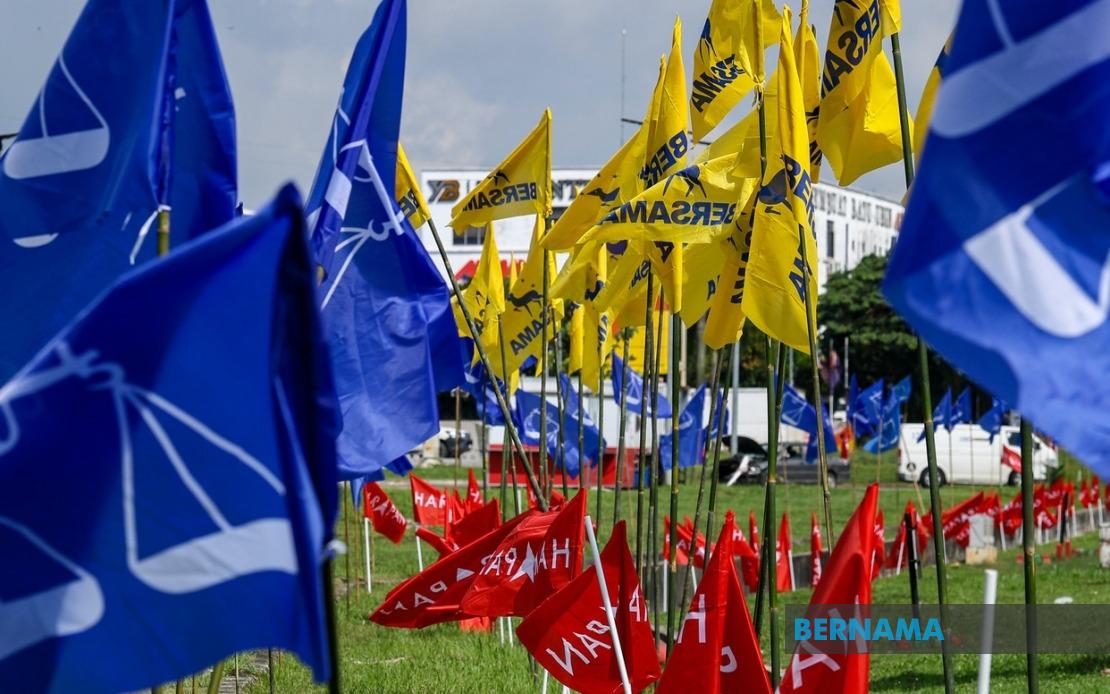
With 172 candidates vying for 56 seats in the 16th Johor state election this Saturday, political observers are pressing contesting parties to elevate the quality of public discourse by centering their campaigns on governance achievements, concrete policy proposals, and shared development priorities rather than personal vendettas or divisive rhetoric that could poison relationships needed across government after the polls.
Prof Datuk Dr Awang Azman Awang Pawi of Universiti Malaya, a sociopolitical analyst and fellow of the Malaysia National Civics Academy, emphasized that democratic competition thrives when rival camps engage in substantive comparisons of their respective blueprints and demonstrated capacity. Parties should vigorously debate their track records in investment attraction, managing urban-rural divides, and tackling pressing concerns such as housing affordability, employment prospects, wage stagnation, and the adequacy of social safety nets. By anchoring debates in these tangible domains, campaigns become genuine contests of vision and competence rather than exercises in character assassination or tribal appeals.
Yet such healthy rivalry requires careful boundary-setting. Awang Azman cautioned against inflammatory language that erects barriers to post-election collaboration. Parties should resist framing federal coalition partners as "absolute enemies" in state-level contests, and similarly avoid amplifying narrow provincial sentiment or weaponizing identity markers. This restraint is not soft-heartedness—it reflects hard political reality. After voters render their verdict, members of these competing parties will inhabit the same cabinet rooms, parliamentary benches, and federal agencies. Campaign wounds that fester prove deeply corrosive to the interpersonal trust and institutional goodwill upon which stable governance ultimately rests.
The substance of competition matters equally. Awang Azman outlined a framework distinguishing legitimate policy debate from corrosive attack. Parties defending an incumbent state mandate can articulate their economic development achievements, administrative stability, and leadership quality. Opposition forces advancing a checks-and-balance platform can spotlight institutional reform, demographic representation, and responsiveness to professional and middle-class constituencies. Both approaches engage voters on merits. Neither requires demonizing rivals or transgressing lines around personal dignity, religious sensitivity, or the legitimacy of opposing political formations.
Johor's particular context enriches this discussion. Voters merit substantive exchanges on the border economy's trajectory and cross-strait logistics; the quantum leap required for cost-of-living relief; labour market dynamism and technical skills development; the Rapid Transit System Link's implementation timeline; the Johor-Singapore Special Economic Zone's investment magnetism; urban congestion mitigation; and the adequacy of public welfare provisions. These concrete questions dominate household conversations across Johor. Campaigns that grapple seriously with them command voter respect far more than those resorting to theatrics.
Political analyst Dr Norman Sapar reinforced this imperative, arguing that modern political maturity is measured not by vocal ferocity in attacking opponents but by demonstrated capacity to navigate disagreement without compromising overarching national interests. Democratic competition at state level and political stability at the federal plane are compatible objectives—but only when contestants exercise restraint and remember their audience extends beyond partisan operatives.
Norman observed that Johor's campaign landscape has generally reflected encouraging discipline thus far. While parties naturally attempt to claim credit for various initiatives and positions diverge on substantive matters, the tone has remained calibrated within bounds of controlled political rivalry. Johor's political tradition, he noted, continues to emphasize courtesy and measured critique over public confrontation and character attacks. This institutional culture deserves preservation and reinforcement.
Norman counseled that campaigns should prioritize people-centric messaging anchored in administrative records, policy blueprints, and demonstrated problem-solving capacity. They should rigorously avoid using electoral contests as platforms to question federal-level cooperation, manufacture controversies designed to splinter national coalitions, or undermine the broader stability upon which citizens and investors alike depend. The electorate has grown discerning: voters increasingly distinguish between legitimate state-level political competition and the imperative to maintain national steadiness.
This electorate sophistication works to the advantage of candidates offering genuine solutions. Campaigns trafficking primarily in opponent denunciation consistently poll less favorably than those highlighting affirmative visions and actionable proposals. Voters hunger for substance. They reward seriousness and punish emptiness. Parties that internalize this judgment—that grasp that strength derives from constructive argument rather than destructive invective—will find themselves better positioned not merely to win Saturday's ballots but to govern effectively afterward and contribute to federal stability.
The challenge before Johor's political contestants is ultimately about institutional maturity: recognizing that elections are not existential wars but episodes in an ongoing democratic conversation, and that the relationships forged through respectful competition outlast any single electoral cycle. When parties wage campaigns grounded in policy substance, bounded by dignity, and conscious of post-election realities, they model the kind of political culture that strengthens rather than weakens Malaysia's democratic institutions and federal arrangements.

