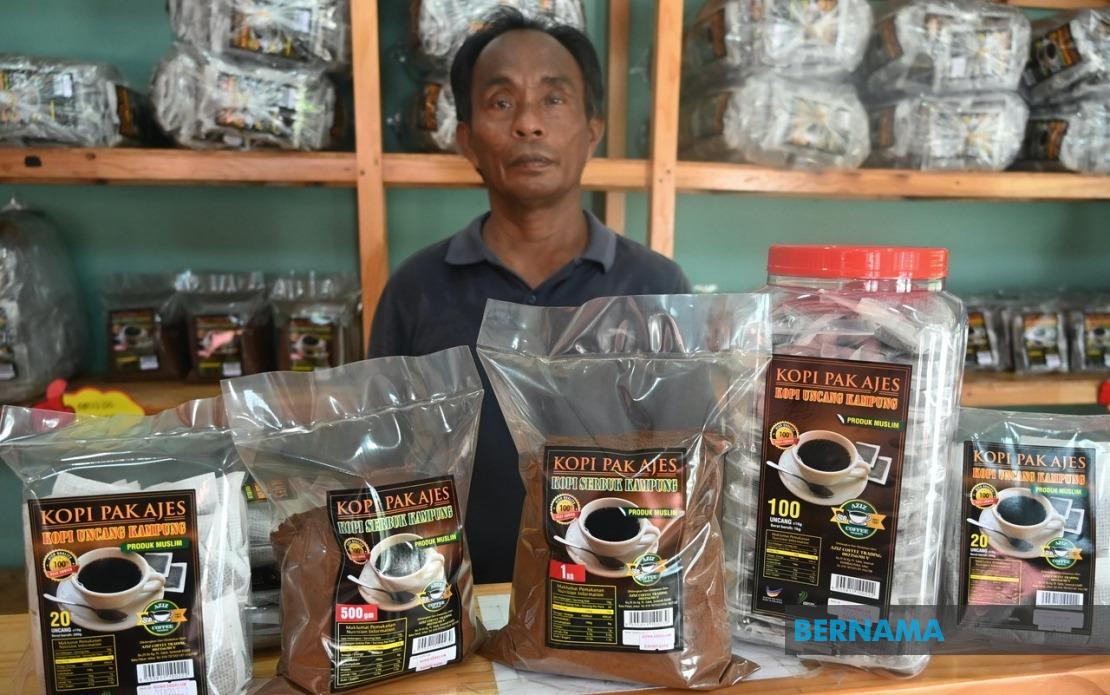
The 16th Johor state election has delivered an unexpected commercial opportunity for a humble coffee producer in Kampung Parit Sidek, Semerah. As candidates and their campaign machinery traverse constituencies across the state seeking voter support, 65-year-old Aziz Mohd—better known locally as Pak Ajes—finds himself scrambling to meet a surge in orders for his coffee products. The chairman of Aziz Coffee Trading has doubled production capacity to cope with demand from election workers and party machinery operating across multiple state constituencies, including Semerah, Sungai Balang, and Bukit Naning, transforming this particular election cycle into an unexpected windfall for his enterprise.
For Aziz, an entrepreneur who has spent more than three decades building his coffee brand from virtually nothing, the timing could hardly be better. He acknowledges the fortuitous nature of the electoral season, emphasizing that such commercial opportunities arrive infrequently in his business cycle. What sets this election apart is the level of advance planning involved. Several parties representing candidates approached Aziz well before the campaign season commenced, allowing him and his son to prepare adequate inventory. The preparation extended to sourcing additional coffee beans from distant locations such as Rengit and Kluang—reflecting the scale of demand that would ultimately materialize throughout the campaign period.
Aziz's entrepreneurial journey reveals a classic pattern of gradual business evolution rooted in opportunity recognition and strategic diversification. His entry into coffee processing traces back to 1991, when he observed local oversupply of coffee beans in a neighbouring village. Rather than leave these resources underutilized, he experimented with small-scale processing for personal consumption and to support acquaintances operating beverage stalls. Before committing fully to coffee, Aziz pursued parallel agricultural ventures—specifically quail farming for egg production and mushroom cultivation—both of which he marketed to suppliers and at nearby markets. This entrepreneurial experimentation proved invaluable, as the modest capital generated from these earlier ventures—approximately RM200 from quail and mushroom sales—provided the foundation for his initial coffee-powder venture.
The scaling trajectory of his business demonstrates how patient reinvestment can compound over decades. Aziz began by packaging coffee powder in 100-gram sachets based on customer orders. Today, his operation produces approximately 1,500 packets daily, translating to over five tonnes of powder monthly. His production capacity now serves a network of coffee shops throughout the Muar and Batu Pahat region. This growth reflects not merely increased demand, but also the accumulation of operational expertise and customer relationships built systematically across three decades.
The coffee-production process itself demands considerable technical precision and attention to detail throughout multiple stages. Aziz oversees meticulous separation of beans from stems and husks, followed by sun-drying over approximately 15 days—a critical phase that cannot be rushed without compromising final product quality. Following the drying stage, beans undergo roasting, grinding, and careful packaging. The packaging phase presents particular challenges; the powder must be sealed swiftly to prevent air exposure, which would cause hardening and clumping, thereby degrading the product's marketability. This sophisticated understanding of production constraints reflects the accumulated knowledge of a seasoned operator.
Recognizing growth potential beyond wholesale operations, Aziz diversified his business model in 2022 by establishing Kupi Nang Ajes Cafe in front of his residence. His son Muhammad Fitri, now 22, has become an active business partner in this retail venture. The cafe offers consumers direct access to Aziz's coffee products—including Americano and latte preparations—at prices positioned to remain accessible to ordinary Malaysians. This retail expansion represents a deliberate strategy to capture higher-margin sales while building direct consumer relationships and brand awareness.
Aziz's vision extends considerably beyond his current footprint. He and Muhammad Fitri envision opening a second outlet strategically located in a high-traffic area, whether in Batu Pahat town or Muar. More ambitiously, they harbour aspirations to establish branches across multiple states, suggesting ambitions for regional or even national expansion of their brand. Such expansion would require additional capital, operational expertise, and supply-chain sophistication—challenges that the entrepreneur appears prepared to tackle, particularly given the demonstrated demand for his products during the current election season.
Government support has materially assisted Aziz's business development. The Department of Agriculture has provided equipment contributions including a coffee grinder and coffee bagging machine, along with training in packaging standards and product labelling. This support exemplifies how agricultural extension services can facilitate private-sector growth, particularly among small and medium-sized enterprises operating in rural areas. For entrepreneurs in constituencies like Semerah, such institutional backing can prove the difference between survival and substantive expansion.
The broader significance of Aziz's experience lies in what it reveals about electoral cycles and local economic activity in Malaysia. Political campaigns generate considerable temporary demand for consumables—refreshments for campaign workers, hospitality for visiting dignitaries and journalists, and sustenance for the mobilized constituencies themselves. This creates windfall opportunities for entrepreneurs positioned to capitalize on such demand surges. Yet Aziz has demonstrated wisdom in recognizing this as cyclical rather than permanent demand; his longer-term strategy focuses on building sustainable market share through product quality, retail expansion, and brand development that will persist long after the 16th Johor election concludes.
The 16th Johor state election, contested across 56 seats by 172 candidates with polling scheduled for a specific Saturday, represents one of several state electoral contests Malaysia has witnessed in recent years. These contests, while primarily significant for their political implications, generate measurable economic activity at local levels. Small entrepreneurs like Aziz benefit from the increased commercial activity without necessarily bearing the risks typically associated with electoral volatility. His three decades of business experience have equipped him to navigate such fluctuations while maintaining the steady growth trajectory that ultimately defines business success in Malaysia's competitive commercial environment.

