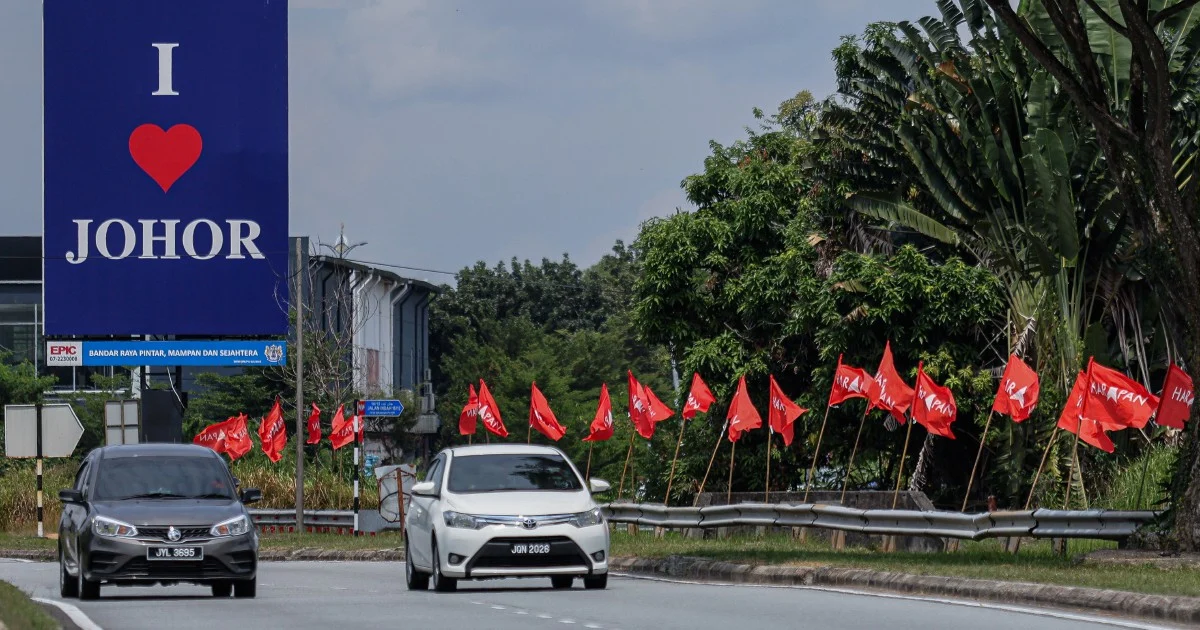
The upcoming Johor state election should pivot away from a narrow focus on individual leadership appointments and instead examine which political coalition possesses the depth of talent and coherent policy vision needed to steer the state forward, according to a prominent PKR Youth representative. This reframing of the electoral contest reflects growing awareness within opposition circles that voters increasingly demand comprehensive policy platforms and capable governance teams rather than personalised leadership contests.
At stake in the Johor election is far more than the selection of the next menteri besar, the party youth leader stressed, emphasising that the electorate should evaluate both coalitions on their track records in economic management, social welfare delivery, and strategic infrastructure development. This argument suggests PKR views the election as an opportunity to demonstrate institutional strength across multiple portfolios and governance competencies, moving beyond the traditional Malaysian political culture where elections often revolve around prominent individuals or high-profile candidates.
The emphasis on coalition performance and team composition reflects international trends in democratic politics, where voters increasingly scrutinise organisational readiness and policy depth rather than relying primarily on leadership personalities. For Johor, a state with significant economic importance as a manufacturing hub, trade and logistics centre, and home to major multinational operations, the capacity to formulate and execute sophisticated economic strategies becomes a central election issue.
PKR's positioning of this argument carries particular significance given the coalition dynamics in Malaysian politics. By advocating for a broader assessment framework, the party implicitly suggests its coalition partners offer a more cohesive and competent governance alternative, with expertise spanning multiple economic sectors and social policy areas. This approach also allows parties to highlight their depth in state-level cabinet positions, where environmental policy, education, health, commerce, and infrastructure portfolios all demand specialist knowledge.
The economic trajectory of Johor over the next five years will substantially influence Malaysia's overall growth prospects. The state hosts significant foreign direct investment in electronics manufacturing, petrochemicals, and renewable energy projects. Voters concerned with employment creation, skills development, and sectoral competitiveness will naturally want assurances that their state government can strategically engage with multinational investors and foster high-value economic clusters. A coalition's ability to present integrated economic expertise becomes, therefore, a legitimate electoral concern.
Furthermore, Johor faces emerging social challenges including urban congestion in the Iskandar Malaysia region, housing affordability pressures, and the need to balance rapid economic development with environmental sustainability. These complex policy domains require governments to coordinate across multiple agencies and leverage specialist technical knowledge. Election campaigns that reduce such challenges to a single leadership personality inevitably lack the substantive depth necessary for addressing interconnected problems.
The PKR Youth argument also implicitly acknowledges that Malaysian voters, particularly in urbanised areas like Johor Baru, Johor Bahru, and Kulai, have become more sophisticated in their electoral calculus. Rather than respond to personality-driven campaigns alone, they increasingly demand evidence of policy coherence, administrative competence, and strategic foresight. Parties that can articulate detailed development plans, supported by credible teams with relevant expertise, gain persuasive advantage with this demographic.
Regional competition adds another dimension to the Johor electoral contest. As a state sharing borders with Singapore and serving as a critical logistics bridge between the southern Malaysian peninsula and Sabah-Sarawak markets, Johor's governance quality directly influences investor confidence across Southeast Asia. International capital flows gravitate toward jurisdictions where governments demonstrate institutional stability and policy consistency. This reality suggests that Malaysian voters in Johor increasingly view state elections through an economic competitiveness lens.
The coalition-focused framing also reflects evolving internal dynamics within Malaysian political groupings. Successfully governing Johor requires seamless coordination among federal-level priorities, state-level legislative agendas, and local authority implementation. Multi-party coalitions, if well-organised and clearly delineated in terms of portfolio responsibilities, can sometimes outperform single-party governments in managing such complexity. This argument appears to guide PKR Youth's strategic communication approach.
Ultimately, the call to assess election contests through a coalition governance lens rather than individual leadership contests signals a maturing of Malaysian electoral discourse. While personality politics will undoubtedly remain influential, the emphasis on team capability, policy substance, and strategic vision reflects voter demand for substantive governance conversations. For Johor specifically, where economic development and social stability remain central voter concerns, shifting debate toward coalition competence and development planning creates space for more evidence-based electoral choices.
The positioning also creates implicit pressure on both coalitions to move beyond candidate announcements and articulate detailed state development blueprints. Voters evaluating competing governance teams will demand clarity on economic sectoral strategies, social welfare expansion plans, infrastructure investment priorities, and environmental stewardship approaches. This elevation of electoral debate potentially strengthens democratic accountability, as politicians must defend detailed policies rather than rely on personal charisma alone.

