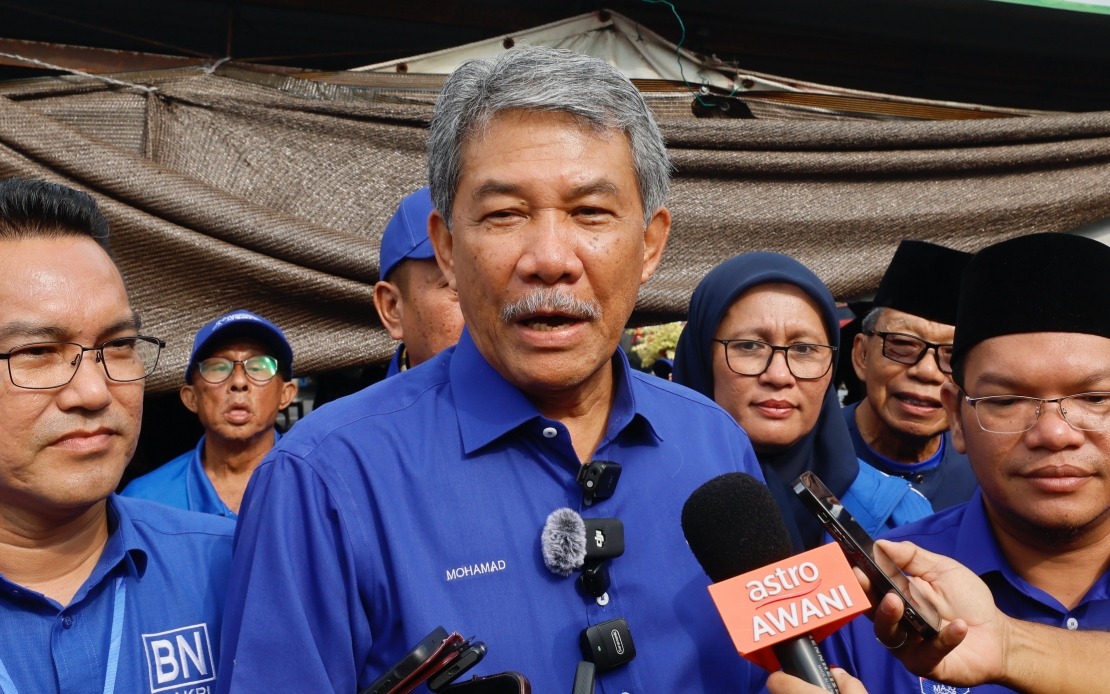
The Johor state election campaign must be conducted with maturity and restraint, steering clear of personal attacks that could jeopardize the country's stability, according to UMNO deputy president Datuk Seri Mohamad Hasan. Speaking during a constituency engagement in Johor Bahru on July 6, Mohamad stressed that while competing parties have every right to articulate their platforms and policy proposals to voters, the campaign strategy must not compromise the collaborative framework that underpins the Unity Government at the Federal level.
Mohamad, who also serves as Foreign Minister, articulated a distinction between vigorous political debate and destructive personal campaigns. He acknowledged that healthy partisan competition exists and that parties engaging in lighthearted banter is an accepted part of democratic discourse. However, he emphasized that campaigns must maintain a line of decorum that preserves institutional relationships essential to national governance. His comments reflect growing concerns within the ruling coalition that state-level contests could generate friction capable of destabilizing the delicate balance required to maintain Federal Government cohesion among its constituent members.
The timing of these remarks proves significant given the heightened political tensions surrounding the Johor election, which is scheduled for July 11 with early voting commencing on July 7. A total of 172 candidates are competing across 56 seats in the Johor State Legislative Assembly, making this a substantial electoral exercise that will determine the peninsula's second-largest state's political direction. The scale of the contest has intensified scrutiny from all major political camps, each seeking to maximize gains while managing the broader implications for Federal-level power dynamics.
During his engagement with Tiram state constituency voters, Mohamad directly addressed speculation that has circulated regarding alleged connections between the election and efforts to secure a pardon for former Prime Minister Datuk Seri Najib Tun Razak. He categorically rejected such insinuations, asserting that attributing such motives to the Johor poll fundamentally misrepresents both the nature of state elections and the constitutional framework governing executive clemency in Malaysia. This clarification became necessary as opposition voices had suggested that certain actors within UMNO might be leveraging state-level contests to accumulate political capital that could subsequently be deployed toward securing a presidential pardon.
Mohamad's legal reasoning proved instructive for understanding Malaysia's constitutional separation of powers. He noted that a state Menteri Besar possesses no institutional capacity to influence pardons, as such powers reside exclusively with the Federal Government and, ultimately, with the Yang di-Pertuan Agong whose prerogative in granting executive clemency remains constitutionally absolute. By emphasizing that the Johor election concerns state government formation rather than Federal Government composition, he sought to disabuse observers of any notion that electoral outcomes could mechanically translate into Federal-level consequences for imprisoned former leaders. This distinction carries particular weight given Malaysia's complex political landscape, where state-level contests frequently generate ripple effects across Federal politics.
The emphasis on law's supremacy in Mohamad's statements reflects UMNO's institutional positioning within Malaysia's constitutional order. As deputy president of the party that has historically served as the dominant component of Federal governance, his comments essentially signal UMNO's commitment to operating within established legal frameworks despite the party's historical proximity to Najib and its ongoing negotiations regarding his legal situation. This public reaffirmation of constitutional propriety serves multiple audiences simultaneously: international observers monitoring Malaysian democracy, domestic constituencies concerned about rule of law, and internal party factions that might harbour differing views regarding Najib's fate.
The broader context of Mohamad's intervention reflects the inherent tensions within Malaysia's Unity Government coalition. Comprised of politically diverse parties spanning the ideological spectrum, the Federal coalition maintains its cohesion through careful management of competitive impulses at state level while preserving collaborative arrangements at the centre. Johor, as a traditionally UMNO stronghold with significant electoral leverage, represents precisely the type of contest where enthusiastic party workers might be tempted to deploy tactics that could alienate coalition partners. By appealing to campaign restraint, Mohamad essentially sought to preempt escalatory dynamics that could spill into Federal Government relations.
The election itself carries substantial implications for Malaysian politics beyond Johor's borders. The state's electoral performance will signal voter sentiment regarding the Unity Government's governance record and provide insights into party capacity to mobilize support under current political conditions. A substantial UMNO victory could strengthen the party's negotiating position within the Federal coalition, while a diminished performance might embolden other coalition members to demand greater concessions. This electoral mathematics underscores why senior Federal figures like Mohamad felt compelled to shape campaign conduct toward moderation rather than allowing unfettered partisan competition.
Mohamad's specific reference to personal attacks and what constitutes appropriate campaign behaviour likely reflected concerns about increasingly acrimonious political discourse observable across Malaysian media platforms. Recent election cycles have demonstrated how personal invective can rapidly proliferate through digital channels, often transcending the originating state to generate nationwide controversy. By establishing normative expectations for dignified campaigning, he attempted to establish parameters that, if observed by major parties, could contain the geographic and thematic scope of campaign disputes.
The Foreign Minister's dual roles in government and party politics positioned his comments as authoritative guidance rather than mere opinion. When senior figures occupying cabinet positions articulate campaign principles, they carry implicit weight of institutional authority that distinguishes such interventions from statements by ordinary party officials. This leverage proved important for attempting to establish behavioral standards that transcended partisan advantage in the immediate moment.
For Malaysian voters observing the Johor contest, Mohamad's remarks provided insight into how Federal-level leadership views the appropriate relationship between state electoral competition and national governance continuity. His framing essentially argued that electoral victory, while desirable, must remain subordinate to institutional imperatives of maintaining functional relationships across government structures. This perspective reflects a particular understanding of democratic practice that prioritizes stability and institutional functionality alongside competitive politics, an approach that carries significant implications for how subsequent state elections might unfold across Malaysia.

