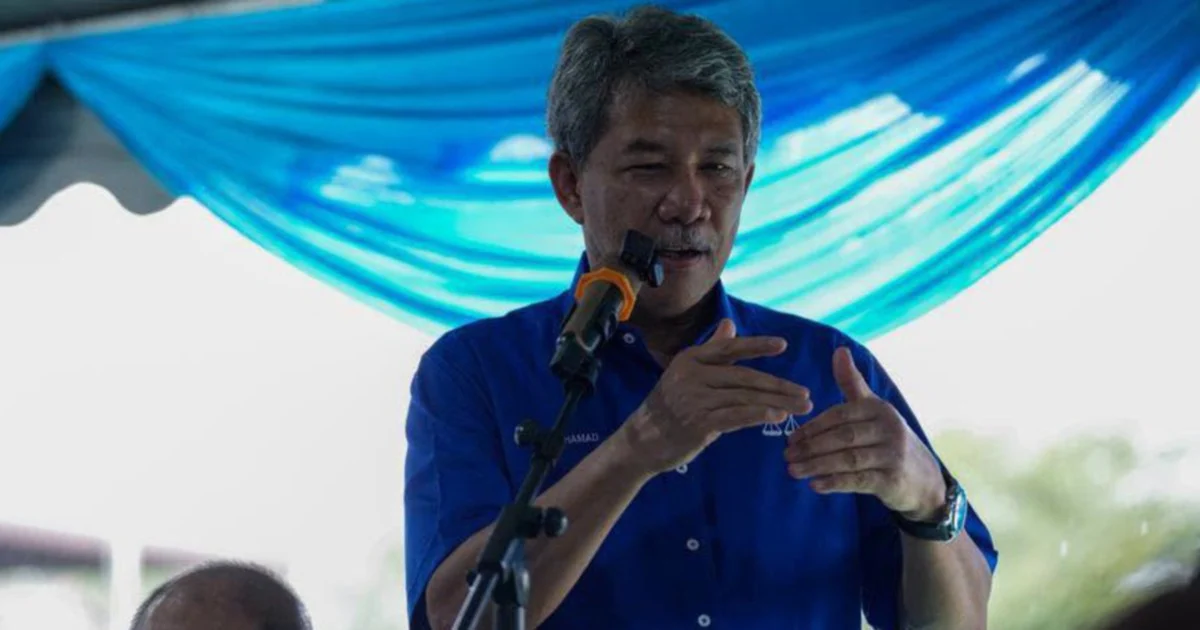
Political tensions are simmering in Johor as a prominent Barisan Nasional leader directly challenged opposition parties' claims connecting the forthcoming state election to potential moves toward freeing Datuk Seri Najib Razak, the former prime minister currently serving a jail sentence. Speaking at an event in Tebrau, the BN representative dismissed what he characterised as repetitive narratives from Pakatan Harapan quarters, asserting that no state chief minister would possess the authority to engineer such an outcome.
The remarks underscore the persistent intersection of Malaysia's two most divisive political forces: the Johor election machinery and the fate of Najib, whose conviction and imprisonment remain flashpoints in the country's political landscape. The assertion that electoral victories could translate into judicial mercy or executive clemency represents a concern that has shadowed recent state-level campaigns, particularly given Najib's towering significance within UMNO and the broader BN coalition.
Najib's incarceration following his conviction in connection with the 1Malaysia Development Berhad scandal has created an unusual political dynamic where his potential exoneration or release has become intertwined with electoral calculations. Supporters and sympathisers within BN circles have periodically raised the possibility of clemency or legal remedies, creating fertile ground for speculation about whether electoral gains might facilitate his freedom. This context makes the BN leader's intervention noteworthy, as it attempts to rebuild a firewall between legitimate political competition and expectations about judicial or executive intervention on behalf of a convicted figure.
The opposition's framing, as the BN leader describes it, appears to suggest that should Barisan Nasional consolidate control in Johor through the election, mechanisms might materialise to address Najib's situation. Such narratives reflect deeper anxieties about the politicisation of justice and the possibility that electoral outcomes could influence the treatment of high-profile political figures. For Malaysian voters and observers across Southeast Asia watching how the nation navigates post-transition governance, such concerns touch on fundamental questions about democratic institutions and the rule of law.
For Johor specifically, these political crosscurrents complicate what should be a straightforward assessment of state-level governance, development priorities, and local leadership. The state, Malaysia's southernmost peninsula territory and a crucial economic and demographic anchor, deserves electoral discourse centred on concrete policy platforms, infrastructure investment, and administrative competence. Instead, the gravitational pull of Najib's case has created a political gravity well that draws attention away from granular state issues and toward national-level intrigue.
The BN leader's intervention also carries implicit criticism of the opposition's campaign strategy. By repeatedly invoking the Najib question, Pakatan Harapan risks appearing to concede that BN remains the natural party of power while simultaneously delegitimising BN rule preemptively by tying it to potential judicial intervention. This rhetorical positioning may energise core opposition voters but could alienate swing voters seeking assurance that elections determine policy direction rather than serve as vehicles for securing personal favours for imprisoned figures.
From an institutional perspective, the statement reflects the complicated political reality where a former leader's legal jeopardy continues shaping electoral behaviour and campaign narratives years after his government's fall. Najib's continued prominence in political discourse, whether as a symbol of the old establishment or as a cautionary tale about accountability, demonstrates how singular individuals can dominate Malaysia's political geography long after losing executive power. The inability to move beyond his case suggests unresolved tensions about transitions, accountability, and national reconciliation.
For Southeast Asia's broader democratic trajectory, Malaysia's experience with managing the political consequences of prosecuting a former leader offers instructive lessons. The region has watched how other nations navigate similar terrain: whether electoral processes can remain insulated from the gravitational pull of prominent prosecutions, whether judicial systems maintain credibility when outcomes appear politically determined, and whether democracies can move forward when significant constituencies believe legal processes are weaponised against their preferred leaders.
The BN leader's assertion that state-level authority cannot catalyse Najib's release technically appears sound within Malaysia's constitutional framework. Clemency powers rest with the Yang di-Pertuan Agong at the federal level, and courts operate independently of executive authority. Yet the persistence of suggestions that electoral outcomes might somehow facilitate such an outcome reveals public perception that political power sufficiently influences formal institutions to produce desired results, even when constitutional structures suggest otherwise.
As Johor voters prepare for the election, the debate over Najib serves as a reminder that Malaysian politics remains preoccupied with unresolved questions stemming from the 1MDB scandal and its aftermath. Whether the electorate ultimately votes based on assessments of state management, personal connections to local leaders, or broader signals about the direction of national politics remains an open question that will reveal much about voter priorities in contemporary Malaysia.

