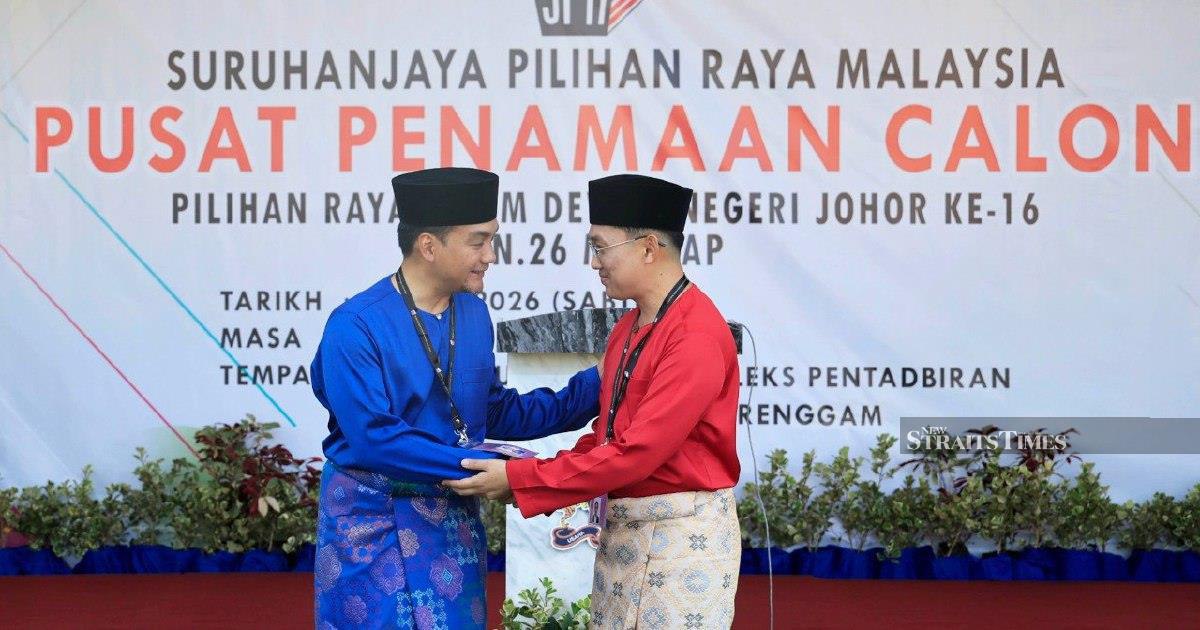
Johor's caretaker Menteri Besar Datuk Onn Hafiz Ghazi has cast aside complacency as he prepares to defend his Machap seat in the state election on July 11, acknowledging that political outcomes in the constituency remain far from certain. His measured assessment of the electoral challenge, voiced in Simpang Renggam, reflects a recognition that incumbency offers no automatic shield in a competitive political landscape where voter sentiment can shift rapidly between election cycles.
The warning from Onn Hafiz represents a deliberate departure from overconfidence often displayed by sitting politicians. Rather than banking on administrative advantages or previous electoral victories, he has opted to frame the contest as genuinely competitive. This posturing, whether tactically motivated or genuinely reflective of ground sentiment, underscores the volatility that characterises contemporary Malaysian state politics, particularly in Johor where demographic changes and shifting allegiances have redefined electoral dynamics over successive contests.
Machap, a constituency within Johor's political architecture, carries significance both locally and regionally. The seat's composition—encompassing urban, semi-rural, and possibly agricultural areas depending on its precise boundaries—typically reflects broader trends affecting Johor's overall electoral direction. A loss by the caretaker Menteri Besar would carry symbolic weight beyond the single constituency, potentially signalling broader rejection of the coalition or administration he represents, whilst conversely, a convincing victory could validate the government's policy direction and public acceptance.
Onn Hafiz's position as caretaker Menteri Besar places him in a peculiar political limbo, where he carries executive responsibility without the full authority of a confirmed mandate. This status creates distinct pressures: he must project confidence in governance whilst simultaneously acknowledging that voters will render judgment on his stewardship through the July 11 ballot. The electorate's perspective on his administration's performance—whether viewed through the lens of economic management, service delivery, or political stability—will heavily influence the contest's outcome.
The Johor election itself represents a significant political moment for Malaysia's southern economic engine. As one of the country's largest states by population and economic output, Johor's electoral outcome reverberates across national political calculations. Coalition performances here provide early indicators of shifting voter preferences and can establish momentum for subsequent elections. For Onn Hafiz specifically, securing his personal seat constitutes a baseline requirement, though broader state-level results will ultimately determine whether his administration continues or faces replacement.
The political ecosystem surrounding Machap has likely experienced considerable movement since the last state election. Opposition parties continuously organise and consolidate their ground presence, whilst the ruling coalition manages internal dynamics between coalition partners and manages public expectations. Candidate selection across all contesting parties in Machap will shape the actual contest; strong or weak opposition nominees can dramatically alter competitive dynamics regardless of underlying voter sentiment.
Onn Hafiz's acknowledgement of uncertainty also reflects lessons from recent Malaysian electoral history, where supposedly safe seats have fallen and unexpected surges have reshaped state governments. Penang, Selangor, and Kedah have all experienced dramatic electoral reversals in recent cycles, demonstrating that no constituency can be taken for granted. Johor, despite the ruling coalition's historical strength there, is not immune to such shifts, particularly if national political narratives or local grievances galvanise voter mobilisation.
The caretaker Menteri Besar's messaging strategy—projecting both confidence in his candidacy whilst acknowledging competitive uncertainty—appears calibrated to motivate his support base without breeding overconfidence among party machinery. Such messaging encourages foot soldiers and supporters to treat the contest with appropriate seriousness, mobilising campaign resources and voter engagement efforts that might otherwise be relaxed if victory appeared assured. It simultaneously signals to wavering voters that their franchise genuinely matters and can influence outcomes.
For Malaysian observers and political analysts, Onn Hafiz's cautionary tone provides a window into how sitting politicians assess their electoral standing and the broader health of their political support. The fact that a caretaker Menteri Besar—a senior state administrator—feels compelled to emphasise the unpredictability of his own constituency contest suggests a political environment where traditional assumptions about electoral advantage have eroded. Demographic changes, economic pressures, and shifting urban-rural voting patterns have collectively redrawn Malaysia's electoral map.
The July 11 election will determine whether Onn Hafiz's caution proves warranted or whether his prior electoral strength translates into confirmation of his stewardship. Beyond the personal implications for his political career, the result will signal the direction of Johor's governance for the coming years and provide insights into the relative strength of competing coalitions as Malaysian politics continues its ongoing realignment. His measured assessment of the Machap race reflects the heightened uncertainty now embedded in state-level electoral contests across the country.

