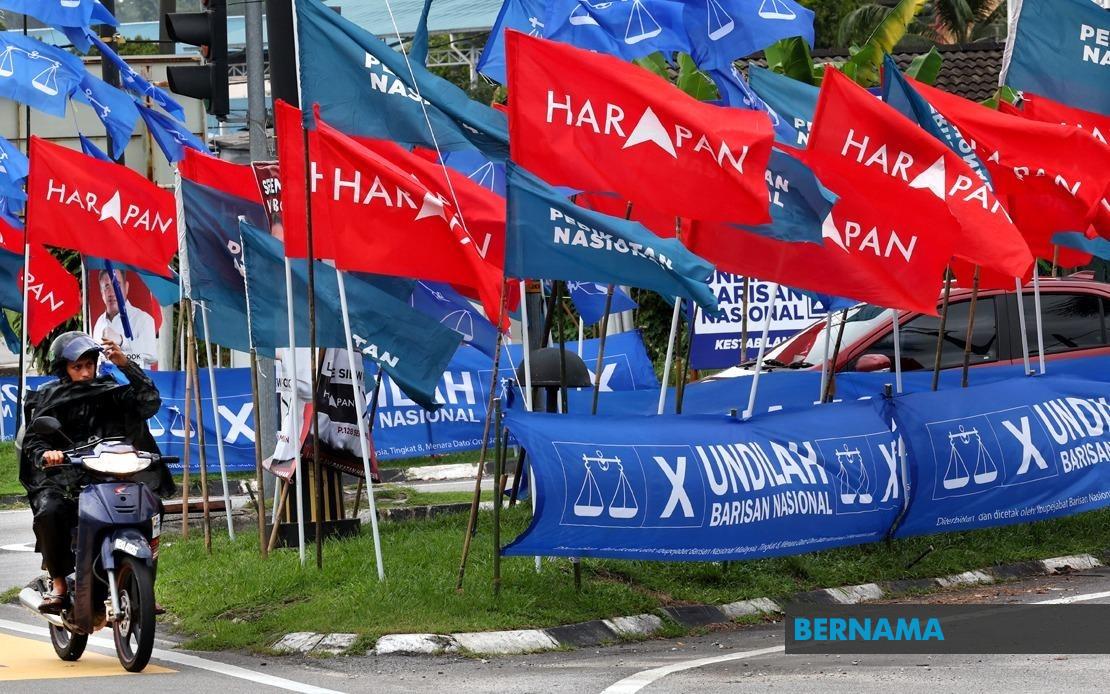
The campaign for Johor's 16th state election has entered its crucial final phase, with candidates from all major political coalitions pulling out all stops to win over voters in the remaining hours before the midnight deadline on Friday. With polling day set for Saturday and fewer than 48 hours of permitted campaign activity remaining, the intensity across constituencies has reached fever pitch as parties recognise that these final moments represent their last opportunity to sway undecided voters and consolidate support among their traditional bases.
Across the 56 state seats up for grabs, the competing alliances have adopted markedly different strategies to maximise their reach in this closing stretch. Large-scale public gatherings known as ceramahs continue to draw significant crowds, while simultaneously, campaign teams have doubled down on intimate grassroots engagement, including door-to-door canvassing and small community dialogues. This dual approach reflects the recognition that winning a state election in Malaysia requires both headline-grabbing shows of force and the granular work of direct voter persuasion at the neighbourhood level. The presence of 172 candidates competing for seats demonstrates the breadth of political competition, creating a fragmented landscape where even second and third-tier parties are making genuine efforts to secure representation.
Prime Minister Datuk Seri Anwar Ibrahim, acting in his capacity as Pakatan Harapan chairman, has thrown his personal weight behind the coalition's final push, with a scheduled campaign itinerary covering three strategic constituencies tonight. His involvement is significant because it signals the federal government's stake in the Johor outcome and underscores PH's determination to retain control of a state it has governed. The decision to include the closely contested Puteri Wangsa seat on his schedule indicates that PH sees this particular battleground as critical to its overall Johor strategy. Such high-level political attention at the state level often translates into heightened media coverage and voter engagement, potentially swaying marginal voters who respond to the visibility and validation that comes with a prime ministerial appearance.
Puteri Wangsa's PH candidate Maszlee Malik has taken to social media to amplify the coalition's get-out-the-vote messaging, explicitly invoking the psychological concept of fear of missing out to encourage supporters to attend PH's "Grand Finale Harapan Johor Selatan" rally. This modern approach to political mobilisation demonstrates how Malaysian campaigns now blend traditional ceramah formats with digital-age tactics designed to drive attendance and online engagement. By framing attendance as a cultural moment and social imperative, Maszlee's messaging taps into the psychology of collective action and peer influence, particularly among younger voters who may respond more readily to social media-driven calls to participation.
Meanwhile, the PH narrative of dedicated persistence is being reinforced through stories of candidates who have maintained their campaigning schedule despite personal challenges. Dr A. Ruban, PH's Paloh candidate, took a brief medical break but rapidly returned to ground campaigning, publicly signalling through a Facebook post that his commitment to his constituency supersedes personal health concerns. Such narratives of sacrifice and dedication, when amplified through social media channels, contribute to the broader political narrative that distinguishes PH's campaign from its rivals. The Felda Redong motorised convoy organised by Johor PKR chairperson Datuk Seri Dr Zaliha Mustafa in support of Kemelah candidate Mohd Afif Abd Hamid, involving 120 motorcyclists, exemplifies the creative logistical approaches parties employ to generate visual spectacle and demonstrate organisational capacity.
Barisan Nasional's campaign machinery has similarly activated its senior leadership, with coalition chairman Datuk Seri Dr Ahmad Zahid Hamidi personally visiting the Endau and Kempas constituencies in a show of solidarity with BN candidates. As the incumbent governing coalition at the state level, BN carries the advantage of incumbency through figures like Johor Menteri Besar Datuk Onn Hafiz Ghazi, who can point to development achievements and state-level accomplishments while campaigning for retention of the mandate. BN's campaign in Larkin, structured around a "Ziarah Kasih" programme that emphasises personal connection with residents, reflects an older, relationship-based approach to political campaigning that remains effective in contexts where personal networks and communal trust remain politically significant.
Perikatan Nasional's inclusion in this tripartite competition represents a significant factor in the Johor political equation, potentially fragmenting the opposition vote if PN can convert campaign momentum into electoral support. Tonight's mega rally in Endau, featuring PN chairman Datuk Seri Ir Dr Ahmad Samsuri Mokhtar and PAS president Tan Sri Abdul Hadi Awang, demonstrates PN's determination to challenge the established dominance of both PH and BN. For constituencies like Endau, where PN is fielding candidate Hasnul Hakimi Hussien, the presence of senior national figures serves multiple functions: it amplifies media attention, energises local party machinery, and signals to voters that PN is a serious contender capable of mobilising national-level resources and personalities.
The participation of smaller parties such as Parti Bersama Malaysia (Bersama) through creative initiatives like the "Bersama Tour Truck" campaign, combined with granular grassroots engagement through small-group community dialogues, reveals how even marginal political players attempt to carve out electoral space. These campaigns recognise that not every voter responds to large public gatherings and that targeted, intimate political engagement can yield results in constituencies where trust and direct engagement matter. Bersama's and other smaller parties' presence also means that vote-splitting could become a factor in tight three-way contests, potentially affecting final outcomes in constituencies where margins are narrow.
The intensity of campaign activity across all political actors reflects the genuine uncertainty surrounding the election's outcome. Unlike some previous Johor elections where results appeared predetermined, the 16th state election features multiple scenarios that remain plausible, depending on how voter sentiment translates into actual ballot behaviour. The activation of national-level leaders by both PH and BN, combined with PN's determined challenge, suggests that party strategists believe the election remains genuinely competitive and that final-stretch mobilisation efforts could meaningfully influence the result. The diversity of campaign tactics—from traditional ceramahs to social media-driven attendance drives to conveyor-based spectacles to intimate community dialogues—indicates that parties recognise they must reach voters through multiple channels and formats.
For Malaysian observers and regional analysts monitoring the election, the final 48 hours will prove crucial in revealing which campaign strategies have proven most effective at converting enthusiasm into actual voter commitment. The appearance of national leaders, the mobilisation of party machinery, and the resourcefulness of campaign teams all culminate in Saturday's voting, where the 172 candidates competing across 56 seats will discover whether their final-stretch efforts have successfully swayed the electorate. The Johor result will carry implications beyond the state itself, potentially signalling shifts in national political sentiment and offering insights into voter behaviour that may shape broader Malaysian politics in the years ahead.

