Recognizing the critical role of media infrastructure in democratic elections, Malaysia's Communications Ministry has rolled out a comprehensive support network for press operations during the 16th Johor state election. The initiative encompasses two primary media facilities alongside 100 additional information dissemination points strategically positioned across the state, designed to accommodate the logistical demands of intensive campaign coverage leading up to polling day on July 11.
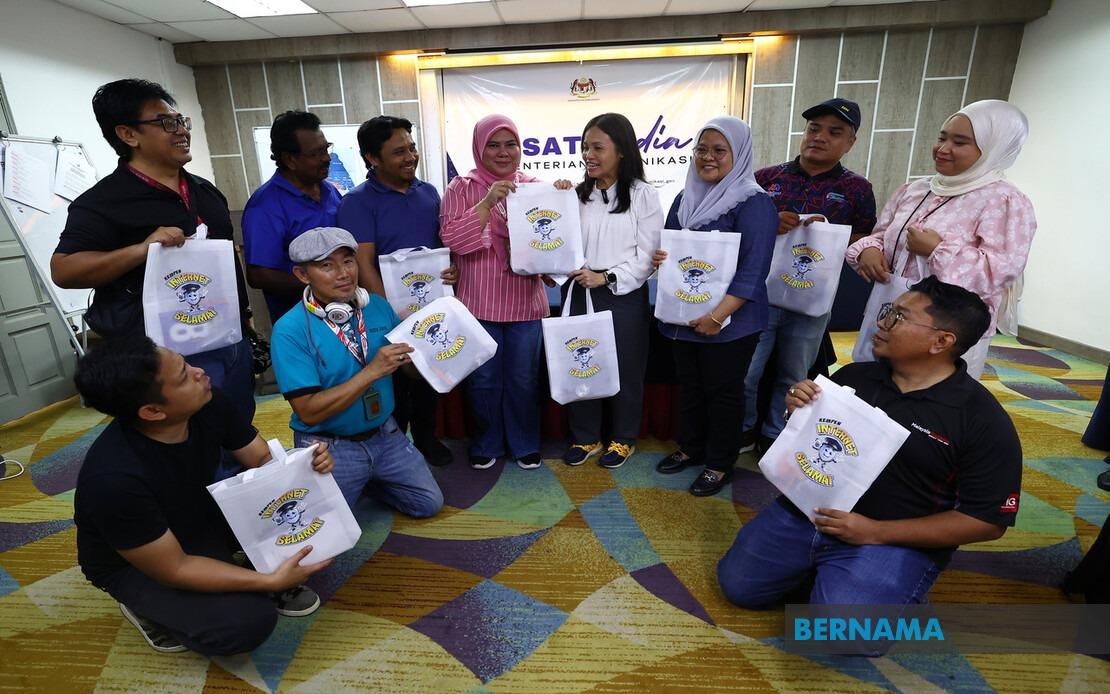
Deputy Communications Minister Teo Nie Ching unveiled the infrastructure framework during a visit to the main media centre at Hotel Seri Malaysia in Johor Bahru on June 28. The second principal hub operates from NADI Kampung Sawah Awok in Muar. Both locations maintain extended hours—9 am to 9 pm daily—commencing from June 26 and continuing through the election itself, providing journalists with sustained operational capacity during what is typically the most intensive phase of campaign reporting.
Connectivity forms the cornerstone of this media support initiative. The ministry has committed to maintaining internet speeds of not less than 100 Mbps across all facilities, addressing a fundamental requirement for modern news operations where multimedia content transmission is essential. This bandwidth threshold proves particularly significant for video journalism and real-time photo distribution, eliminating the technical constraints that previously hampered rapid news dissemination during state-level electoral contests. The specification reflects acknowledgment that contemporary journalism standards demand immediate content delivery rather than delayed filing.
Beyond connectivity, the established centres offer comprehensive technical resources to address diverse newsroom requirements. Facilities include desktop computers, laptops, photocopiers, and printing equipment, creating an integrated workspace that accommodates both digital and traditional news production workflows. This multi-platform orientation recognizes that Malaysian media outlets continue operating across print, broadcast, and digital domains, each with distinct technological needs. The provision of shared infrastructure reduces barriers to coverage for smaller news organizations with limited field resources.
Telecommunications reliability extends beyond the designated media centres through proactive network monitoring coordinated by the Malaysian Communications and Multimedia Commission (MCMC). The regulatory body has committed to supervising telecommunications service providers throughout the campaign period, ensuring that internet performance remains consistently optimized statewide rather than concentrated only in primary hub locations. This supervisory role reflects understanding that journalists operate across dispersed field locations and cannot rely exclusively on centralized facilities.
The ministry has introduced the MCMC Nexus application as a crowdsourced signal monitoring tool, inviting public participation in real-time assessment of network strength across specific geographic areas. The application framework emphasizes data privacy safeguards, distinguishing between technical metrics—location data and signal strength measurements—and personal information, with only technical parameters shared with service providers for infrastructure optimization. This transparency measure addresses growing public concern regarding data collection practices by government bodies.
Election coverage standards remain subject to established content guidelines that transcend mere technical provisioning. Teo reminded political participants and campaign supporters that healthy democratic discourse requires scrupulous avoidance of sensitive subjects encompassing race, religion, and royalty—the traditional 3R framework within Malaysian political communication. This emphasis underscores that infrastructure support carries implicit expectations regarding journalistic responsibility and the maintenance of social harmony during heightened political activity periods.
The MCMC maintains active collaboration with law enforcement agencies to monitor social media environments for content exhibiting extreme provocative characteristics that threaten public order. Detection and removal protocols operate in parallel with conventional media monitoring, recognizing that digital platforms present distinct regulatory challenges compared to traditional newsroom outputs. This coordinated approach reflects institutional awareness that election-period political tensions can rapidly escalate through social media amplification, particularly regarding inflammatory content exploiting communal sensitivities.
Factual accuracy initiatives complement the technical infrastructure through the Malaysian Media Council's establishment of a dedicated fact-checking platform specifically oriented toward the electoral context. By encouraging public habit formation around verification practices before information sharing, the council addresses the phenomenon of unverified claim propagation through digital networks. This educational component recognizes that technical infrastructure alone proves insufficient for maintaining information integrity during politically charged periods; audience literacy regarding verification standards provides complementary protection against misinformation dynamics.
For Malaysian news organizations and regional media outlets covering Johor's electoral contest, this institutional architecture represents substantial operational facilitation compared to previous electoral cycles. The combination of physical infrastructure, guaranteed connectivity thresholds, shared technical resources, and parallel content monitoring mechanisms creates an ecosystem supportive of professional journalism standards. The initiative also signals government acknowledgment that contemporary democratic processes depend substantially on reliable information systems and technical enabling rather than content control mechanisms.
The election schedule establishes July 7 for early voting, with the main polling day following four days later on July 11. This timeline provides the established media infrastructure approximately two weeks of operational availability during the most information-intensive phase of the electoral process. For journalists managing competing demands across multiple stories and platforms, this support framework substantially enhances capacity for comprehensive coverage while maintaining technical quality standards expected by contemporary news audiences throughout Southeast Asia.

