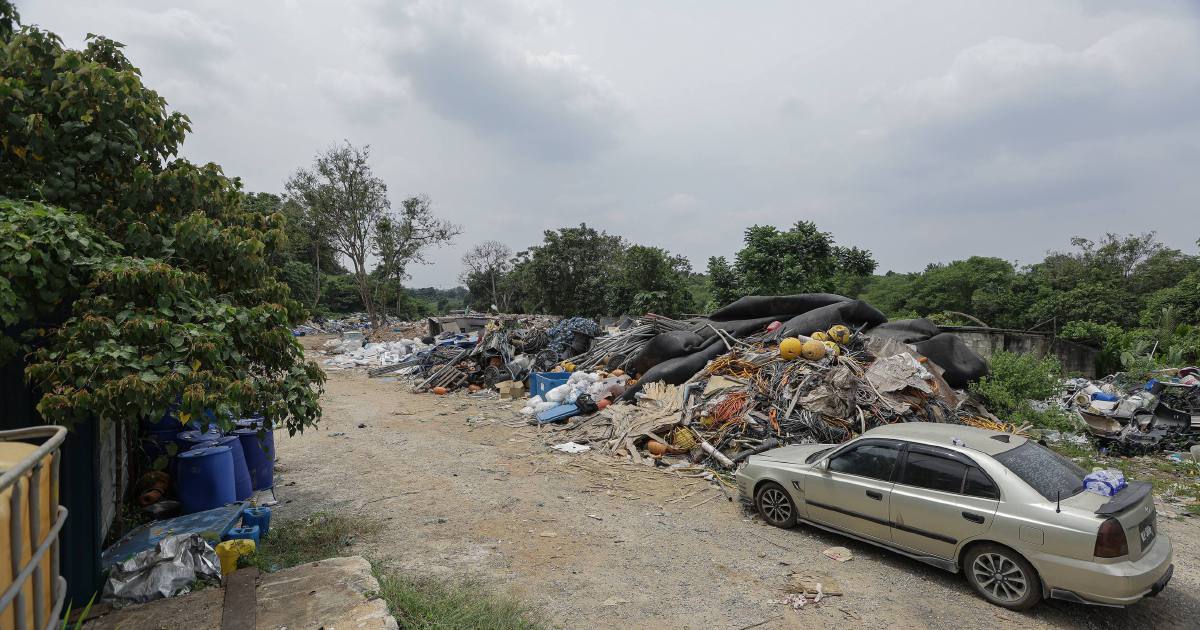
Authorities in Johor have announced plans to create a coordinated multi-agency task force aimed at thoroughly examining allegations that construction waste originating from Singapore has been deposited illegally at various locations within Pontian district. The move represents a significant escalation in the state's response to environmental concerns and signals growing determination to address cross-border waste management challenges affecting the southern Malaysian state.
The establishment of this investigative body comes amid mounting concerns about transboundary waste trafficking, a persistent issue affecting border communities throughout Southeast Asia. Pontian, which sits directly across from Singapore's southwestern region, has become a focal point for such environmental violations. The strategic location makes it particularly vulnerable to such activities, as the proximity to Singapore's densely populated and industrialised urban centre creates both opportunity and temptation for operators seeking cost-effective disposal solutions outside their own jurisdiction.
Construction and demolition waste represents one of the most voluminous waste streams in rapidly developing economies like Singapore. With stringent domestic environmental regulations and high disposal costs at licensed facilities, illicit dumping across borders becomes an economically attractive alternative for unscrupulous waste handlers. The practice undermines environmental standards in receiving areas and creates public health risks for local communities, making coordinated enforcement efforts essential.
The task force structure itself reflects contemporary approaches to environmental governance in Malaysia. By bringing together multiple government agencies—likely including environmental, local authority, customs, and police departments—Johor authorities aim to create overlapping investigative and enforcement capacity. This multi-disciplinary approach addresses the complexity of transboundary environmental crime, which typically requires expertise spanning regulatory compliance, forensic waste analysis, border control, and criminal investigation.
For Malaysian environmental advocates and border-state residents, this development carries significant symbolic importance beyond the immediate investigation. It demonstrates acknowledgment that Malaysia cannot passively accept becoming a repository for neighbouring countries' waste. Such assertiveness in environmental sovereignty has become increasingly important as regional development accelerates and waste volumes expand across Southeast Asia.
The investigation will require establishing the precise origin of waste materials found at dumping sites, tracing the logistics chains that transported them across the border, and identifying responsible parties. Technical analysis of waste composition can often reveal geographic and temporal sourcing information, while interviewing operators and reviewing transport records may expose the commercial networks facilitating such activities. Success will depend on both Malaysian investigative rigour and potentially on cooperation from Singapore authorities, should cross-border coordination become necessary.
The timing of this announcement also reflects broader regional trends in environmental enforcement. Several Southeast Asian nations have strengthened waste management controls and border surveillance in recent years, responding to public concern about pollution and resource depletion. Malaysia's move aligns with this pattern, though the specific focus on Singapore's construction waste suggests particular frustration with a persistent problem that standard bilateral discussions may not have adequately resolved.
For Pontian residents and businesses, the task force offers potential relief from environmental degradation affecting land values, groundwater quality, and public health. Illegal dumping sites accumulate hazardous materials that leach into soil and water systems, creating long-term contamination. Cleanup costs typically fall on local governments and affected communities rather than the original waste generators, creating profound inequity. Addressing the source of this waste flow through investigation and enforcement could prevent future accumulation.
The investigation's outcomes may also carry diplomatic implications. While Singapore and Malaysia maintain generally cooperative relations, environmental enforcement along their shared border occasionally reveals friction points. If the task force identifies a systematic pattern of waste trafficking rather than isolated incidents, it could warrant formal diplomatic engagement at higher levels. Singapore's commitment to environmental standards within its territory typically remains firm, but ensuring equivalent standards compliance in disposal practices abroad requires consistent attention and occasional pressure.
Beyond the immediate investigation, this task force signals potential policy developments in Johor. Authorities may implement enhanced border monitoring, strengthen penalties for waste trafficking, or negotiate new bilateral protocols with Singapore covering construction waste management. Regional precedents suggest that formal agreements establishing legitimate, safe cross-border waste disposal arrangements—with cost-sharing where appropriate—can reduce the attractiveness of illicit alternatives.
For Malaysian environmentalists and urban planners watching from other states, Johor's action provides a model for assertive border environmental governance. Pontian's situation is not unique; other Malaysian jurisdictions near Thailand, Singapore, and Brunei face similar pressures. If Johor's task force succeeds in documenting the problem and holding responsible parties accountable, it may encourage comparable efforts elsewhere.
The months ahead will determine whether this task force becomes an effective enforcement instrument or another administrative gesture that yields limited practical results. Success will require sustained political backing, adequate resource allocation, and genuine commitment to prosecution should criminal liability be established. Observers across Southeast Asia will be watching to see whether Malaysia's border regions can successfully push back against becoming convenient dumping grounds for wealthier neighbours' waste, or whether economic and logistical incentives will continue enabling such practices despite official oversight.

