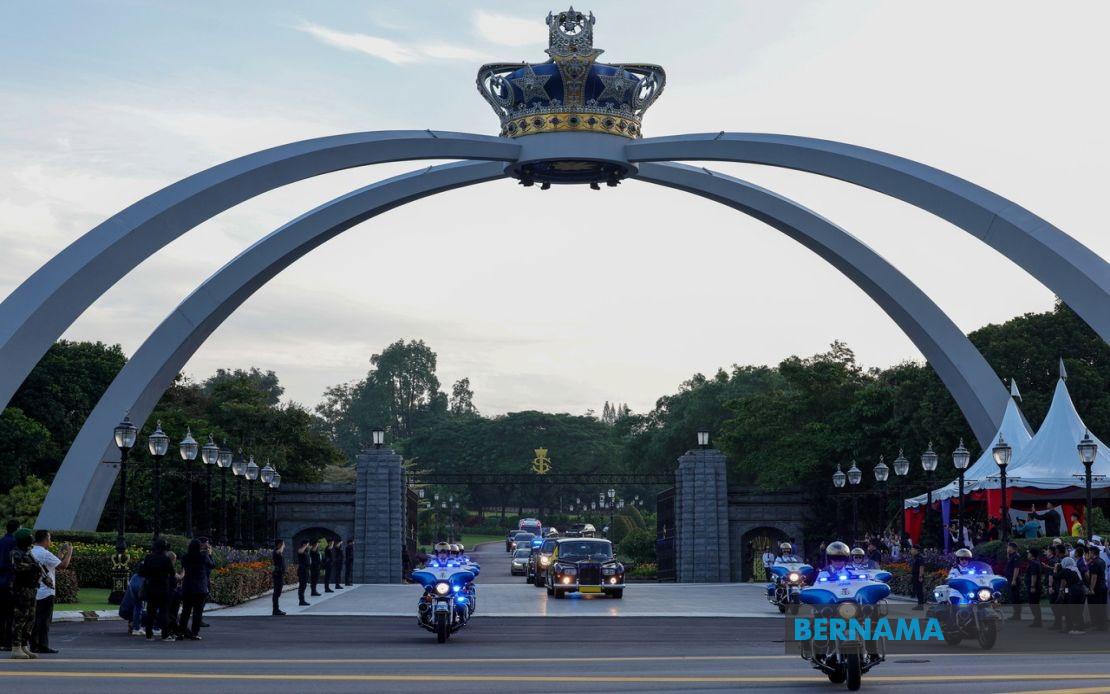
The ceremonial induction of Johor's new State Executive Council will now take place on Saturday instead of Friday at the royal palace in Johor Bahru, following a last-minute schedule change announced to media representatives on Friday morning. The event, originally planned to occur before Tunku Mahkota Ismail, the Regent of Johor, has been moved to the following day without any public clarification regarding the reasons behind the postponement.
The delayed ceremony will mark a formal moment in Johor's political calendar, bringing together senior state figures including Menteri Besar Datuk Onn Hafiz Ghazi, who assumed office just over a week ago. Also expected to attend are Johor Royal Council president Datuk Dr Rahim Ramli and State Secretary Datuk Mohammed Ridha Abd Kadir, underscoring the significance placed on this institutional transition within the state administration.
Onn Hafiz's swearing-in as Menteri Besar for his second consecutive term occurred on the preceding Sunday, following Barisan Nasional's commanding electoral performance in the recent Johor State Election. The ruling coalition's decisive victory, securing 48 of the 56 seats available in the Johor State Legislative Assembly, provided the political foundation for the administration's formal reconstitution through the Exco ceremony.
The postponement, while unexplained, is unlikely to significantly impact the administration's operations, as Onn Hafiz has already begun his term and the executive council members have presumably been identified and prepared for their roles. Nevertheless, the timing adjustment introduces a minor disruption to what would typically be a straightforward ceremonial process following an election victory.
For Malaysian political observers, such schedule changes at the state level offer limited insight into broader governance patterns but do reflect the complex coordination required when orchestrating high-level state functions involving royal participation. The involvement of Tunku Mahkota Ismail in presiding over the ceremony underscores the continued constitutional prominence of the Johor monarchy in state governance frameworks.
Johor's political landscape has stabilized following the 16th State Election, with Barisan Nasional's strong showing consolidating the coalition's grip on Southeast Asia's second-largest state by population. The comprehensive electoral mandate obtained in the Saturday polling exercise provides Onn Hafiz's administration with substantial parliamentary support for pursuing its legislative agenda over the coming term.
The composition of the new executive council will be revealed and formally established through Saturday's swearing-in, where the appointed members will pledge their commitment to their respective portfolios and to the state's development priorities. This formal occasion represents an opportunity for the administration to signal continuity, personnel changes, or strategic reorientations through the selection and arrangement of ministerial assignments.
From a Southeast Asian perspective, Johor's political developments carry significance given the state's economic importance as a manufacturing and trade hub with direct connections to Singapore and broader regional commerce networks. Political stability and effective governance in the state therefore extend beyond domestic Malaysian considerations to influence regional business confidence and cross-border cooperation frameworks.
The absence of any stated reason for the postponement leaves open various practical explanations, ranging from scheduling conflicts involving the Regent to logistical adjustments or unforeseen ceremonial requirements. In the context of Malaysian state politics, such delays are typically resolved through quiet administrative coordination rather than public disclosure of underlying factors.
The Saturday ceremony will conclude a transition period that began with Onn Hafiz's formal assumption of the Menteri Besar position, formally installing his chosen executive council members into their designated roles. This progression from election victory to government formation to ceremonial installation represents the standard constitutional sequence through which Malaysia's state administrations assume full operational authority.

