Johor is broadening its ambitious education transformation agenda by extending its Sekolah Rintis Bangsa Johor (SRBJ) pilot programme into the Islamic religious school system. The state government has greenlit construction of the first Sekolah Agama Rintis Bangsa Johor (SARBJ) at Kota Iskandar this year, signalling a comprehensive approach to systemic educational reform that encompasses both secular and religious educational pathways.
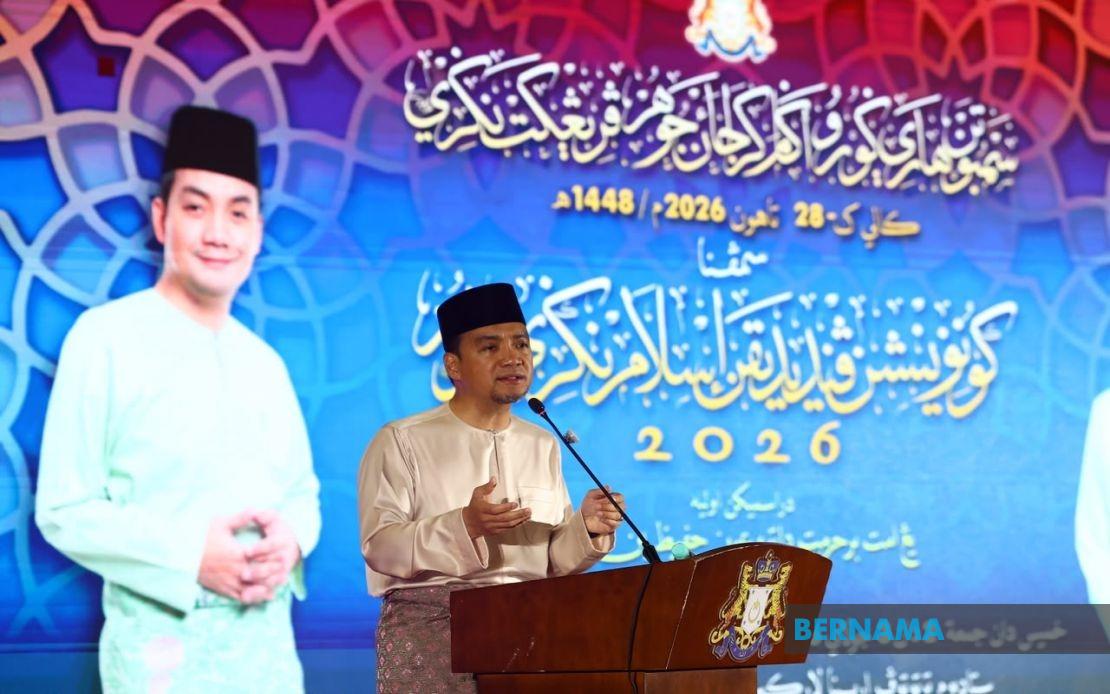
Menteri Besar Datuk Onn Hafiz Ghazi attributed the initiative to the Regent of Johor, Tunku Mahkota Ismail, framing it as a visionary blueprint for overhauling the state's entire education ecosystem. Speaking at the 28th Johor Government Religious Teachers' Day celebration held at Arena Larkin Indoor Stadium, Hafiz emphasised the state's commitment to embedding modern pedagogical methods across all school categories, from conventional primary institutions to specialist religious colleges.
The SRBJ programme has already established a foothold with four operational pilot schools across Johor. Two secondary institutions—Sekolah Menengah Kebangsaan Seri Kota Puteri 2 and Sekolah Menengah Kebangsaan Tasek Utara—operate in Pasir Gudang and Johor Bahru respectively, complemented by primary counterparts Sekolah Kebangsaan Seri Kota Puteri 4 and Sekolah Kebangsaan Tasek Utara. These schools serve as testbeds for pedagogical innovations that the state intends to scale across the education sector.
The expansion into religious education represents a significant shift in Malaysia's approach to modernising madrasah-style institutions. Islamic schools have historically operated with distinct curricula and teaching methodologies from mainstream government schools, but this initiative seeks to bridge that divide by introducing the same innovative frameworks that characterise the SRBJ schools. The introduction of technological infrastructure, enhanced language programmes, and leadership development opportunities within religious institutions could reshape how Islamic education competes with secular alternatives in attracting students and educators.
State Islamic Religious Affairs Committee chairman Mohd Fared Mohd Khalid announced the approval for the SARBJ construction, positioning it as a logical extension of proven success at conventional schools. This alignment between religious and secular educational reform is noteworthy for a state where Islam holds constitutional significance. By applying the same quality standards and modernisation principles to both sectors, Johor signals that religious learning need not lag behind in adopting contemporary teaching practices.
The SRBJ model itself rests on several foundational pillars designed to produce graduates equipped for a globalised economy. Digital learning infrastructure forms the backbone, ensuring students develop technological literacy from an early age. Multilingual competency—extending beyond Malay and English—prepares learners for cross-cultural communication and economic participation in Southeast Asia's increasingly interconnected markets. Character development components address concerns that academic achievement alone produces incomplete citizens, whilst teacher empowerment investments recognise that educational quality depends ultimately on instructor capability and motivation.
For Southeast Asian observers, Johor's methodical approach offers instructive lessons. The state's decision to pilot innovations in selected schools before broader rollout demonstrates policy discipline that contrasts with initiatives launched at scale without adequate testing. This measured expansion reduces implementation risks whilst generating evidence about what works within local contexts. The extension to religious schools particularly interests neighbouring countries where Islamic education represents a significant educational sector that governments often struggle to integrate with modernisation agendas.
The initiative's scope extends beyond existing school categories. Menteri Besar Hafiz announced plans to establish pilot kindergartens within the SRBJ framework, indicating ambitions to intervene at the earliest stages of childhood education. Early childhood intervention offers documented cognitive and social benefits that compound throughout students' educational journeys, suggesting the state government prioritises foundational development alongside higher-level institutional reform.
For Malaysia's education landscape, Johor's expansion into religious schools carries implications beyond state boundaries. Successful integration of Islamic institutions into modern educational frameworks could provide templates for other states wrestling with similar challenges. The programme demonstrates that religious identity and contemporary pedagogy need not exist in tension, a message with potential resonance across Malaysia where education debates often contain subtle sectarian dimensions.
The involvement of Tunku Mahkota Ismail in originating the SRBJ concept adds institutional weight to what might otherwise appear as routine administrative reform. Royal endorsement provides political protection for initiatives that might otherwise attract ideological criticism, enabling educators and administrators to focus on implementation rather than defending conceptual frameworks. This patronage model, whilst distinctively Malaysian, proves effective at insulating long-term programmes from electoral cycle disruptions.
Resource allocation deserves scrutiny as Johor proceeds with expansion. Pilot schools require sustained investment in infrastructure, teacher training, and curriculum development that state budgets can strain. The progression from four conventional schools to adding religious institutions whilst simultaneously piloting kindergarten innovations suggests Johor has secured financial commitments matching its ambitions, though sustainability across successive budget cycles remains to be demonstrated.
The religious teachers' forum where these announcements occurred underscores the programme's grounding in educator consultation. Islamic religious teachers constitute a distinct professional community with particular concerns about curriculum coherence, religious content integrity, and professional recognition. Their presence at announcement events and input into programme design likely strengthened implementation prospects by securing stakeholder buy-in before structural changes materialise.
As implementation proceeds, outcomes measurement will prove crucial. Whether SARBJ graduates demonstrate improved academic performance, enhanced digital competencies, and stronger moral grounding compared to conventional religious school cohorts will determine whether this expansion represents sustainable innovation or well-intentioned experimentation. For Malaysian policymakers observing Johor's trajectory, success metrics will ultimately shape whether this model warrants emulation elsewhere.

