The Johor state government has launched an ambitious RM50 million repainting initiative aimed at refreshing ageing residential complexes across the state, underscoring its commitment to improving housing conditions for lower-income communities. The programme, which targets 170 housing blocks encompassing 11,693 residential units distributed across 26 locations statewide, represents one of the larger infrastructure maintenance efforts undertaken in recent years and is expected to directly benefit approximately 46,772 residents.
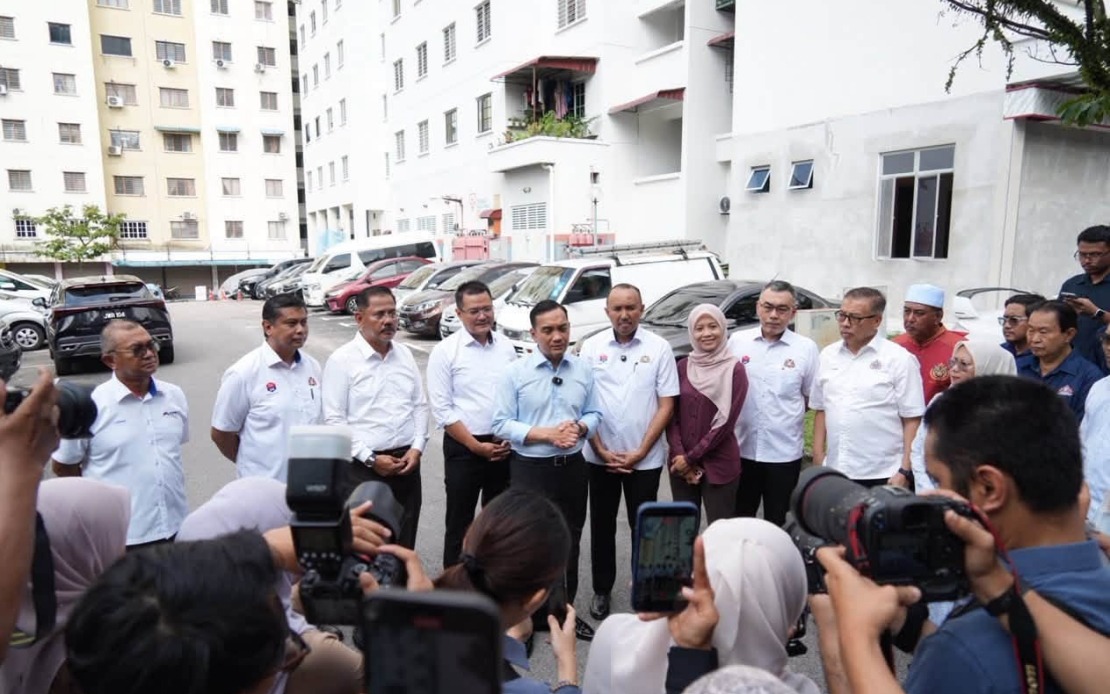
Datak Mohd Jafni Md Shukor, the State Housing and Local Government Committee chairman, emphasised during an inspection visit to Desa Muafakat Apartments that the project extends beyond mere cosmetic improvements. He articulated a broader vision for the initiative, framing the repainting works within the context of community wellbeing and social cohesion. According to Mohd Jafni, the cleaned and refreshed residential environments created by this programme would contribute to heightened resident comfort, foster stronger neighbourhood bonds, and demonstrate governmental commitment to prioritising the quality of life for those living in state-funded housing.
The implementation structure involves a coordinated approach among multiple state agencies, reflecting the complexity of delivering such a large-scale initiative. The Johor State Housing Development Corporation (PKPJ) and the Local Government Division operating under the Johor State Secretary's Office serve as primary coordinating bodies, whilst municipal authorities including the Johor Bahru City Council (MBJB), Iskandar Puteri City Council (MBIP), Pasir Gudang City Council (MBPG), and Kulai Municipal Council (MPKu) provide localised oversight and support. This multi-agency framework ensures that works are distributed equitably across municipal boundaries and tailored to specific community contexts.
The scale of the programme necessitates rigorous quality assurance protocols to prevent recurring deterioration or the emergence of ancillary problems within housing complexes. Mohd Jafni stressed that all contractors and implementing agencies have been instructed to maintain exacting standards throughout execution, cautioning against projects that present well initially but rapidly degrade or inadvertently create fresh complications for residents. Adherence to stipulated timelines, technical specifications, and established quality benchmarks has been positioned as non-negotiable, reflecting lessons learned from previous maintenance initiatives that fell short of expectations.
During the inspection visit, which was accompanied by Johor Menteri Besar Datuk Onn Hafiz Ghazi, officials assessed not only the repainting works themselves but also related infrastructure concerns within the housing complex. The Desa Muafakat site visit incorporated briefings on slope subsidence issues near parking facilities and deteriorating internal road networks, indicating that the broader maintenance agenda extends beyond cosmetic renewal to encompass structural and infrastructure vulnerabilities. This comprehensive approach suggests that the state government recognises interconnected maintenance challenges within ageing residential estates and is attempting to address multiple deficiencies concurrently.
The timing of this initiative arrives amid growing attention to housing adequacy and maintenance standards across Malaysia's lower-income residential zones. Many low-cost and medium-cost housing developments constructed in previous decades now require significant intervention to arrest deterioration and restore resident satisfaction. Johor's commitment of capital to this sector signals recognition that deferred maintenance within these communities undermines both physical infrastructure and resident morale, potentially contributing to broader social outcomes including reduced community engagement and increased migration to other states seeking superior living environments.
The programme encompasses not only repainting operations but also encompasses ancillary developments at participating sites. Officials visited construction progress on the Tabika KEMAS Bangsa Johor facility at Desa Muafakat, suggesting that housing estate renewal is being coupled with early childhood development infrastructure. This integrated approach to community facility enhancement aligns with state-level strategies to strengthen social services provision alongside physical infrastructure maintenance.
From a broader policy perspective, this initiative demonstrates how state governments are deploying maintenance expenditure as both a practical necessity and a mechanism for political engagement with lower-income constituencies. Housing satisfaction levels represent a measurable governance indicator, and improvements to resident environments contribute tangibly to perceived state performance. For Johor, a state encompassing diverse income brackets and experiencing significant urbanisation pressures, demonstrating tangible commitment to public housing standards helps sustain political legitimacy amongst lower-income voters who form substantial portions of municipal electorates.
The scale of resource allocation—RM50 million across a single maintenance programme—reflects substantial budgetary commitment that could alternative be directed toward new housing development or other state priorities. This allocation decision implicitly acknowledges that the existing housing stock requires significant ongoing investment to maintain habitability standards and that allowing depreciation to advance further would incur greater future costs and administrative complications. Such forward-thinking on maintenance budgeting remains inconsistently practiced across Malaysian state administrations.
Regional comparisons suggest that systematic housing maintenance programmes remain less common than they should be given the scale of low-cost and medium-cost housing stock across Malaysia. Johor's initiative potentially sets a benchmark for neighbouring states facing similar ageing housing inventories and may inspire emulation if outcome metrics demonstrate substantial resident satisfaction improvements and maintained durability of repainting works. The success or shortcomings of this programme will likely inform future state-level housing maintenance policy across the region.
Implementation timelines for projects of this magnitude typically extend across multiple fiscal years, requiring sustained political will and budgetary discipline to prevent mid-stream reductions or scope narrowing. The explicit quality standards emphasised by officials suggest awareness of previous programme failures where cost pressures or scheduling challenges compromised outcomes. How effectively these safeguards prevent such slippage will ultimately determine whether this initiative achieves its stated objectives of enhancing resident wellbeing and demonstrating reliable governance responsiveness to community housing concerns.

