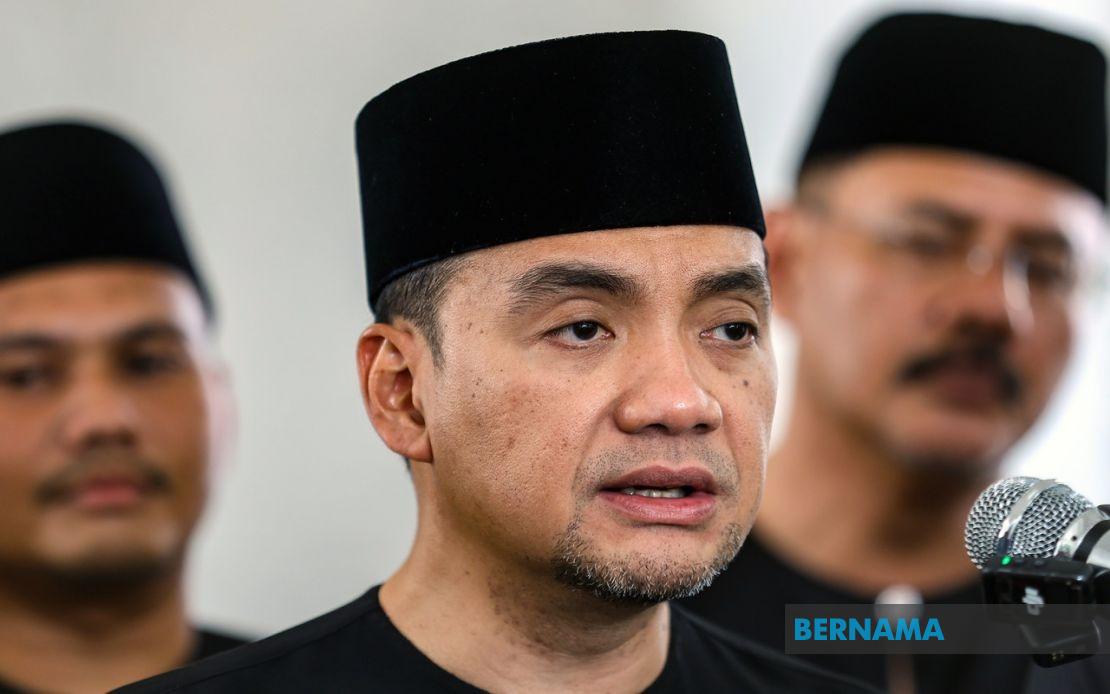
The Johor state government has unveiled an initiative designed to revitalise mosque communities and deepen the practice of congregational prayers during evening hours. The Semarak Maghrib and Isyak programme, announced by Menteri Besar Datuk Onn Hafiz Ghazi, represents a strategic expansion of religious engagement efforts across the state's mosques, building upon the government's earlier campaigns focused on dawn prayer attendance.
The timing of this initiative reflects a deliberate government strategy to extend religious participation beyond the traditionally well-attended Subuh (dawn) prayers into the evening period. By targeting Maghrib and Isyak prayers—the sunset and late evening congregational prayers respectively—the state authorities aim to create more opportunities for Muslims to gather at mosques throughout their daily routines. This approach acknowledges that evening prayers can be strategically leveraged to foster greater mosque utilisation and community engagement across all demographic segments.
Onn Hafiz articulated the underlying philosophy driving this programme during a recent address, emphasising that mosques must evolve beyond their primary worship function to become vibrant centres of knowledge, spiritual development, and social cohesion. The initiative directly responds to concerns about declining congregational attendance in some Malaysian communities, where modern lifestyles and work schedules have created obstacles to regular mosque participation. By establishing structured activities alongside prayer times, the Johor government seeks to restore mosques as essential hubs of Islamic community life.
The programme also fulfils a specific commitment from the Barisan Nasional manifesto pledged during the 16th Johor state election, demonstrating the administration's intention to translate electoral promises into concrete policy actions. This connection between campaign pledges and implementation efforts indicates that religious community engagement remains a priority within the broader governance framework. The government views the programme as an expression of its mandate to serve the values and aspirations of Johor's Muslim population.
The inaugural Semarak Maghrib and Isyak event took place at Masjid Jamek As-Syakirin in Bukit Saujana, establishing a template for replication across other state mosques. The inaugural gathering incorporated structured religious content alongside communal prayer, including a scholarly session addressing the foundations of Islamic practice. Johor Bahru district kadi Mohd Zaini Mohd Salleh delivered a focused discussion on the 40 Hadith centred on the concept of intention, known in Islamic jurisprudence as the determining factor in human actions. Complementing this educational component, participants engaged in the recitation of Surah Al-Mulk, integrating Quranic engagement into the programme's framework.
The multifaceted structure of these gatherings—combining obligatory prayers, scholarly instruction, and Quranic recitation—reflects a sophisticated understanding of community engagement dynamics. Rather than treating congregational prayer as an isolated ritual, the Johor government positions these sessions as comprehensive religious experiences that address intellectual curiosity, spiritual development, and communal bonding simultaneously. This holistic approach increases the appeal of mosque participation beyond purely devotional motivations.
The initiative carries implications for other Malaysian states, many of which grapple with similar challenges regarding mosque attendance and religious community vitality. The Johor model demonstrates how state governments can actively shape religious practice through targeted programming, institutional investment, and high-level political endorsement. Should the Semarak Maghrib and Isyak programme achieve measurable success in boosting mosque attendance and engagement, neighbouring states may adopt similar frameworks, potentially creating a regional template for government-supported religious community development.
Onn Hafiz's public advocacy for the programme underscores the political significance attached to religious community engagement in Malaysian state governance. By personally championing mosque revitalisation efforts, the Menteri Besar signals that such initiatives constitute a priority rather than peripheral programming. This top-level attention typically translates into resource allocation, institutional coordination, and sustained implementation momentum that might otherwise prove elusive for community-focused religious programmes.
The broader context for this initiative includes evolving patterns of religious practice among Malaysian Muslims, particularly in urban centres like Johor Bahru where demographic shifts and economic transformation have altered traditional community structures. By deliberately investing in mosque-centred activities, the state government attempts to preserve continuity with established Islamic traditions while adapting to contemporary social realities. The programme acknowledges that religious participation requires deliberate institutional support and community mobilisation rather than assuming automatic adherence to traditional practices.
The emphasis on syiar Islam—the propagation and practising of Islamic values within public and community spaces—indicates that the Johor government conceptualises religious vitality as interconnected with state development objectives. From this perspective, strengthened congregational practices and enhanced mosque functionality contribute to broader social cohesion, ethical foundation-building, and cultural resilience. The programme thus occupies a position within larger state strategies for community development that transcend narrowly religious dimensions.
Looking forward, the success of the Semarak Maghrib and Isyak programme will likely depend on sustained institutional support, active mosque leadership coordination, and community response across different demographic groups. The initial gathering at Masjid Jamek As-Syakirin provides a foundation, but widespread adoption across Johor's mosaic of communities will require ongoing engagement and demonstrated value. How effectively the programme addresses potential barriers to evening mosque attendance—including work schedules, family commitments, and accessibility concerns—will ultimately determine its impact on congregational prayer patterns and mosque vitality across the state.

