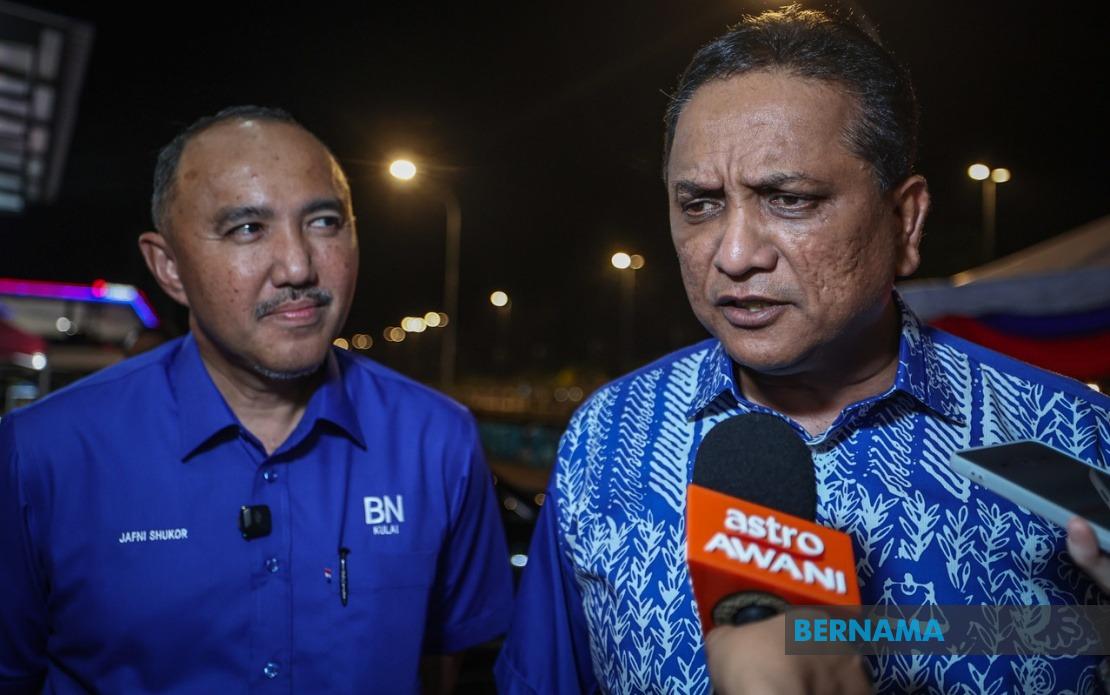
Tensions within Johor's political establishment have surfaced once again, with senior UMNO figures moving swiftly to rebut suggestions that the Regent wields excessive influence over state governance. Datuk Seri Reezal Merican Naina Merican, speaking in Johor Bahru on June 25, dismissed characterizations of the Tunku Mahkota Ismail as orchestrating government decisions as fundamentally misguided and divorced from reality. His intervention underscores the delicate balance between royal institutions and elected leadership in Malaysia's most developed state.
The controversy centres on the role of Tunku Mahkota Ismail in state affairs and how his public pronouncements on developmental issues are being interpreted by various political actors. Reezal Merican contended that the Regent's willingness to speak candidly on matters affecting Johor's future ought not be misconstrued as overreach, but rather recognized as a legitimate expression of his constitutional position and duty to the people. He framed such intervention as entirely consistent with the Regent's mandate to serve the interests of Johorians and maintain the welfare of the state.
According to Reezal Merican's interpretation of constitutional arrangements, the Regent possesses both the right and the obligation to issue directives and provide guidance within the framework of his responsibilities. He emphasized that such actions represent a form of institutional checks and balances, where the Regent offers oversight alongside the Menteri Besar and State Secretary. This perspective reflects a traditional understanding of how royal institutions function within state governance structures across Malaysia, though contemporary political dynamics have increasingly strained these conventional boundaries.
The UMNO Supreme Council member was particularly emphatic in denying that party grassroots share concerns about royal overreach. He asserted that throughout his involvement with UMNO's upper echelons, no credible suggestion has emerged that Johor's UMNO operates under palace direction or control. This statement carries weight given his position within the party hierarchy, though it simultaneously highlights the political sensitivity surrounding the issue. The timing of his comments, made during a meeting with Barisan Nasional Kulai leadership, suggests party structures are mobilizing to counter narratives that might complicate the impending state election.
The backdrop to these remarks involves Datuk Dr Mohd Puad Zarkashi, a former Speaker of the Johor State Legislative Assembly, whose recent departure from UMNO accompanied accusations that Menteri Besar Datuk Onn Hafiz Ghazi has become subordinate to palace interests. Mohd Puad's exit represents a significant defection, particularly given his previous seniority within state institutions, lending credibility to dissident voices questioning the current power structure. His decision to voice these concerns publicly has proven uncomfortable for party leadership, forcing them into defensive postures.
Reezal Merican directly challenged Mohd Puad's motivations, suggesting the former Speaker's choice to implicate the royal institution in state politics appears strategically timed and potentially self-serving. Particularly, he questioned why Mohd Puad would seek to entangle the palace in partisan debates precisely as Johor approaches a crucial electoral moment. This line of argument attempts to reframe the defection as opportunistic rather than principled, a common defensive strategy when party figures publicly distance themselves. The insinuation of political calculation rather than genuine concern aims to delegitimize alternative viewpoints within UMNO's Johor machinery.
The constitutional relationship between state monarchs and elected governments in Malaysia remains an evolving question with few settled answers. While royals exercise ceremonial functions and hold certain reserve powers, the extent to which they should actively shape governance priorities remains contested. In Johor's context, where the Tunku Mahkota Ismail has cultivated a public profile emphasizing developmental vision and royal duty, the boundary between appropriate guidance and governmental interference has become increasingly blurred. Reezal Merican's intervention suggests UMNO wishes to normalize and legitimize this level of royal engagement.
The controversy arrives at a consequential juncture for Johor politics. With the Election Commission designating June 27 for nomination day and July 11 for polling day, the state enters a compressed campaign period where internal party discord could prove destabilizing. Accusations that the government functions as a palace instrument threaten to undermine BN's narrative of capable, autonomous administration. For UMNO specifically, suggestions of royal puppet-mastering challenge the party's claims to genuine leadership and decision-making authority, essential components of its electoral appeal to voters.
Mohd Puad's departure and subsequent public criticism represent more than an individual defection—they signal potential fractures in Johor's political settlement. If other party members harbour similar concerns about power dynamics, the question of royal influence could resurface repeatedly, eroding public confidence in state governance. Reezal Merican's swift response reflects awareness that such narratives, if left unchallenged, could gain traction particularly among traditional UMNO constituencies accustomed to viewing parties as independent agents rather than appendages of royal prerogative.
The substantive question underlying this debate involves what role appointed institutions should play in operational government. If the Regent issues directives that contradict or supersede elected officials' preferences, constitutionalism is arguably compromised. Conversely, if the Regent remains entirely silent on matters affecting state development, questions arise about why the position carries formal responsibilities. Reezal Merican's framing presents royal guidance as desirable institutional check, but Mohd Puad's departure suggests not all UMNO members find this balance acceptable.
Looking toward the election itself, the palace controversy introduces an unpredictable element that neither BN nor UMNO can entirely control. While Reezal Merican's dismissal of the "palace puppet" characterization may satisfy party loyalists, voters assessing Johor's governance capacity might find themselves uncertain about where actual decision-making authority resides. This ambiguity, ironically created by the very institutional arrangements meant to strengthen state governance, could become a factor in how Johoreans evaluate their electoral choices.

