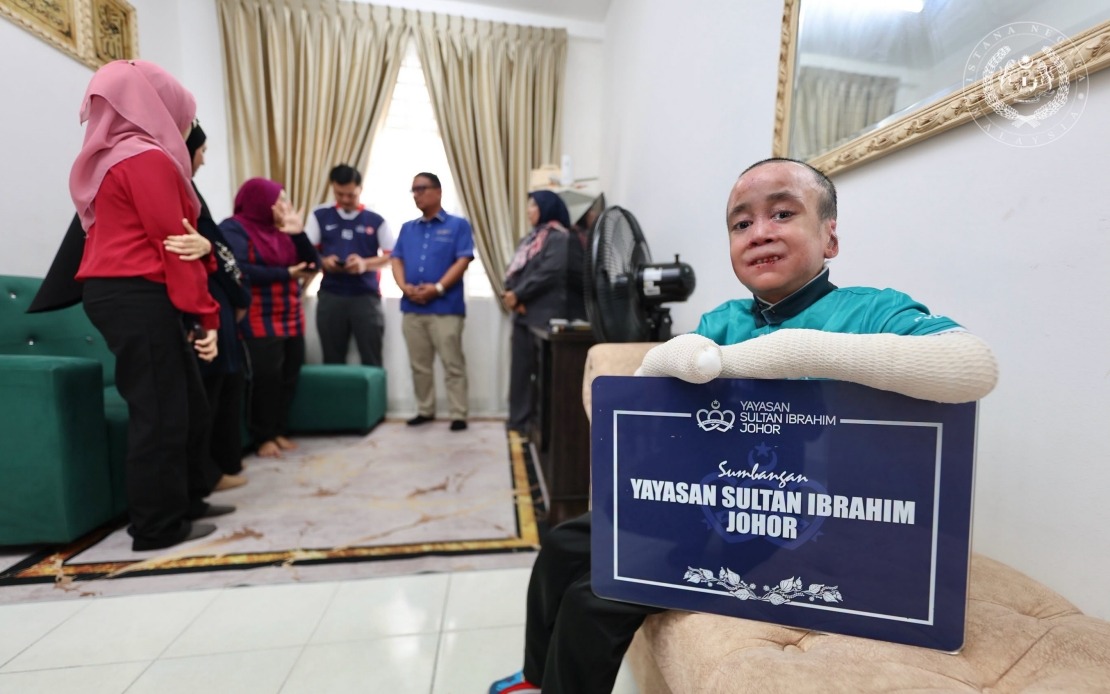
The Yayasan Sultan Ibrahim Johor (YSIJ) has stepped in to provide financial support for Muhammad Hazreel Mikhail Hizar, a 15-year-old resident of Johor Bahru grappling with epidermolysis bullosa, a debilitating chronic skin condition he has endured since birth. The assistance was formally presented on August 18 at the home of Hazreel's mother, Noor Halimaton Hashim, located in the Sungai Tiram People's Housing Project, through YSIJ's Ziarah Kasih welfare programme, which aims to identify and support vulnerable families across the state.
Epidermolysis bullosa is a rare genetic disorder characterised by extreme fragility of the skin and mucous membranes, causing blistering and erosions even from minor trauma or friction. For Hazreel, this means his daily existence demands meticulous medical attention and environmental management far beyond what most adolescents require. The condition necessitates constant wound cleaning protocols to stave off potentially life-threatening infections, as the damaged skin barrier leaves him acutely vulnerable to bacterial colonisation. Beyond hygiene measures, his living environment must maintain cool temperatures with continuous air-conditioning to prevent perspiration and friction that could trigger painful blistering episodes.
The burden of caring for a teenager with such complex medical needs falls squarely on Noor Halimaton, who manages the household as a single mother supporting three children. Her ability to pursue meaningful full-time employment remains severely constrained because Hazreel's condition demands constant supervision and hands-on care throughout the day and night. This creates a precarious financial situation where medical expenses, utility costs for maintaining proper environmental conditions, and general living expenses strain limited household resources. Many families in similar circumstances across Malaysia face comparable challenges, often falling through gaps in social safety nets designed for more visible or immediately life-threatening conditions.
The intervention by YSIJ represents recognition of how chronic conditions, though not typically fatal in the short term, can profoundly destabilise family finances and wellbeing. Epidermolysis bullosa, while rare, affects hundreds of Malaysian families who struggle with inadequate public awareness and limited specialised medical infrastructure outside major urban centres. The psychological toll on caregivers, particularly single parents, compounds the physical demands. Noor Halimaton's gratitude in statements to the Royal Press Office underscores how targeted assistance can provide meaningful relief when circumstances align.
The Ziarah Kasih programme represents a proactive approach to welfare delivery that extends beyond formal applications and bureaucratic processes. By identifying families in need and conducting home visits, the foundation gains firsthand understanding of actual living conditions and specific requirements. This ground-level engagement model proves particularly valuable for households managing chronic illnesses, where standardised assistance categories may not adequately capture the true cost of care. For Hazreel's family, the timing of this intervention offers tangible relief during what are undoubtedly challenging months.
Malaysian society increasingly recognises that supporting individuals with rare genetic disorders requires coordinated effort spanning medical services, social assistance, and community advocacy. Public awareness of conditions like epidermolysis bullosa remains limited, meaning many affected families endure years of struggle before connecting with available resources. Educational initiatives highlighting these conditions, coupled with welfare programmes willing to extend support, help shift outcomes for vulnerable households. The YSIJ assistance demonstrates how royal patronage of charitable work can translate policy intent into concrete support reaching those who need it most.
For Noor Halimaton specifically, the financial aid addresses immediate pressures while she continues navigating the complex requirements of Hazreel's care. Single-parent households already face economic disadvantages, and the addition of a child with serious medical needs exponentially increases vulnerability. Many such families operate on razor-thin margins, where unexpected medical expenses or equipment needs can precipitate crises. The assistance from YSIJ helps stabilise this household's precarious position and provides breathing room for the mother to focus on her son's wellbeing without the paralysing anxiety that financial desperation brings.
The case of Muhammad Hazreel Mikhail Hizar also highlights the importance of charitable foundations focusing on lesser-known conditions affecting smaller population groups. While high-profile medical causes attract donor attention, rare genetic disorders often lack the visibility and funding necessary to support affected families adequately. Organisations like YSIJ that cast wider nets in identifying need, rather than waiting for applications, uncover situations that might otherwise remain invisible to welfare systems. This proactive stance aligns with broader social responsibility trends encouraging institutions to actively seek out vulnerable populations rather than expecting families to navigate bureaucratic pathways.
Looking forward, Hazreel's situation exemplifies why sustained, multi-year support matters more than one-time interventions for families managing chronic conditions. The medical and caregiving demands will not diminish as he enters adulthood, potentially intensifying as independence becomes more complex for someone with his medical profile. Foundations and government agencies must consider how to transition young people with chronic conditions into adult support systems that recognise both their medical needs and their aspirations for fuller participation in community life. Investment in such families during adolescent years yields long-term benefits for individuals and societies alike.

