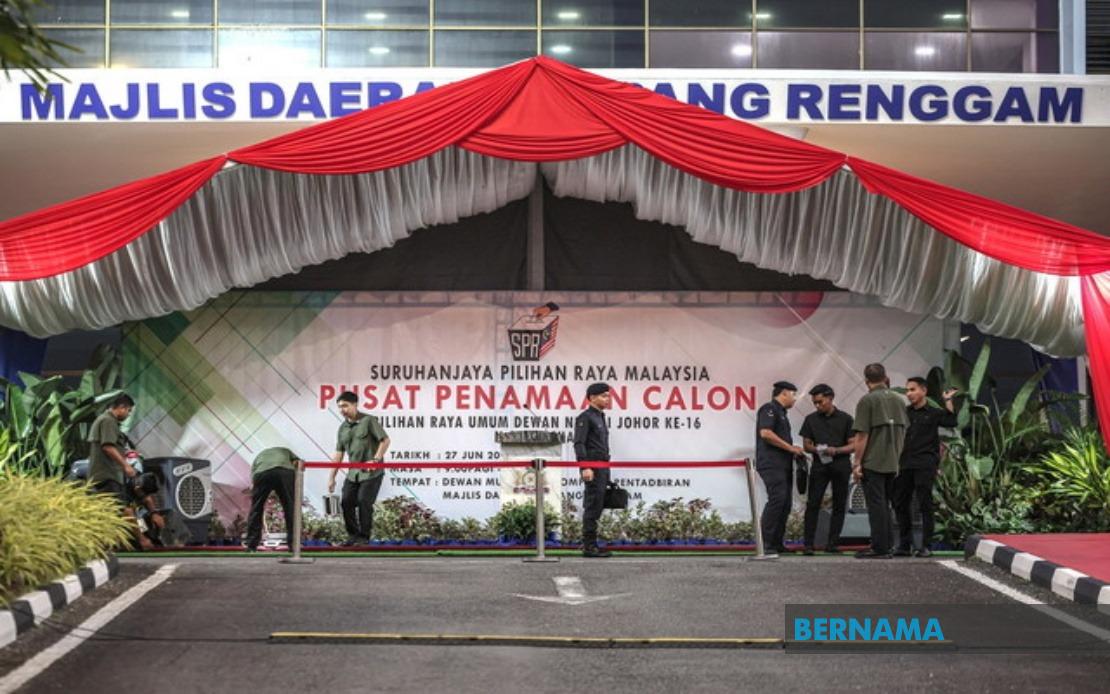
The 16th Johor State Election formally commenced its nomination phase on June 27 when all 56 designated centres across the state unlocked their doors at 9am sharp, setting in motion a carefully orchestrated electoral process overseen by the Election Commission. This synchronized opening across multiple centres underscored the logistical complexity of managing candidacies across Johor's diverse constituencies, from urban Johor Bahru to rural outposts like Mersing and Segamat. The timing represented a crucial juncture in the electoral calendar, transforming months of political manoeuvring and party preparations into formal candidature.
The nomination submission window operated under strict temporal constraints that reflected the Election Commission's standardized procedures for state-level contests. Candidates, their proposers, and seconders had precisely sixty minutes—from 9am until 10am—to deliver their nomination documents to the returning officer stationed at each centre. This compressed timeframe, while seemingly brief, has become standard practice in Malaysian electoral administration and serves multiple purposes: it creates a definitive cut-off point preventing late submissions, ensures all nominations can be verified within a predictable schedule, and demonstrates administrative efficiency to the watching public. The returning officers, appointed by the Election Commission specifically for this election, bore responsibility for verifying that all documentation met prescribed standards before the official candidate list would be announced following the completion of verification procedures.
Flexibility in the submission process accommodated various scenarios that might arise during the hectic morning of nominations. The regulations permitted submission by the candidate alone, by the candidate alongside their proposer and seconder, or by any two of the three parties, or even by a single representative carrying the necessary documentation. This tiered approach recognized the practical realities of political campaigns, where coordinating multiple individuals in a single location within a narrow timeframe could prove difficult, particularly for independent candidates or smaller political movements lacking extensive organizational infrastructure. Such provisions, while administratively straightforward, have proven essential to ensuring that aspiring candidates are not disenfranchised by procedural technicalities.
The electoral momentum immediately following nominations would intensify dramatically once the verification process concluded. The Election Commission had mandated a fourteen-day campaign period stretching from the candidate verification announcement through 11:59pm on July 10, providing political parties and independent candidates with a substantial window to canvas voters, hold rallies, disseminate manifestos, and mobilize their supporters. This extended campaign duration distinguished state elections from federal parliamentary contests and reflected the Election Commission's assessment that voters required adequate time to absorb competing political messages before making their choices. The campaign period would witness the characteristic intensity of Malaysian electoral politics, with competing visions for Johor's future contested across town halls, social media platforms, and informal community gatherings.
Political enthusiasm was already evident hours before the official opening, as party supporters began assembling near nomination centres as early as 6:30am. The gathering of party faithful—visible displays of organizational capacity and grassroots engagement—served multiple purposes within electoral politics. For established parties, these demonstrations projected unity and enthusiasm to the media and potential voters. For newer or smaller political movements, mobilizing supporters for nomination day represented a critical opportunity to signal viability and organizational competence. The Malaysian electoral environment, particularly in Johor with its competitive multi-party dynamics, meant that such visual demonstrations of support frequently attracted media coverage that extended well beyond the immediate nomination process, shaping early narratives about which candidates and parties appeared to possess momentum.
Weather considerations added a practical dimension to the day's proceedings that nonetheless merited official attention from the Malaysian Meteorological Department. Forecasts predicted rain across several key population centres including Johor Bahru, Muar, Batu Pahat, Kota Tinggi, Pontian, Tangkak and Kulai during the morning hours, while other districts such as Segamat, Kluang and Mersing were expected to remain clear. The afternoon outlook proved potentially more volatile, with thunderstorms anticipated across most districts including the major urban concentrations of Johor Bahru, Segamat, Kluang and Kota Tinggi. While such meteorological forecasts might appear peripheral to the formal electoral process, they possessed genuine significance for the logistics of nomination day. Rain could affect crowd management, traffic flow around nomination centres, and the general conduct of supporters gathering to demonstrate support for their candidates. The Election Commission's coordination with MetMalaysia represented the interconnected nature of modern electoral administration, where even atmospheric conditions received bureaucratic attention.
Security arrangements for nomination day reflected the Election Commission and law enforcement's commitment to preventing disruptions during this sensitive phase of the electoral cycle. Police personnel, augmented by members of the People's Volunteer Corps (RELA), deployed around all nomination centres to maintain order, manage traffic flows, and prevent the untoward incidents that could mar the electoral process. This security presence served both practical and symbolic functions—practically ensuring the smooth flow of candidates and documentation through centres, while symbolically reinforcing the state's commitment to orderly electoral procedures. The visible security presence also communicated to potential disruptors that the state would tolerate no interference with this foundational democratic process.
The electorate for this contest encompassed a substantial cross-section of Johor's population, with Election Commission statistics indicating a total eligible voter registration of 2,727,926 individuals. This expansive pool comprised 2,703,175 ordinary voters from the general civilian population, supplemented by 12,041 military personnel and their spouses, and 12,710 police personnel and their spouses. These latter two categories represented a notably smaller but constitutionally recognized segment of the electorate, reflecting Malaysia's integration of uniformed services into the electoral process despite their non-civilian status. The sheer magnitude of registered voters underscored why the Election Commission required such elaborate logistical arrangements, with nominations processed across 56 separate centres to prevent bottlenecks and ensure efficient processing across Johor's geographically dispersed constituencies.
The electoral calendar for this state contest had been meticulously scheduled by the Election Commission to balance competing considerations of voter convenience, administrative capacity, and campaign dynamics. Early voting was scheduled for July 7, accommodating those unable to vote on the main polling day and providing a crucial safety valve for the electoral process by distributing the voting burden across two separate days. The primary polling day was set for July 11, approximately two weeks after nominations, providing the mandated fourteen-day campaign period while ensuring that campaign momentum would not excessively cool through an unnecessarily protracted contest. This compression of the entire electoral cycle—from nominations on June 27 through polling on July 11—reflected modern Malaysian electoral practice that prioritizes efficiency and voter engagement over extended campaigns that might test public patience. For Johor specifically, a state that had experienced significant political realignment in recent years, this relatively rapid transition from nominations to polls meant that whichever parties or candidates secured nominations would immediately confront the intense pressure of campaigning for voter support in an increasingly competitive political landscape.

