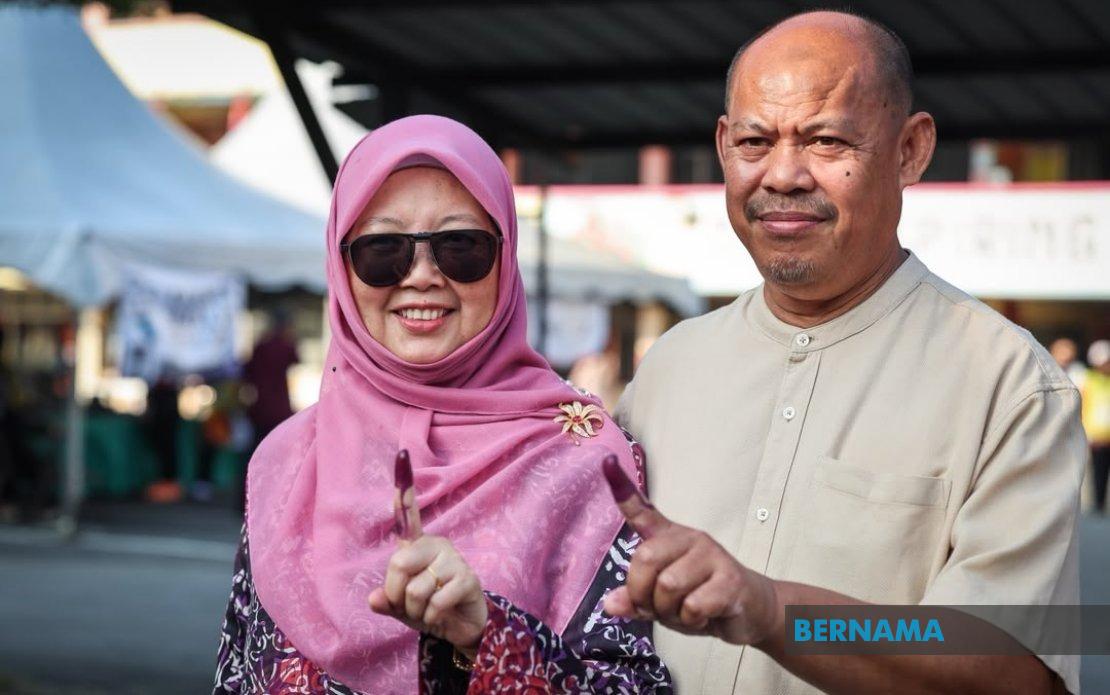
The 16th Johor state election witnessed prominent political personalities heading to polling stations during the opening hours, setting the tone for voter engagement on July 11. Among the first to exercise their democratic duty were high-profile leaders who sought to demonstrate commitment to the electoral process whilst simultaneously encouraging their supporters to follow suit during the early voting window.
Johor PKR's top representative, Datuk Seri Dr Zaliha Mustafa, fulfilled her civic obligation at 9 am sharp at Sekolah Menengah Kebangsaan Bandar Baru Uda in the state capital. The accomplished politician, who previously held a ministerial portfolio in the Prime Minister's Department overseeing Federal Territories, cast her ballot in the Larkin constituency alongside her spouse, Dr Ahmad Adzlan Musa. Her strategic appearance at the polling station during the earliest moments of voting served as a visible endorsement of electoral participation to the broader public.
Dr Zaliha's remarks to the assembled press highlighted weather considerations that would shape voting patterns throughout the day. She appealed directly to Johor residents to arrive at their designated polling stations in the morning hours, reasoning that precipitation forecasted from midday onwards could discourage turnout during the afternoon period. This practical concern reflected the reality that weather conditions significantly influence voter behaviour in Malaysia's tropical climate, where heavy afternoon downpours are commonplace during certain seasons.
The early arrival strategy was not limited to PKR representatives. Johor DAP's chairperson, Teo Nie Ching, similarly positioned herself among the day's first voters, casting her ballot approximately thirty minutes after Dr Zaliha at Sekolah Jenis Kebangsaan Cina Kulai Besar in the Kulai area. The staggered but collectively early appearances by leaders from different opposition coalitions suggested a coordinated messaging effort to mobilise grassroots support through visible leadership participation.
The pattern of senior politicians voting early carries multiple strategic implications. Firstly, such actions generate positive media coverage and photographic evidence of civic engagement that can be leveraged across social media and traditional news channels. Secondly, the symbolic act reinforces party discipline and demonstrates that leadership expects and models the behaviour demanded of party members and supporters. Thirdly, by establishing presence at polling stations during peak hours, these figures positioned themselves to interact with voters, gather intelligence about turnout rates, and reinforce get-out-the-vote messaging.
For Malaysian electoral observers, the emphasis on early voting reflects lessons learned from previous state and national elections where weather disruptions, voter fatigue toward day's end, and logistical challenges compressed turnout into specific windows. Political strategists have increasingly recognised that morning voting periods offer advantages in terms of voter availability and reduced external impediments to participation. The explicit communication of this timing advantage by party leadership represented a deliberate effort to overcome structural barriers to voting.
The Johor election itself held significance beyond the state level, as outcomes typically indicated broader trends affecting federal political dynamics. Johor's electoral composition, spanning diverse urban and rural constituencies with varied demographic profiles, made it a bellwether for understanding voter sentiment across different regional strongholds. The presence of multiple political parties competing for influence meant that turnout patterns carried implications for seat distribution and coalition-building possibilities in the state assembly.
The coordination of early voting appearances by opposition-aligned leaders underscored the competitive intensity of this electoral contest. By positioning their top figures at polling stations during opening hours, PKR and DAP sought to establish momentum and demonstrate organisational capacity. Such visibility also served to energise grassroots party activists working on polling day, who draw encouragement from observing prominent leaders fulfilling their own voting obligations before embarking on intensive ground operations.
Weather considerations mentioned by Dr Zaliha extended beyond mere convenience; they represented genuine logistical challenges that election commissions and political parties must anticipate. Malaysia's monsoon patterns and afternoon thunderstorms can reduce turnout by fifteen to twenty percent in affected areas, a significant margin in closely contested races. Political strategists therefore calibrate their get-out-the-vote campaigns around these meteorological realities, and leadership appeals for early participation become integral components of election day strategy.
The broader context of Malaysian electoral politics reveals consistent patterns wherein early voting by senior leaders generates cascading effects throughout party hierarchies and supporter networks. When chairpersons and prominent figures appear at polling stations within the first hour, local party machinery interprets this as a signal to intensify efforts. The visibility of leadership presence boosts morale among volunteer poll watchers and party canvassers who operate throughout the day.
From a Malaysian civic participation perspective, the Johor election's early voting emphasis highlighted ongoing efforts to strengthen democratic engagement despite competing claims on voter attention. In an environment where political fatigue and voter apathy pose persistent challenges, the strategic positioning of party leaders at polling stations represented a calculated response to documented patterns of declining participation rates across multiple electoral cycles. By making voting convenient through early messaging and modelling the desired behaviour, political parties attempted to counteract structural impediments to turnout.

