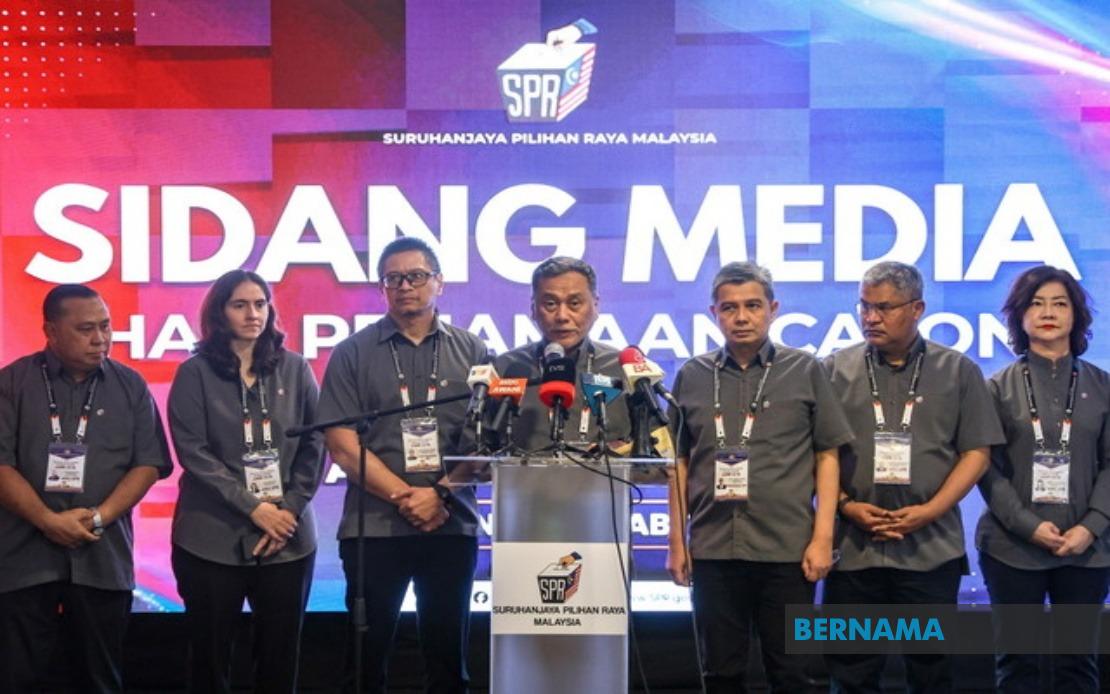
The electoral landscape for Johor's 16th state election has taken final shape, with the Election Commission confirming that exactly 172 candidates from across the political spectrum will vie for the 56 available seats. The announcement came after the completion of nomination proceedings at all 56 centres throughout the state, marking a critical juncture in the campaign process. EC chairman Datuk Seri Ramlan Harun validated every submission received before the 10 am closure, with no candidates facing disqualification during the vetting stage.
The gender composition of the candidate pool reflects ongoing shifts in Malaysia's political representation. Women candidates account for 34 of the total slate, translating to roughly 20 per cent of all contestants, while 138 are male. This ratio underscores the persistent challenge of achieving gender parity in state-level politics, a conversation gaining momentum across Southeast Asian democracies as parties recalibrate their candidate selection strategies.
Barisan Nasional and Pakatan Harapan have fielded identical numbers of nominees, each putting forward 56 candidates—effectively contesting every available seat. This blanket coverage signals both coalitions' ambitions to maximise their parliamentary strength and suggests intense competition across virtually all constituencies. Such comprehensive fielding demonstrates the financial and organisational capacity these two blocs possess, contrasting sharply with smaller parties that must prioritise limited resources.
Perikatan Nasional, the third major coalition, has nominated 33 candidates, covering approximately 59 per cent of available seats. This selective approach allows PN to concentrate campaigning efforts where party leaders perceive stronger prospects, a tactical calculation reflecting the coalition's more constrained resource allocation compared to BN and PH. The strategy prioritises battleground constituencies where the coalition believes it can mount competitive challenges.
Smaller parties and newer entrants round out the contest. Parti Bersama Malaysia has fielded 15 candidates, positioning itself as a serious secondary player, while MUDA—Malaysia's youth-focused party—presents four nominees. Single-candidate entries from Parti Orang Asli Malaysia and Parti Sosialis Malaysia indicate broader political fragmentation, though their limited candidate numbers suggest either strategic selectivity or resource constraints. Additionally, six independent candidates are running unaffiliated from any party banner, reflecting dissatisfaction with established political structures or personal political ambitions.
The distribution of contests across the 56 constituencies reveals considerable variation in competitive intensity. Fourteen seats will feature straight fights—two-candidate races offering voters the starkest choice between alternatives. Meanwhile, 27 constituencies will experience three-cornered contests, representing the most common scenario. Twelve seats will see four candidates battling for victory, while three constituencies will present five-candidate contests. This fragmented contest structure creates unpredictable dynamics, particularly where vote splitting among multiple similar-leaning candidates could dramatically alter outcomes.
The prevalence of multi-candidate contests holds particular significance for Malaysian electoral analysis. In such scenarios, victory thresholds drop substantially, meaning candidates winning with 25 to 35 per cent of votes can claim seats in crowded races. This feature encourages strategic voting calculations among the electorate, as voters must weigh not only their preferred candidate but also likely competitors and vote distribution patterns. Third and fourth-placed candidates frequently attract attention when positioned as potential spoilers capable of splitting opposition votes.
Johor's electoral significance extends beyond state-level politics. As Malaysia's second-largest state by population and a powerhouse of economic activity, Johor election results typically serve as a barometer for national sentiment. The state's diverse demographic composition—spanning urban centres, manufacturing hubs, and rural constituencies—mirrors broader Malaysian society, making results here particularly instructive for federal-level strategising. Success or failure in Johor can reshape momentum heading toward eventual federal elections and influence internal party calculations about electoral viability.
The nomination process completion marks the formal transition from planning to active campaigning. Candidates now enter the critical phase of voter engagement, rally organisation, and media appearances. The confirmed slate encompasses a spectrum from established political figures seeking re-election to newcomers attempting political entry. Campaign dynamics will likely emphasise bread-and-butter issues—employment, infrastructure, cost of living—alongside broader narratives about governance and national direction.
Election observers will closely monitor how major coalitions deploy resources across these 172 candidates. Campaign spending, advertising allocation, and leadership attention tend to concentrate on marginal seats where outcomes appear genuinely competitive. Safe seats may receive less intensive support, freeing resources for targeted battlegrounds. This strategic calculus has profound implications for how thoroughly different communities feel engaged and valued during the campaign process.
The diversity of participating parties and candidates reflects Malaysia's maturing democratic ecosystem, where competition extends beyond the traditional BN-opposition binary into a more fragmented landscape. Smaller parties can occasionally surprise with strong performances in specific constituencies, particularly where local issues or candidate popularity override national party dynamics. Such volatility introduces genuine unpredictability into what might otherwise appear predetermined.
As Johor's electorate prepares for voting, these 172 candidates—representing different ideologies, generations, and visions for the state's future—will intensify efforts to secure their place in the state assembly. The various contest configurations mean that strategic positioning, voter turnout patterns, and local grassroots mobilisation will prove decisive in many constituencies. Johor voters now face their most significant recent choice about the state's political direction, with implications potentially reverberating across Malaysian politics for years beyond the election itself.

