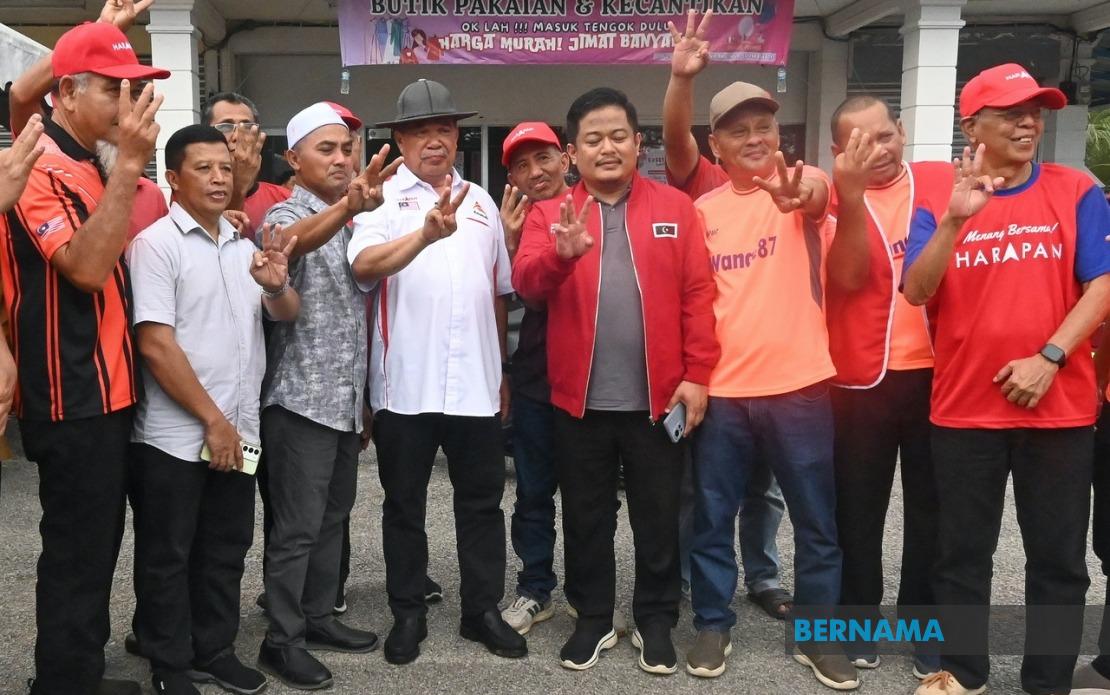
The real test of any political manifesto comes not from its launch or its promises, but from its execution on the ground. That message formed the crux of Amanah president Datuk Seri Mohamad Sabu's campaign pitch to Johor voters ahead of Saturday's state election, as he sought to persuade the electorate that Pakatan Harapan's recently unveiled platform represents a genuine commitment to reform rather than empty rhetoric.
Speaking in Rengit during a campaign stop that formed part of the Johor Tour with Bang Mat programme, Mohamad Sabu directly challenged the opposing party's characterisation of the PH manifesto as mere "copy paste" political content. Rather than engage in a tit-for-tat debate over the manifesto's originality, the Amanah leader reframed the discussion around delivery and results. The manifesto's true measure of credibility, he argued, would emerge only through successful implementation by a PH state government.
The underlying logic of this argument speaks to a fundamental challenge facing opposition-led coalitions across Malaysia: how to convert policy pledges into tangible action. For voters in Johor, particularly in rural constituencies where PH's presence remains less established than in urban centres, the question becomes whether voting for the coalition offers a genuine pathway to change or merely substitutes one set of broken promises for another. Mohamad Sabu sought to address this scepticism head-on by positioning implementation as the party's primary differentiator.
As Minister of Agriculture and Food Security in the federal government, Mohamad Sabu brings a dual perspective to the campaign trail. His ministerial credentials theoretically demonstrate PH's capacity to govern effectively at the national level, yet they also invite scrutiny over why similar policy commitments have not been uniformly delivered across all portfolios during PH's time in federal office. This paradox—between aspiration and actual governance record—remains the central tension in opposition coalition campaigns throughout Malaysia.
The Amanah president emphasised that the manifesto itself emerged from extensive grassroots consultation rather than boardroom strategising. According to his account, party leaders spent considerable time listening to residents across Johor, identifying their concerns, and translating those grievances into concrete policy proposals. This narrative of bottom-up policy development, if accepted by voters, would distinguish PH's approach from what it characterises as top-down governance by the incumbent administration.
Crucially, Mohamad Sabu provided a specific timeline for implementation, pledging that if PH wins the Johor election, tangible action would begin as early as July 12—the day after polling. This compressed timeframe serves multiple purposes: it demonstrates confidence and urgency, signals to supporters that change will not be delayed by bureaucratic processes, and provides a near-term benchmark against which voters can measure the coalition's commitment to its promises.
The campaign dynamics in rural Johor reveal an interesting shift compared to the 2018 general election. At that time, PH remained relatively unfamiliar to many voters in Johor's villages and smaller towns, where traditional political structures and personal relationships often dictate voting patterns more powerfully than party manifestos. Mohamad Sabu's observation that the coalition now enjoys warmer receptions and generates spontaneous support in markets and public spaces suggests that familiarity and exposure have translated into improved electoral prospects, at least on the surface level of campaign interactions.
This apparent warming towards PH in rural constituencies holds significant implications for the overall election outcome. Since 2018, the Johor political landscape has fractured considerably, with UMNO-led Barisan Nasional facing competition not only from PH but also from Perikatan Nasional and independent candidates. In this fragmented environment, winning rural constituencies often determines which coalition commands a legislative majority, and Mohamad Sabu's confidence about rural reception suggests PH believes it can make competitive inroads in these traditionally difficult terrain.
The timing of the Johor election carries broader significance for Malaysian politics. Coming amid ongoing tensions within federal coalition arrangements and questions about the stability of the PH-led government in Putrajaya, a strong performance in Johor would provide substantial political capital and validate the coalition's strategy of contesting state elections aggressively. Conversely, poor results would intensify internal debates within PH about coalition viability and electoral strategy.
For Malaysian voters, particularly in Johor, the choice in Saturday's election extends beyond local state government issues. A PH victory would represent voter endorsement of the coalition's national direction and suggest that despite governance challenges and coalition tensions, voters remain willing to grant the opposition coalition opportunities to demonstrate its capacity to govern. A defeat would indicate persistent voter scepticism about PH's ability to deliver on its promises or doubts about the coalition's overall political viability.
The security forces' early voting scheduled for the day before the main poll represents standard procedure across Malaysian elections, yet it also reflects the electoral commission's efforts to streamline the voting process and accommodate those unable to participate on the standard polling day. The election framework itself, with its clearly demarcated timeline and procedures, contrasts with the somewhat fluid and unpredictable nature of Johor politics in recent years.
Moving forward, the manifesto debate will likely intensify as election day approaches. Opposition parties will continue challenging the credibility of PH's policy platform, while PH will attempt to shift discussion from promises to proven track records and implementation capacity. For voters trying to make informed decisions, the challenge remains distinguishing between political positioning and genuine commitment to delivering public goods. Mohamad Sabu's invocation of implementation as the ultimate test of credibility reflects recognition that in an increasingly sophisticated electoral environment, manifestos alone no longer guarantee voter confidence.

