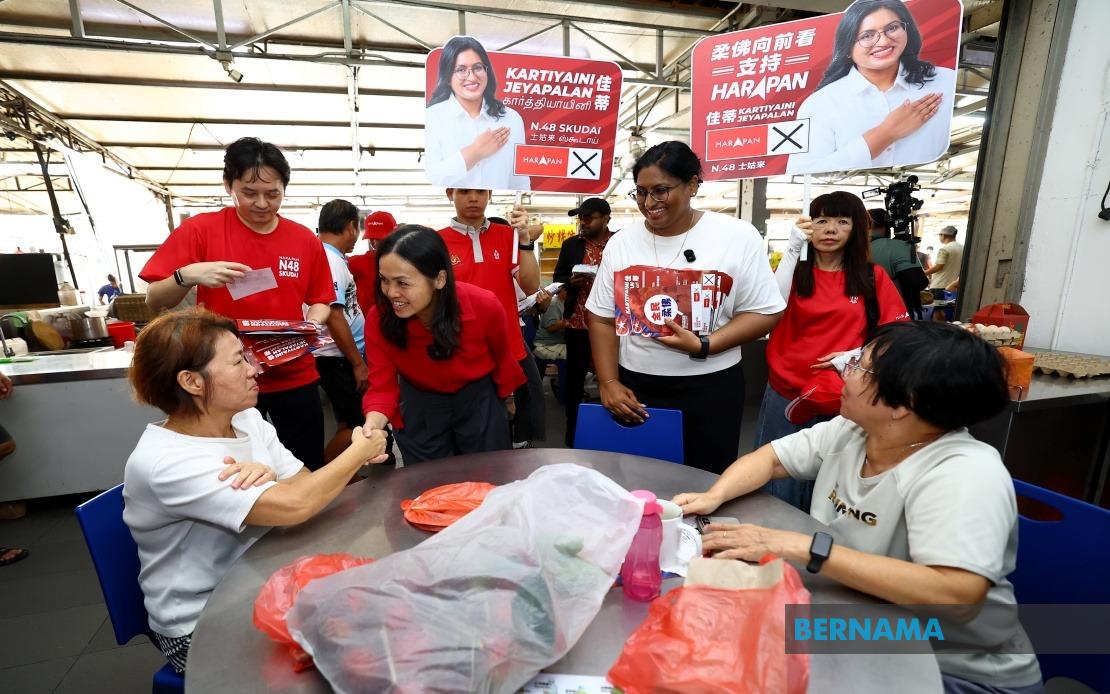
With Johor's state election scheduled for Saturday, political leaders are making a final push to mobilise the electorate, particularly focusing on voters who have migrated or are working in neighbouring states and countries. Johor DAP chairman Teo Nie Ching, who also serves as Deputy Communications Minister, has emphasised the importance of citizens exercising their democratic franchise by returning home to participate in what promises to be a pivotal electoral contest that will determine the composition of the state assembly for the next term.
Teo's appeal carries particular weight given the demographic complexities of modern Malaysian voting patterns. The state is home to a substantial transient workforce, with thousands of residents maintaining employment in Singapore, Kuala Lumpur, and other economic hubs across the region. Her message resonates with a fundamental principle of democratic participation: that every vote carries intrinsic value and should not be taken for granted. This is especially pertinent in a state with significant economic ties to Singapore, where cross-border commuting patterns influence voter turnout and electoral dynamics.
To underscore her point, Teo highlighted the extraordinary lengths to which Malaysian diaspora communities have gone to ensure their voices are heard. An Australian-based voter in Queensland reportedly travelled to the airport hoping to find someone willing to hand-carry a postal ballot back to Malaysia after commercial courier services could not guarantee timely delivery before the polling deadline. Such anecdotes illustrate the genuine commitment many Malaysians abroad feel toward their country's electoral processes, a sentiment Teo believes should inspire domestic voters who face far fewer logistical obstacles.
The scale of international effort to participate extended beyond Australia. A postgraduate student pursuing advanced studies in China incurred additional expenses exceeding RM1,000 by rescheduling flights to return for voting day. Similarly, voters in the United States invested considerable time and effort locating fellow Malaysian citizens to witness their postal voting procedures, demonstrating that geographic distance has not diminished their sense of civic responsibility. These narratives provide a powerful counterpoint to apathy or complacency among voters with easier access to polling stations.
Teo met with residents in Kampung Baru Skudai alongside Kartiyaini Jeyapalan, the Pakatan Harapan candidate contesting the Skudai state seat. The engagement underscores the coalition's grassroots campaign strategy, combining high-profile messaging with direct community interaction. This dual approach—national-level rhetoric about voting rights combined with localised constituency work—reflects the sophisticated electoral machinery that major political coalitions have developed across Malaysian states.
Beyond voter mobilisation, Teo addressed a parallel challenge that has become increasingly prominent in contemporary electoral campaigns: the weaponisation of misinformation and digital deception. She cautioned the public against artificially constructed social media accounts and deliberately fabricated news narratives designed to manipulate voter perceptions during the campaign's critical final phase. This warning reflects growing concerns across Southeast Asia about information warfare in electoral contexts, where rapid digital dissemination can spread falsehoods faster than corrections can take root.
Teo advocated for a cultural shift toward digital literacy, promoting a "verify before you share" ethos that places responsibility on individual consumers of information. Her argument recognises the paradoxical nature of internet technology: while it enables unprecedented speed in information distribution, this same velocity can amplify false narratives before fact-checking mechanisms engage. The challenge is particularly acute during compressed election cycles when campaign momentum builds rapidly and voters make decisions under time pressure.
Kartiyaini amplified these messages by describing Pakatan Harapan's focused campaign targeting the substantial Johor workforce employed in Singapore. The coalition deployed activists at the Sultan Iskandar Building Customs, Immigration and Quarantine Complex from early morning to engage with cross-border commuters, and even boarded buses transporting workers across the causeway to deliver their appeals directly. The response from this demographic, according to Kartiyaini, has been notably positive, suggesting receptiveness to the mobilisation message among this strategically important voter segment.
The campaign narrative extends beyond simple voter turnout to encompass broader questions about state-level governance and its consequences for constituent welfare. Kartiyaini emphasised that state elections carry equivalent significance to federal contests, arguing that effective state governments can implement policies addressing residents' immediate needs and driving development priorities. This framing attempts to elevate the Johor election beyond a secondary contest in the political calendar and position it as consequential for ordinary citizens' lives.
Demographically, the 16th Johor state election involves a substantial electorate: approximately 2.7 million registered voters are anticipated to cast ballots across 56 state assembly constituencies. This scale indicates the electoral weight Johor carries within Malaysia's broader political landscape. The state's economic importance, its role as a transportation and commerce hub linking Malaysia to Singapore, and its history of political contestation make its government composition consequential for regional economic and social policy.
The campaign's focus on cross-border workers reflects evolving migration patterns within Malaysia and Southeast Asia more broadly. Younger professionals increasingly pursue employment opportunities across state and international boundaries, creating a dispersed electorate that previous electoral campaigns struggled to reach. Political coalitions that successfully mobilise this mobile workforce gain a tangible advantage, particularly in marginal constituencies where voter turnout can determine outcomes. The sophistication of Pakatan Harapan's cross-border engagement strategy suggests a recognition of these demographic realities.
For Malaysian observers, particularly those in other states contemplating upcoming electoral contests, the Johor campaign offers instructive lessons about contemporary political communication. The combination of emotional appeals grounded in diaspora sacrifice, warnings against information manipulation, direct constituency engagement, and targeted outreach to specific demographic segments reflects a comprehensive approach to electoral mobilisation in the modern era. Whether these strategies translate into significantly elevated turnout among cross-border workers and diaspora voters will become apparent once polling concludes, but the effort itself demonstrates how Malaysian political actors are adapting to demographic and technological changes reshaping electoral participation.

