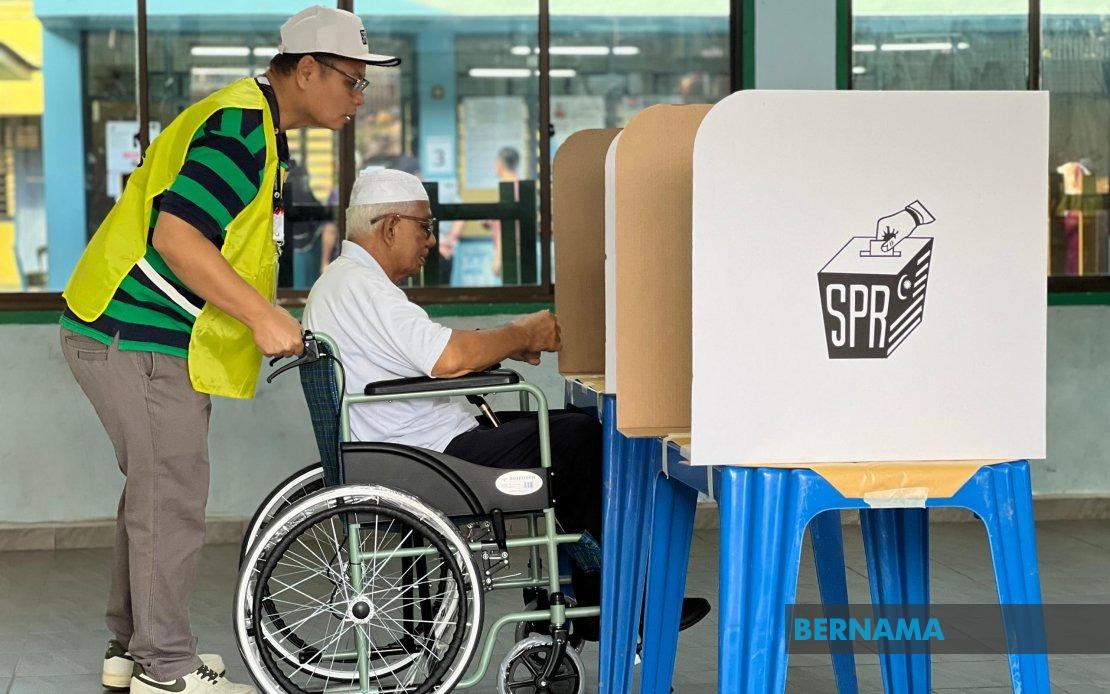
Johor began its state election today with all 1,076 polling centres operating in unison from 8 am, marking the culmination of a two-week campaign for the state's new government. The voting exercise encompasses 4,889 individual polling streams, with an anticipated 2.7 million registered voters participating in the electoral process. Ballot boxes remain open until 6 pm, though certain polling stations serving constituencies with lighter voter populations will conclude proceedings earlier, with closures beginning as soon as 11 am depending on demand.
The contest involves 172 candidates competing for 56 seats in the State Legislative Assembly, creating a varied electoral landscape across Johor's constituencies. The configuration includes a mix of competitive formats: twelve contests featuring four-cornered fights where voters choose among four candidates, twenty-seven three-way races, and fourteen direct one-on-one showdowns between two candidates. This diversity reflects the political fragmentation present in Malaysia's second-largest state by population and area.
The Election Commission has set an ambitious target for civic participation, projecting a voter turnout approaching 70 per cent. The electoral body anticipates releasing comprehensive results by 10 pm, allowing the winning coalition to begin transition planning well into the evening. This timing underscores the efficiency with which modern Malaysian elections are conducted, particularly given the scale of operations required to manage millions of ballots across such a geographically dispersed region.
For Malaysian observers, Johor's election carries significant implications beyond state boundaries. As the nation's only state consistently governed by Barisan Nasional since independence, shifts in Johor's political direction would represent a watershed moment in the nation's electoral history. The state's economic importance—hosting the Port of Tanjung Pelepas and serving as a crucial corridor to Singapore—means that changes in state administration could influence regional business confidence and investment patterns throughout Southeast Asia.
On the ground, the Election Commission deployed security personnel to multiple polling stations to maintain order and prevent irregularities during voting. Journalistic personnel arrived at polling locations from 7 am onwards, preparing to document results as they emerged throughout the afternoon and evening. This media presence reflects the election's prominence within Malaysian political circles and among international observers monitoring Southeast Asian democratic processes.
Weather conditions posed minimal disruption to the voting exercise across most of Johor, with clear skies prevailing in the majority of constituencies. However, Muar district experienced rainfall during the morning hours, which some observers noted could potentially influence voter turnout in that region, though no official concerns regarding weather-related obstacles were raised by election administrators.
The completion of the campaign period at midnight the previous evening marked the formal conclusion of electioneering activities, during which candidates and their supporters conducted rallies, neighbourhood visits, and media engagements across all constituencies. Campaign intensity in Johor traditionally runs high, reflecting the state's political significance and the competitive nature of contests where multiple parties possess genuine prospects of victory.
For Malaysian citizens monitoring the election's progress, the day represents a democratic exercise that will reshape Johor's governance structure and potentially influence national coalition dynamics. The state's strategic importance in Malaysian politics stems from its size, economic contribution, and historical role as a political bellwether. Changes in Johor's political orientation often precede or coincide with broader shifts in national political sentiment.
The electoral process unfolding today also carries implications for how Malaysia continues to refine its democratic institutions and election management capabilities. The scale of coordination required—managing over four thousand polling streams simultaneously across a state spanning 19,189 square kilometres—demonstrates the administrative maturity of Malaysian electoral operations compared to many developing democracies in the region.
As evening approached, stakeholders across Malaysia prepared for the results that would begin flowing from 10 pm onwards. Political parties established war rooms to monitor developments, financial markets positioned themselves to react to outcomes affecting investor confidence, and media organisations stood ready to analyse the implications of Johor's electoral verdict. The election represented a crucial moment for the state's political trajectory and a significant checkpoint in Malaysia's ongoing democratic evolution.

