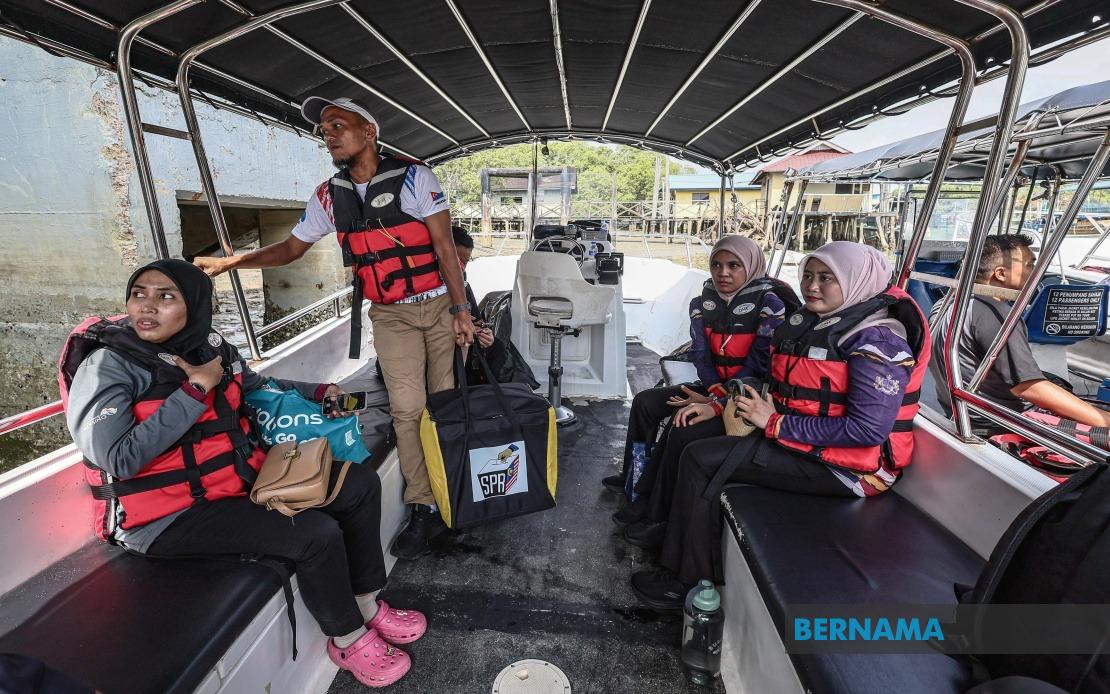
The 16th Johor State Election, held on July 11, has done more than shape the future political direction of Malaysia's southern bastion—it has simultaneously injected fresh revenue into the pockets of small business operators who have seized the opportunity presented by heightened voter movement and election-related logistics. Across Johor, from the waters surrounding offshore islands to food stalls positioned near polling stations, proprietors have witnessed an uncommon surge in commercial activity that stands in sharp contrast to ordinary weekday trade.
Amongst the beneficiaries are maritime transport companies serving island communities, where logistical challenges traditionally limit passenger volume. Mustakim Shafie, the 35-year-old proprietor of Island Eagle Boat Services & Island Hopping, operates a fleet of six speedboats primarily engaged in ferrying election officials and materials to outlying islands, yet the election cycle has expanded his revenue streams considerably. On a standard day, his enterprise functions within predictable boundaries, but the polling period transformed his operational schedule into a bustling sequence of voter transportation requests. Nearly 50 islanders utilised his charter services to return home and exercise their democratic rights, complementing the election personnel logistics that dominated initial operations. This dual demand has proved financially significant—Mustakim reported that his bookings doubled relative to a typical day, a substantial multiplier effect for a modest maritime operator working in a geographically constrained market.
The pricing structure of these maritime services reveals the premium nature of island transportation. Standard charter arrangements through Mustakim's operation range from RM4,000 to RM4,500 for extended three-day packages, whilst a one-way passage accommodating up to 18 passengers costs approximately RM2,500. Such figures underscore how election-driven demand translates into meaningful turnover for a small enterprise operating in a sector where passenger bookings fluctuate considerably with seasonal and administrative cycles. The concentration of demand during the election window therefore represents a critical revenue opportunity that helps stabilise annual income patterns.
However, maritime operators face inherent vulnerabilities that election activity cannot entirely mitigate. Unpredictable weather patterns and volatile sea conditions remain persistent operational risks that threaten the reliability of transport services during polling periods. Hasrul Azmin Jumaat, a seasoned boat operator with more than two decades of maritime experience, exemplifies the expertise required to navigate these hazards safely. His track record encompasses the demanding longer routes, including the more than two-hour, 76-kilometre journey to Pulau Aur, where weather shifts can rapidly compromise passenger safety. The ability to manage such conditions through accumulated experience and local knowledge becomes essential during high-volume electoral operations, where any maritime incident could undermine public confidence in transport services and potentially affect voter participation rates.
Whilst island communities depend on boat operators for election access, terrestrial locations witnessed their own business surge through food service providers positioned strategically near polling centres. Ismail Mad Hasim and his wife Faradila Fairuz Mohd Affandi, a husband-and-wife entrepreneurial team aged 55 and 45 respectively, operated a food stall adjacent to Sekolah Kebangsaan Taman Sutera and discovered exceptional demand from voters, particularly early voters completing their civic duties before proceeding to work or other commitments. Their stall became a natural congregation point, with customer arrivals beginning as early as 8 am and throughput substantially exceeding typical Saturday business volumes. This location-based advantage—placing a food service within convenient walking distance of a major polling centre—proved invaluable for capturing demand from voters seeking refreshment in the morning hours.
The couple's previous experience during earlier general elections provided institutional knowledge about electoral day consumer patterns and permitted efficient inventory management to accommodate the anticipated surge. Importantly, their commitment to civic participation did not diminish despite commercial opportunity—both planned to cast their own votes at the same polling centre immediately after their stall inventory depleted, demonstrating how small business proprietors throughout Johor balanced entrepreneurial gain with electoral responsibility.
From an economic perspective, the election's impact on small business represents a form of stimulus that penetrates directly into household income for numerous proprietors operating at the margins of Malaysia's formal economy. Boat operators and food vendors typically function with limited capital buffers and seasonal income variability, meaning that concentrated demand periods such as elections provide disproportionately important revenue injections. These earnings support not merely individual proprietors but extend through multiplier effects—workers hired temporarily, suppliers engaged for additional stock, and household consumption patterns affected by improved cash flow.
The geographic specificity of these economic gains also merits consideration for regional development policy. Johor's island communities, which depend on maritime transport for basic access, benefit substantially when electoral processes concentrate passenger demand, yet such occasions occur only periodically. Sustainable economic development for maritime operators might require identifying comparable demand drivers beyond electoral cycles, whether through tourism, government services expansion, or inter-island commerce initiatives.
The election's impact illuminates broader patterns in Malaysia's informal and semi-formal business sectors, where numerous proprietors operate with minimal reserves and depend on periodic demand surges. As the Johor state election progressed through polling day—involving more than 2.6 million registered voters and continuing until 6 pm—small business operators across multiple sectors captured economic benefits that extended far beyond the immediate political contest. The phenomenon suggests that electoral events, whilst primarily significant for democratic participation, simultaneously function as unintended economic stimulus mechanisms for geographically isolated and seasonally vulnerable business communities throughout the region.

