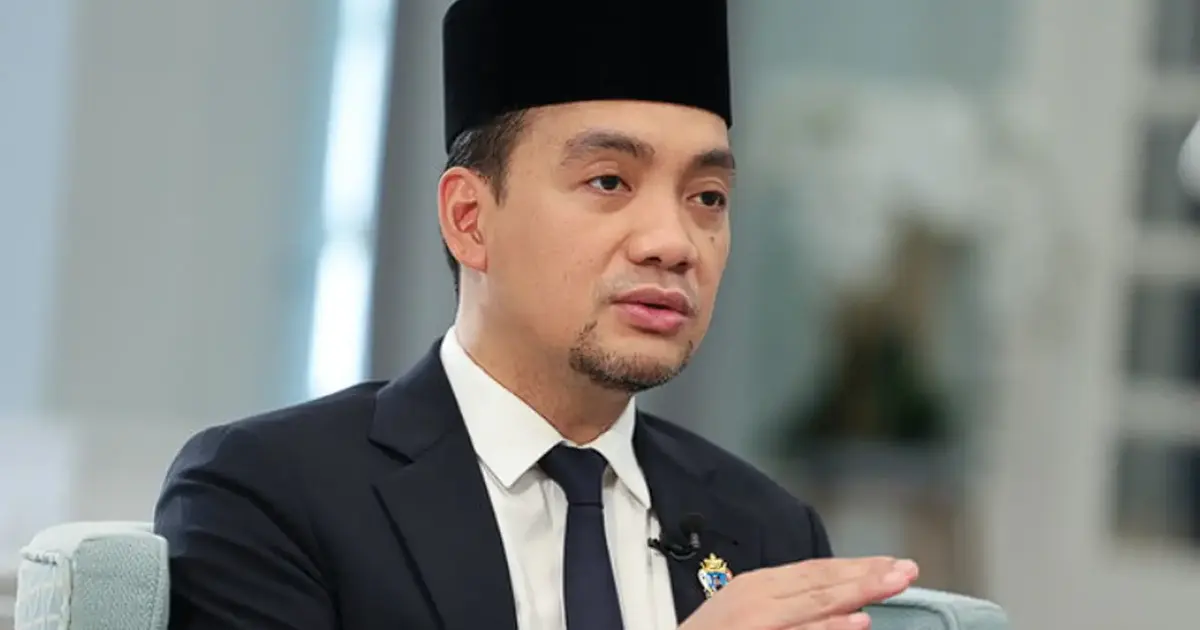
The dissolution of Johor's state assembly, approved through royal assent, operates within established constitutional parameters and does not constitute interference in political matters by the palace, according to caretaker menteri besar Onn Hafiz. His remarks address mounting scrutiny surrounding the formal mechanisms that enabled the assembly to be dissolved and elections called, with critics questioning the extent to which the Sultan's approval might signal active involvement in partisan political decisions.
Under the Malaysian federal system, state assemblies require royal assent before they can be dissolved, a procedure embedded in state constitutions that governs the machinery of electoral politics at the state level. This requirement exists across all 13 states and serves as a constitutional safeguard ensuring that dissolution does not occur through executive fiat alone. Onn Hafiz's clarification underscores the distinction between the palace performing its mandatory constitutional duty and the palace actively directing political strategy or favouring particular parties—a meaningful separation that often becomes blurred in public discourse surrounding royal authority.
Johor, Malaysia's most politically volatile state in recent cycles, has experienced significant electoral turbulence. The 2018 general election marked a watershed moment nationally, and Johor's political landscape has remained fluid as parties realign and seek electoral advantage. The assembly's dissolution cannot proceed without the Sultan's signature on the official document, yet that formal requirement does not automatically imply that palace officials engineered the dissolution timeline or championed a particular political outcome. Constitutional procedure and political agency, while intertwined procedurally, remain conceptually distinct.
Onn Hafiz's intervention clarifies an important principle often muddied in Malaysian political commentary: the palace exercises constitutional authority differently from political power. When sultans or palace institutions sign off on statutory requirements—dissolving assemblies, appointing menteri besars during transition periods, or granting clemency—they perform functions that the constitution vests in them. These acts are ministerial in character; they validate decisions made through other channels rather than originating fresh political initiatives from the palace itself.
The caretaker status of Onn Hafiz's administration adds another layer of complexity. During caretaker periods, the government operates under strict constraints, prohibited from making major policy decisions that ought to await a new mandate. Dissolution fits within permissible caretaker functions because it directly facilitates the restoration of full democratic governance through fresh elections. The timing and decision to dissolve emanate from political actors and formal state institutions—the menteri besar and state executive council—not from palace initiative, though palace approval remains legally indispensable.
Malaysian constitutional convention has evolved considerably since independence. The role of hereditary rulers in governance has shifted markedly, particularly as democratisation deepened and institutional checks strengthened. Modern interpretations emphasise that while sultans retain significant formal authority, the legitimate exercise of that authority increasingly requires alignment with democratic norms and the principle that elected representatives, not unelected palace officials, should determine electoral timing and political direction. This interpretive evolution reflects broader regional trends toward constraining monarchical discretion in electoral matters.
Public confidence in constitutional processes depends partly on perceptions of impartiality and institutional respect for boundaries. When the palace routinely provides rubber-stamp approvals for decisions made through proper democratic channels, it reinforces the separation between ceremonial-constitutional duty and political agency. Conversely, if palace approval were withdrawn or delayed for partisan reasons, it would signal an improper intrusion into realms that ought to remain within the elected government's domain. Onn Hafiz's statement implicitly encourages readers to view the assembly's dissolution within this framework: as a proper exercise of formal authority, not as evidence of covert palace political management.
For Malaysian observers, the distinction matters considerably. Southeast Asian democracies have historically struggled to maintain boundaries between traditional authority and elected governance. Thailand's military interventions repeatedly invoked defence of the monarchy as justification. Other regional states face persistent questions about whether traditional institutions meaningfully constrain executive power or merely lend legitimacy to predetermined outcomes. Malaysia's ability to sustain a relatively stable democracy hinges partly on whether major institutions—including the palace—respect their assigned constitutional roles and refrain from overstepping into spheres properly reserved for elected bodies.
Johor specifically occupies significant symbolic weight within Malaysian politics. As the largest state geographically and economically significant, its political direction influences perceptions of national democratic health. Johor has traditionally been Barisan Nasional's strongest bastion, though recent elections demonstrated that voters' loyalty to any single coalition remains conditional. The state therefore serves as a bellwether for broader political sentiment and institutional performance. When questions arise about how major state decisions are made and validated, they resonate beyond Johor's borders.
Onn Hafiz's clarification reflects broader efforts by Malaysian political and institutional actors to articulate clearer boundaries between constitutional form and political substance. As the nation navigates increasingly competitive electoral cycles and rising partisan polarisation, maintaining public comprehension of why certain procedures exist becomes more crucial. Royal assent for assembly dissolution exists not because sultans possess or should exercise political judgment about electoral timing, but because constitutional design assigns them a formal validating role in state machinery. Understanding this distinction helps citizens assess whether institutions are functioning properly or whether traditional authority is encroaching inappropriately into democratic space.
The broader implications extend to institutional trust. Malaysians increasingly demand transparency about decision-making processes and clear explanations of the rationales underlying major political actions. When caretaker governments dissolve assemblies, public interest demands clarity about who decided to dissolve, when the decision was made, and through what channels it proceeded. Palace approval fits within that sequence as a necessary constitutional step, not as the originating decision or evidence of palace political preference. Onn Hafiz's remarks, in this context, serve to educate stakeholders about proper institutional functioning and to reinforce confidence that constitutional processes, while sometimes opaque to casual observers, operate within defensible legal and procedural frameworks.

