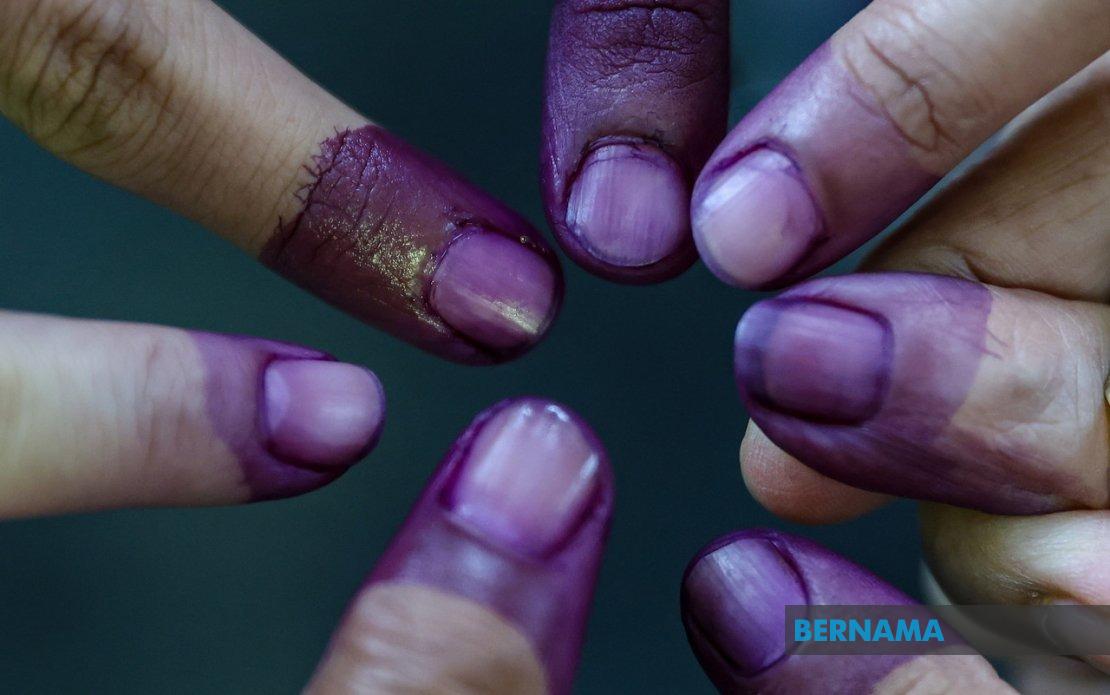
The purple mark on voters' index fingers in Johor has transcended its traditional role as a symbol of civic participation, becoming instead a golden ticket to discounts and freebies as major food and beverage brands celebrate democratic engagement on election day. With more than 2.6 million eligible voters casting ballots across the state to determine representation for the 56 seats in the State Legislative Assembly, businesses have seized the occasion to reward democratic participation through tangible promotions that have resonated particularly well on social media throughout the day.
The Coffee Bean & Tea Leaf has emerged as one of the most generous participants, extending a 20 per cent discount on selected purchases to any customer presenting an inked finger at participating outlets. Limited to voting day only, the promotion demonstrates how retail chains recognise the commercial opportunity inherent in election day foot traffic and the goodwill associated with rewarding civic duty. Such discounts, while modest in absolute value, carry symbolic weight by positioning business participation as solidarity with the electoral process itself.
Krispy Kreme has positioned itself within this competitive landscape by offering an Original Glazed doughnut for RM2 to voters displaying their indelible ink marks at selected Johor locations. The condition that supplies last introduces an element of scarcity that drives urgency and encourages rapid redemption. Burger King has extended its participation across two calendar days, providing a complimentary Soft Serve Cone ice cream with any set meal purchase until the following day, thereby capturing both same-day voters and those casting ballots slightly later in the voting window.
Marrybrown, a prominent local fried chicken chain, has joined the celebrations by granting one free piece of fried chicken with any MB Combo purchase upon presentation of the indelible ink. The consistency of participation across international and local brands suggests a coordinated, if informal, recognition that election day represents an opportunity to align commercial interests with community participation. These offers, while individually unremarkable, collectively create a festive atmosphere that transforms the voting experience from a solemn civic obligation into something approaching a community celebration.
Social media has amplified the reach and impact of these promotions exponentially. Since early morning, voters have shared photographs of their post-ballot reward stops, creating an organic marketing phenomenon that extends brand exposure far beyond traditional advertising channels. This user-generated content simultaneously documents the voting experience and promotes participating businesses, creating a virtuous cycle wherein democratic participation becomes visually associated with consumer pleasure and brand engagement. The phenomenon reflects broader trends in Malaysian consumer culture, where experiences are often valued as much for their social media documentation as for their intrinsic merit.
The indelible ink itself carries a specific history within Malaysia's electoral context. First introduced by the Election Commission in 2013 during the Kuala Besut by-election, the purple mark serves a critical anti-fraud function by creating a visible barrier against multiple voting and enhancing the integrity of the electoral process. That this fraud-prevention mechanism has been repurposed as a marketing device speaks to the creative adaptation of electoral infrastructure and the manner in which democratic processes intersect with consumer capitalism in contemporary Malaysia.
Johor's election today reflects broader national political dynamics, with 172 candidates representing eight distinct political entities competing for the 56 available seats. Pakatan Harapan and Barisan Nasional each field 56 candidates, representing the traditional poles of Malaysian politics, while Perikatan Nasional contests 33 seats, reflecting the realignment that has characterised Malaysian politics since 2020. Smaller players including Parti Bersama Malaysia (15 candidates), MUDA (four), and single representatives from Parti Orang Asli Malaysia and Parti Sosialis Malaysia demonstrate the fragmented landscape of contemporary Malaysian electoral competition, alongside six independent candidates.
The scale of the Johor electorate merits particular attention within regional context. With 2.6 million eligible voters participating in state elections, Johor represents one of Malaysia's most significant electoral contests outside the federal level. The state's economic importance, demographic diversity, and geopolitical position adjacent to Singapore amplify the significance of its electoral outcomes for broader Malaysian governance and regional stability. Election results in Johor frequently signal shifts in voter sentiment that presage or reflect changes in federal political dynamics.
The convergence of electoral politics and consumer marketing evident in today's promotions reflects deeper transformations in how Malaysians experience democratic participation. Rather than occurring in isolation, voting increasingly takes place within a landscape of commercial messaging and consumer incentives. While the indelible ink mark preserves the technical integrity of elections, the promotional ecosystem surrounding it demonstrates how even the most fundamental democratic rituals become embedded within consumer capitalism and the logic of commercial rewards. Whether this development ultimately enhances civic engagement or dilutes the meaning of democratic participation remains an open question for Malaysian society.

