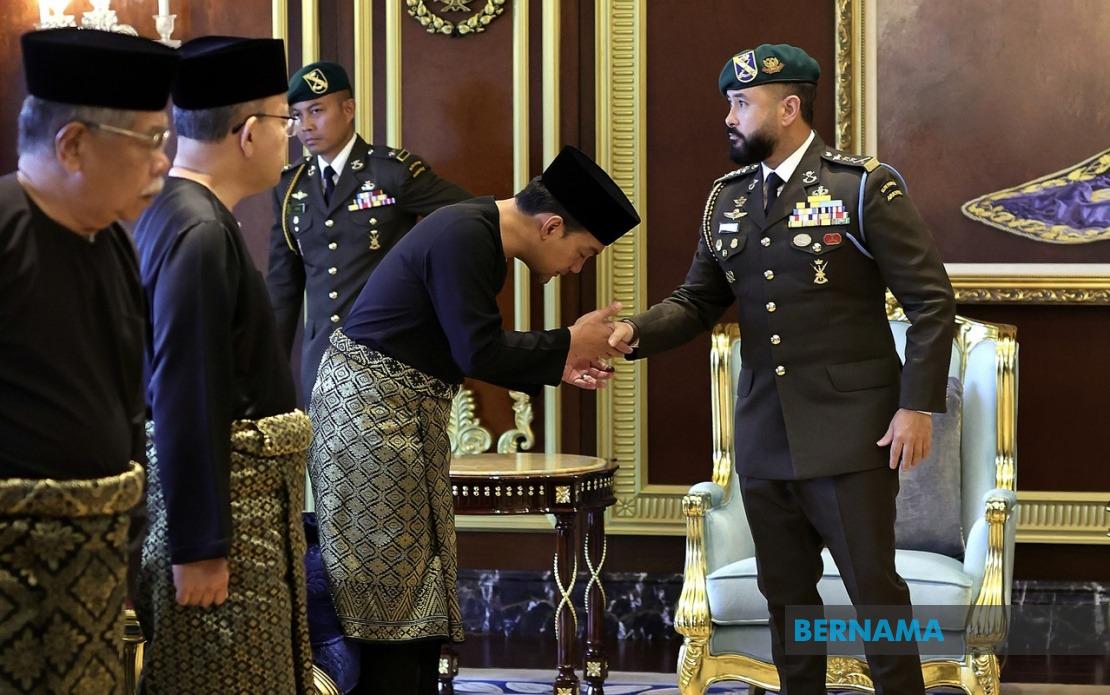
The newly appointed members of Johor's State Executive Council will formally take their oath of office in a ceremony scheduled for tomorrow at Istana Bukit Serene in Johor Bahru. The swearing-in represents a significant moment for the state administration as it settles into a fresh mandate following the recent electoral victory that reshaped the political landscape in Malaysia's southern region.
Tunku Mahkota Ismail, the Regent of Johor, will preside over the solemn occasion, underscoring the constitutional importance of the moment. The presence of the Regent reflects the formal nature of the proceedings and the significance the state's monarchy places on the transition to a new governing team. This ceremonial dimension is customary in Malaysia's constitutional monarchy system, where royal sanction legitimises the appointment of senior state officials.
Among those confirmed to attend the event are Menteri Besar Datuk Onn Hafiz Ghazi, who was sworn in for his new term just four days earlier on July 12, along with Datuk Dr Abdul Rahim Ramli, president of the Johor Council of Royal Court, and state secretary Datuk Mohammed Ridha Abd Kadir. These senior figures represent the apex of the state's administrative hierarchy and their attendance signals continuity and stability in governance during this transition period.
The palace has extended an invitation to media representatives to document the proceedings, with press access arranged at both main entrances from 9.30 am onwards. This openness to media coverage reflects contemporary governance practices, allowing journalists to inform the public about the formal establishment of the new executive structure. The timing of media access suggests a carefully choreographed schedule designed to accommodate news organisations while maintaining the ceremony's dignified atmosphere.
This swearing-in ceremony arrives on the heels of Barisan Nasional's commanding performance in the recent Johor State Election, where the coalition secured 48 of the state assembly's 56 seats. The electoral victory, achieved in voting held last Saturday, provided a decisive mandate that consolidated BN's control over the state administration. In Malaysia's political context, such electoral margins are significant, as they grant the ruling administration substantial scope to pursue its governance agenda without the constraints of narrowly divided legislatures.
The formation of the new Exco follows Menteri Besar Datuk Onn Hafiz Ghazi's own swearing-in ceremony four days prior, which established the political foundation for the state government's fresh term. This sequential process—first the chief minister's appointment, then the executive council's formal oath-taking—represents the constitutional procedure through which Malaysia's states formalise changes in their leadership structures. The interval between the two ceremonies allowed for the designation and preparation of individual Exco members.
For Malaysian observers, particularly those monitoring developments in Johor, this moment encapsulates the broader political dynamics that have shaped the country's landscape in recent years. Johor, as one of Malaysia's largest and economically significant states, holds considerable weight in national political calculations. The state's governance framework influences investment decisions, administrative efficiency, and policy implementation across diverse sectors including infrastructure, education, and economic development.
The successful consolidation of Barisan Nasional's hold on Johor carries implications extending beyond state-level politics. The coalition's strong showing in the southern state provides it with a secure power base in a region historically competitive in Malaysian electoral contests. This stability allows BN leadership to maintain focus on governance priorities rather than navigating precarious political balances, a luxury that states with more fragmented legislatures often lack.
For the incoming Exco members preparing to take their oaths, the ceremony marks the formal commencement of their constitutional responsibilities. These individuals assume positions of significant public trust, overseeing portfolios that shape the daily lives of Johor's residents across domains ranging from local development to public services. The solemnity of the oath-taking underscores the gravity of these responsibilities within Malaysia's constitutional framework.
The timing of the swearing-in, just over a week after the electoral victory, demonstrates the efficiency with which Johor's political institutions have moved to establish the new administration. This rapid transition reflects the clarity provided by the decisive electoral outcome and the absence of post-election negotiations that might have protracted the formation of government in more contested political scenarios. The state administration can thus begin implementation of its policy platform with minimal administrative delay.
As Johor enters this new governmental phase, the Exco's composition and agenda will inevitably attract scrutiny from stakeholders including federal counterparts, civil society observers, and the wider Malaysian public. The state's role in the broader national economy and its importance as an urban and industrial centre ensure that decisions emanating from the state government resonate beyond Johor's borders, influencing regional economic corridors and national developmental priorities.

