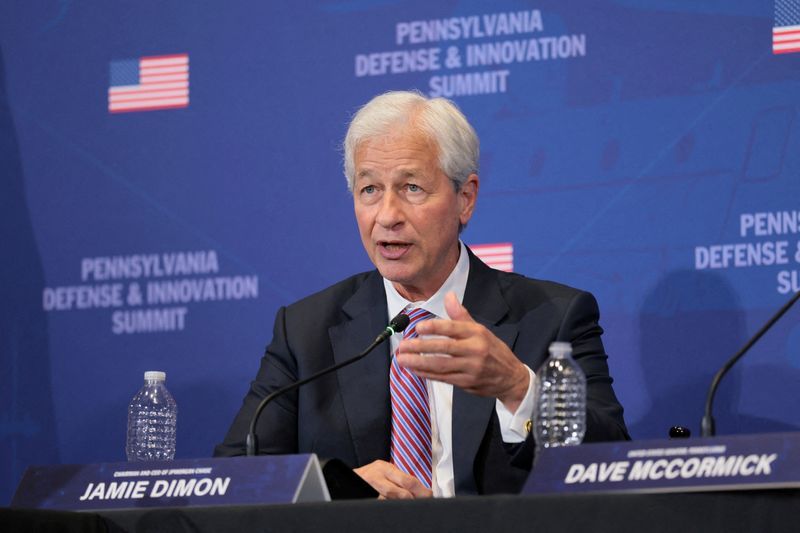
JPMorgan Chase Chief Executive Officer Jamie Dimon is mobilizing corporate America to confront the mounting security challenges posed by rapid artificial intelligence adoption. Through personal outreach launched in July, Dimon has engaged leaders from major banks, regional financial institutions, and technology firms to participate in a coordinated response framework designed to identify and mitigate AI-related vulnerabilities across essential infrastructure sectors. The scale of his campaign reflects growing alarm within the financial establishment about how quickly businesses are deploying AI systems without adequate safeguards.
The initiative, which expands an existing collective called the Alliance for Critical Infrastructure, represents a significant pivot toward using industry collaboration as a primary defense mechanism against AI-induced risks. JPMorgan co-founded the ACI alongside Mastercard and Berkshire Hathaway Energy, originally positioning it to coordinate resilience planning, facilitate cross-sector intelligence sharing, and respond to traditional threats including cyberattacks and physical security breaches. By repositioning this established network, Dimon is leveraging existing relationships and governance structures rather than building new institutional machinery from scratch, a pragmatic approach that may accelerate implementation.
The recruitment phase has already encompassed more than 40 corporations spanning financial services, energy production, water systems, utilities, telecommunications, aviation, and rail transport. These sectors share a critical commonality: their dependence on increasingly sophisticated technology systems that could become vulnerable to AI-driven exploitation. The Alliance plans to schedule discussions throughout August to establish collaboration protocols and define shared objectives. This broad coalition-building signals that concern about AI risks has transcended individual corporate fiefdoms and entered the realm of industry-wide strategic coordination.
Dimon's personal involvement carries particular weight in financial and policy circles. As chief executive of America's largest bank, his public warnings about advanced AI systems have positioned him among a small cadre of business leaders willing to articulate existential technology risks before regulators formally mandate action. His previous statements comparing access to advanced AI capabilities to distributing ballistic missiles to individuals reflect an underlying conviction that current deployment practices lack appropriate gatekeeping mechanisms. This rhetorical stance suggests the ACI initiative extends beyond technical problem-solving into advocacy for stronger governance frameworks.
The specific catalyst for accelerating this effort includes recent cyberattacks targeting water infrastructure in Minnesota and other states, incidents that underscore how interconnected systems create cascading vulnerability. When malicious actors compromise one sector, reverberations travel through dependent networks, potentially affecting millions of citizens. Intelligence sharing across previously siloed industries offers a mechanism to identify attack patterns earlier and distribute defensive knowledge more rapidly. The ACI framework positions itself as the institutional conduit for this accelerated information flow.
The initiative's stated objectives center on developing shared comprehension of how organisations currently deploy AI technology, cataloguing associated risks, and establishing protective guardrails. Significantly, the coalition intends to engage with government authorities to translate industry consensus into policy recommendations, suggesting that business leaders believe regulatory frameworks lag behind technological reality. This collaborative posture toward government differs markedly from traditional corporate resistance to regulation, implying that industry participants view formal oversight as preferable to unmanaged proliferation of AI vulnerabilities.
The Trump administration's receptiveness to this outreach remains an open question, though the timing of the initiative suggests confidence in obtaining executive engagement. Recent federal coordination efforts, including the Gold Eagle initiative launched in July to convene AI developers, critical infrastructure operators, and federal agencies around vulnerability disclosure and remediation, indicate that government stakeholders recognise the necessity for public-private cooperation. The ACI's positioning as an industry-led but government-aligned forum could facilitate faster policy implementation than traditional regulatory processes.
For Malaysian and Southeast Asian observers, this American industry coalition carries indirect but meaningful implications. Financial institutions and critical infrastructure operators across the region increasingly rely on technology vendors and standards that originate in American ecosystems. Should the ACI develop robust AI risk frameworks, these standards may eventually diffuse internationally through subsidiaries and technology partnerships. Additionally, regional governments watching American corporate-led governance models may draw lessons about whether industry self-regulation or formal governmental oversight better addresses AI-related security challenges.
The ambitious timeline of achieving full ACI functionality by year-end suggests Dimon and allied executives view the current moment as urgent. This compressed schedule reflects conviction that further delay increases exposure to AI-driven vulnerabilities. Whether corporate coalitions can move faster and more effectively than traditional regulatory bodies remains uncertain, though the concentration of business resources and expertise within the ACI could theoretically accelerate problem identification and solution development relative to government-only approaches.
The absence of detailed public results from the initial outreach phase invites questions about governance transparency and accountability mechanisms. As a voluntary industry consortium, the ACI operates outside formal regulatory oversight, raising potential concerns about whether corporate participants might prioritise competitive advantages over genuine security cooperation. These structural tensions suggest that sustained effectiveness will depend substantially on participants' commitment to genuine information sharing rather than strategic withholding of sensitive competitive intelligence.
Dimon's leadership of this effort also reflects broader repositioning within JPMorgan Chase, signalling that the institution views AI governance not merely as a compliance requirement but as a core strategic domain where first-mover advantage and coalition leadership generate competitive advantage. By framing AI risk management as a collective industry responsibility rather than an individual corporate burden, Dimon may simultaneously be advancing JPMorgan's reputational positioning as a responsible market leader while distributing the actual cost and complexity of developing effective safeguards across dozens of participants.

