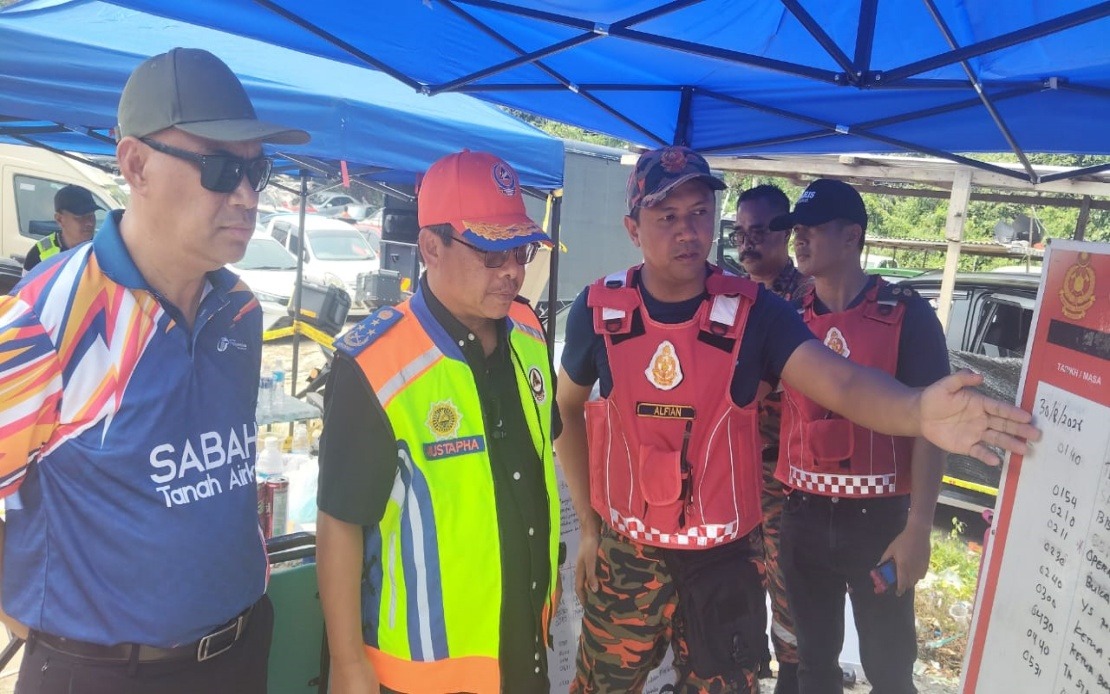
A devastating fire swept through Kampung Lok Buta in Kota Kinabalu in the early hours of Friday morning, resulting in the deaths of three children and the destruction of more than 200 residential structures. The incident, which occurred at 1.40 am, claimed the lives of Nana Abdullah, aged 4, her brother Mohd Asrul Abdullah, aged 6, and their cousin Nurfarahdilah Mohd Tajihah, aged 8. The tragedy has prompted an immediate and coordinated response from Sabah's government and local authorities to address the humanitarian crisis affecting the community.
In response to the scale of the disaster, authorities swiftly established two temporary relief centres at Dewan Kampung Likas and Dewan Damai to accommodate more than 200 displaced residents. Datuk Mustapha Sakmud, Minister in the Prime Minister's Department responsible for Sabah and Sarawak affairs, confirmed that these centres would serve as central hubs for victim registration, coordination of relief efforts, and distribution of donations. The Kota Kinabalu City Hall formally declared the affected area a disaster zone, a designation that activates emergency protocols and prioritizes resource allocation for recovery operations.
Mustapha, who is also the Sepanggar Member of Parliament, emphasised the critical importance of identifying students among the affected population to prevent educational disruption. This concern reflects broader recognition that disasters of this magnitude can have cascading effects on vulnerable populations, particularly children already dealing with the trauma of losing their homes. He committed to liaising with the Ministry of Education to ensure that pupils from primary and secondary schools, tertiary institutions, and technical vocational training centres receive necessary support to continue their studies without interruption.
The minister's visit to the site, accompanied by Datuk Seri Dr Sabin Samitah, the Kota Kinabalu mayor and District Disaster Management Committee chairman, underscored the seriousness with which state leadership is treating the incident. Mustapha called for immediate inter-agency coordination meetings to develop a comprehensive assistance programme for those affected. His intervention suggests that the government recognises the need for a multi-faceted response that addresses not only immediate shelter and food needs but also medium-term rehabilitation and economic support for displaced families.
In a significant demonstration of how disaster response operates within Malaysia's federal structure, Mustapha indicated that the matter would be escalated to the Malaysia Agreement 1963 Implementation Action Council, a high-level body responsible for coordinating federal and state interests in East Malaysia. He suggested that Prime Minister Datuk Seri Anwar Ibrahim and Sabah Chief Minister Datuk Seri Hajiji Noor would receive a comprehensive briefing from the Kota Kinabalu mayor regarding the disaster's impact and the resource requirements for recovery and rehabilitation. This escalation ensures that the fire receives attention at the highest levels of federal governance.
The involvement of multiple tiers of government reflects the complex interplay between local, state, and federal authorities in disaster management within Malaysia's constitutional framework. While local authorities like DBKK manage immediate response and coordination, state ministers like Mustapha serve as intermediaries to federal resources, and the Prime Minister's office provides overall strategic direction. This hierarchical approach, while sometimes appearing bureaucratic, allows for the mobilisation of substantial resources and ensures that recovery efforts align with national development priorities.
Mustapha pledged to provide initial financial assistance to the families of the three deceased children, a gesture intended to provide immediate relief during their period of acute grief. This direct intervention by a federal minister signals the government's commitment to supporting affected families beyond mere logistical coordination. The announcement of such assistance also serves to reassure the broader public that victims will not be abandoned to manage the consequences of the disaster without official support.
The Kampung Lok Buta fire represents one of the more significant residential disasters in recent Kota Kinabalu history, measured both by the number of homes destroyed and lives lost. For a community that likely includes working-class families with limited personal resources, the complete destruction of over 200 homes creates an immediate housing crisis alongside the psychological trauma of losing neighbours and, in some cases, family members. The establishment of relief centres represents the necessary first step in transitioning residents from crisis mode to managed recovery.
The disaster also raises broader questions about fire safety protocols in residential areas, particularly in densely populated informal settlements where housing standards and building codes may not be uniformly enforced. While the immediate priority is humanitarian response, investigators will eventually examine the fire's origin and trajectory to understand how it spread so rapidly and extensively. Such investigations typically inform future fire prevention strategies and may lead to enhanced safety requirements in vulnerable communities.
For Malaysian and Southeast Asian observers, this incident underscores the vulnerability of urban poor communities to large-scale disasters and the importance of disaster preparedness infrastructure. The rapid establishment of relief centres and the engagement of multiple government agencies demonstrate functional disaster response mechanisms, yet the scale of destruction suggests that prevention and mitigation remain critical areas requiring further investment and coordination.

