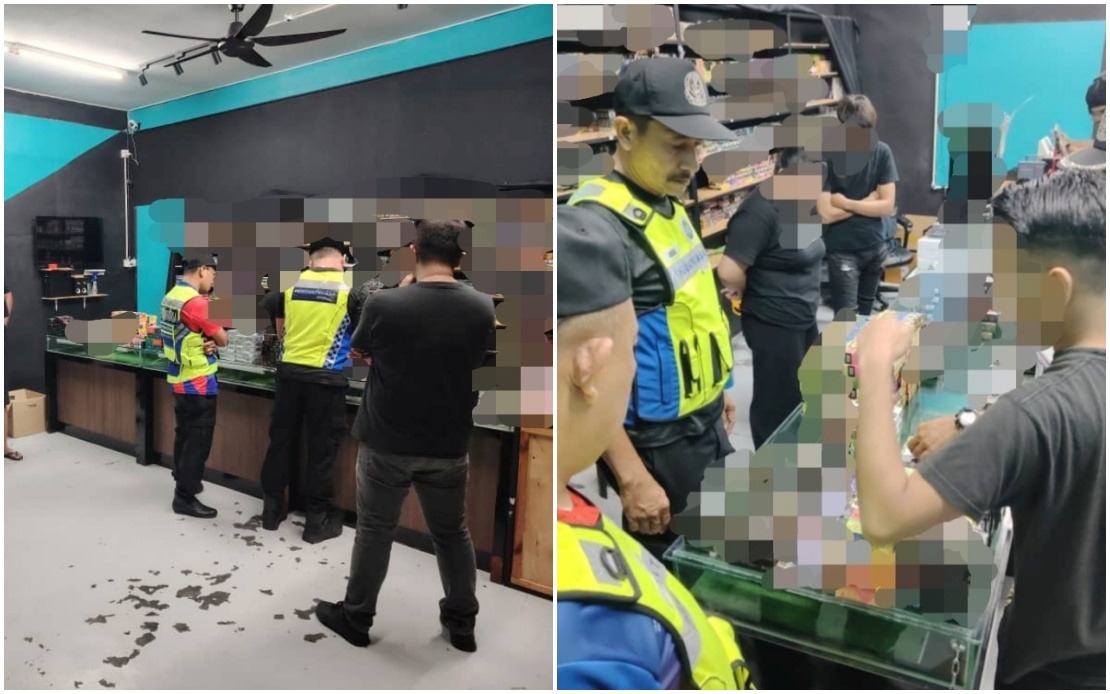
The Kangar Municipal Council (MPK) has intensified enforcement against illicit vape trading in Perlis by seizing a substantial cache of electronic cigarettes and related paraphernalia during a coordinated operation in the early hours of July 4. Officers confiscated 400 units of vape liquid alongside 70 devices from a business premises on Jalan Padang Behor, with the entire haul valued at RM15,000. The intervention represents part of a broader regulatory push by state authorities to eliminate vape sales ahead of an imminent prohibition taking effect in August 2025.
Affendi Rajini Kanth, the municipal council's president, confirmed that the operation unfolded between 10.30 pm and 1 am in partnership with the Royal Malaysia Police (PDRM). The enforcement action drew its legal foundation from the MPK Trade, Business, and Industry Licensing By-Laws, enabling municipal authorities to take decisive action against commercial establishments defying state directives. This collaborative approach between local enforcement and national police demonstrates the growing coordination between different government tiers to achieve regulatory objectives in Perlis.
The targeted establishment had accumulated a troubling compliance history prior to the seizure. Affendi disclosed that the premises had previously incurred multiple fines and received an official business cessation notice issued in August 2025, yet operators persisted in conducting vape sales activities. This pattern of repeated violations underscores the challenges municipal authorities face when property owners and business operators disregard regulatory warnings and continue illegal commercial operations despite formal notices and financial penalties.
Perlis state government's proclamation banning vape retail operations represents a significant policy stance within Malaysia's federation of states. Each Malaysian state maintains considerable autonomy over local business regulation and health-related matters within their jurisdiction, and Perlis has chosen to implement a comprehensive sales prohibition rather than pursue a licensing or regulation framework. The August 2025 effective date provided business owners several months' notice to wind down operations, yet some establishments have ignored this deadline entirely.
The applicable by-law framework permits substantial financial consequences for continued non-compliance. Under the provisions invoked during this operation, convicted offenders face fines reaching RM2,000 upon initial conviction, with additional daily penalties capped at RM200 for each day the violation persists following sentencing. This dual-penalty structure creates escalating financial pressure on non-compliant operators, though enforcement remains dependent on successful prosecution and conviction through the courts.
The seizure highlights broader concerns regarding vape product availability and youth access across Southeast Asia. Malaysia has experienced increasing scrutiny of electronic cigarette products in recent years, with health authorities raising concerns about nicotine dependence and the unknown long-term effects of inhaled substances. Several Malaysian states have adopted restrictive approaches, with Perlis joining jurisdictions implementing outright sales prohibitions rather than age-restriction models employed in other locations.
The operation's timing in the late evening hours suggests deliberate tactical planning to apprehend operators during peak business activity. Many retail establishments selling restricted products conduct transactions during evening and night hours to minimize detection, making nocturnal enforcement operations strategically sound. The MPK's collaboration with PDRM enhanced operational capacity, providing police presence to ensure officer safety and facilitate potential arrests if necessary.
For legitimate business operators in Kangar's commercial sector, the escalating enforcement presents clear messaging about municipal and state government commitment to implementing regulations. Properties located on established commercial thoroughfares like Jalan Padang Behor face particularly intense scrutiny, as municipal authorities prioritize high-visibility locations that may influence younger populations and undermine broader public health objectives.
The RM15,000 valuation of seized goods reflects the profitability potential that attracts entrepreneurs to vape retailing despite regulatory obstacles. Even after accounting for confiscation risks and potential fines, the financial incentives remain substantial enough to motivate continued illegal operations. This economic reality suggests that purely enforcement-based approaches may require supplementation with alternative strategies addressing underlying commercial incentives.
Looking forward, the August 2025 enforcement commencement date remains critical for Perlis authorities. MPK and state enforcement agencies will likely intensify inspections and operations during this period to ensure compliance from remaining operators. Subsequent months will demonstrate whether the prohibition achieves meaningful effect or whether underground vape trading emerges to supply demand despite formal legal restrictions.
The seizure also reflects evolving municipal governance in Malaysia, where local councils increasingly take proactive roles in public health enforcement beyond traditional infrastructure and sanitation responsibilities. This expansion of municipal authority into commercial product regulation represents a significant shift in local government engagement with state-level policy implementation.

