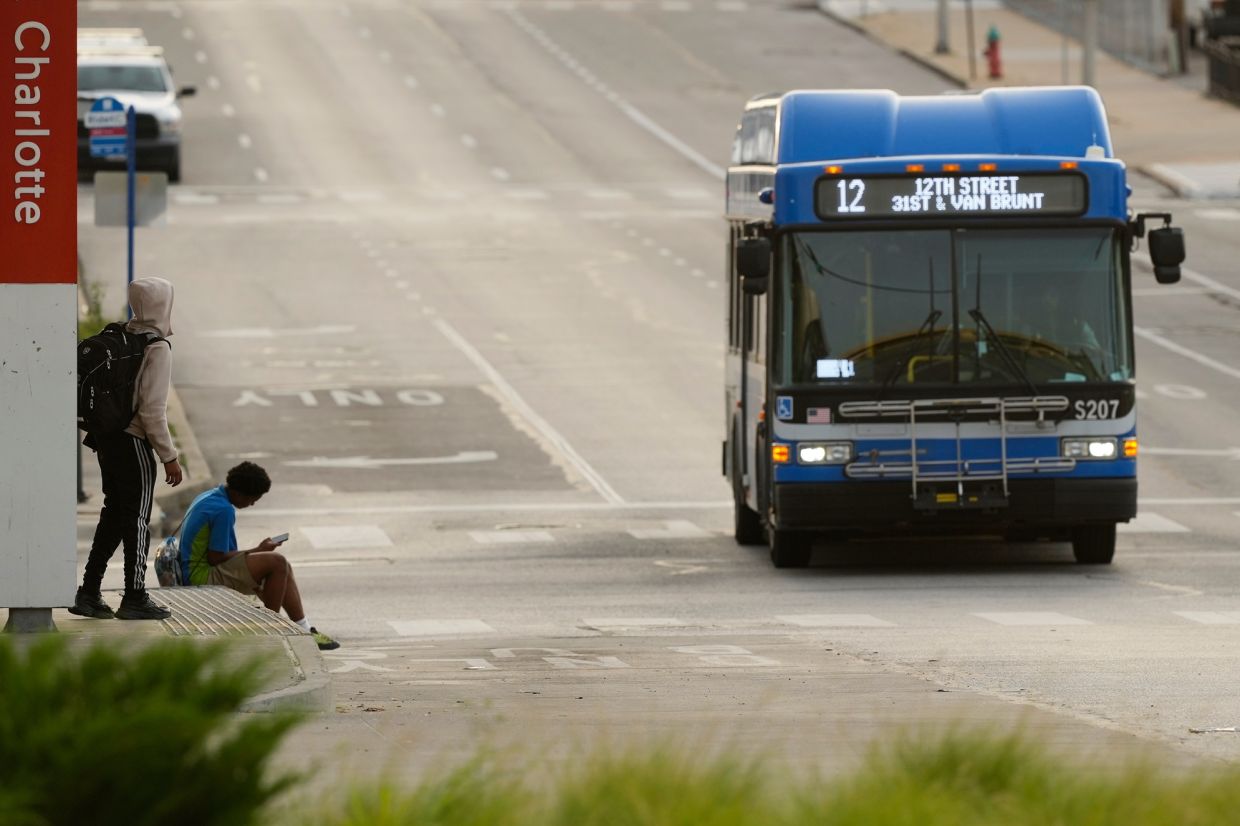
Kansas City, Missouri is moving forward with plans to deploy facial recognition software on its public transit buses, a development that has positioned the midwestern city as ground zero in the escalating American debate over artificial intelligence surveillance and citizen privacy. The transportation authority intends to equip cameras aboard some buses with technology capable of automatically identifying passengers whose faces match databases of banned riders, missing persons, or individuals on law enforcement watch lists. The initiative represents an unprecedented application of live facial recognition in the US public transportation context, drawing intense scrutiny from privacy advocates and civil rights organisations who view it as a potentially transformative moment in mass surveillance policy.
The project has become a focal point precisely because both proponents and opponents recognise its broader significance beyond Kansas City itself. Privacy researchers warn that if the system succeeds without substantial public backlash, it could establish a template that other American cities might adopt, potentially normalising facial recognition across the nation's transit infrastructure. Jay Stanley, a senior policy analyst with the American Civil Liberties Union's Project on Speech, Privacy and Technology, emphasised the historical uniqueness of the initiative, describing it as crossing a line that has remained uncrossed for approximately two and a half decades of modern surveillance technology development. The stakes extend beyond municipal borders; Southeast Asian cities watching American regulatory approaches to surveillance technology may eventually look to Kansas City's experience as a precedent when considering their own public transportation security measures.
The partnership between Kansas City Transportation Authority and SafeSpace Global, a Knoxville, Tennessee-based technology firm, demonstrates how private companies are increasingly positioning surveillance capabilities as essential safety infrastructure. SafeSpace Global has previously deployed facial recognition systems in nursing homes to alert staff when residents leave unattended, and later expanded into correctional facilities and educational institutions. The Kansas City transportation project marks the company's first venture into public transit, suggesting a calculated expansion strategy from controlled environments into more open public spaces. This progression is significant because it reflects how surveillance technology developers systematically normalise their systems through incremental deployment across different institutional contexts, each application building justification for the next.
The operational mechanics of the system reveal both its functionality and the underlying privacy concerns it generates. When bus-mounted cameras capture facial images, the data is immediately cross-referenced against active alert lists maintained by the transportation authority. If no match is found, the facial data is reportedly discarded rather than retained permanently. However, standard video footage from the buses continues to be archived on local servers for up to five years, creating a comprehensive record of transit use patterns even if individual facial recognition matches are not generated. This distinction between facial data disposal and video retention is precisely where privacy advocates identify a critical vulnerability, particularly as law enforcement agencies might request access to the archived footage for investigative purposes.
Official defenders of the initiative, including Tyler Means, the transportation authority's chief mobility and strategy officer, frame facial recognition as merely an extension of existing surveillance infrastructure already normalised on public buses. This framing suggests that the introduction of artificial intelligence analysis represents merely a technological upgrade rather than a fundamental shift in surveillance capability. Means characterised privacy concerns as temporary resistance that would dissipate once residents recognised the system functioned without tangible negative effects. This argument underestimates a crucial distinction that privacy researchers emphasise: passive video recording, while raising privacy concerns, operates differently from active real-time biometric analysis that can immediately identify specific individuals and trigger responses based on that identification. The latter capability represents a qualitatively different form of surveillance power.
Safety officials, including former Detroit Police Chief James Craig, argue persuasively that facial recognition represents a valuable law enforcement tool when deployed responsibly with appropriate oversight mechanisms and transparent policies. Craig points to successful applications in identifying crime suspects and argues that abandoning the technology entirely represents an overreaction that leaves cities without valuable security resources. His position reflects a genuine tension: facial recognition does possess legitimate operational applications for identifying suspects in criminal investigations or locating missing persons. The challenge lies in establishing meaningful constraints that prevent the technology from expanding beyond its stated purposes, a historical pattern that gives privacy advocates legitimate grounds for concern.
Previous American experiences with facial recognition deployment reveal why such concerns resonate strongly. Tampa, Florida's Ybor City neighbourhood witnessed an early attempt at facial recognition surveillance shortly after the September 11 terrorist attacks, but immediate public opposition and civil liberties challenges forced authorities to abandon the program. More recently, New Orleans police secretly utilised facial recognition technology contrary to explicit city ordinances, demonstrating how surveillance systems can proliferate even when formally prohibited. Detroit's partnership with private businesses to install cameras capturing live feeds to police departments similarly illustrates how facial recognition capabilities can expand through corporate partnerships that circumvent traditional democratic oversight channels. These precedents suggest that technological capabilities, once deployed, tend toward expansion regardless of initial restrictions.
The concerning asymmetry in surveillance expansion becomes apparent when examining how facial recognition systems scale their function. A technology initially justified for identifying missing persons or banned transit users can gradually expand to include additional watch lists, law enforcement suspects, immigration enforcement targets, or politically sensitive individuals. The infrastructure required to execute facial recognition is identical regardless of the purposes to which it is ultimately directed, meaning that building the system creates latent capacity for mission creep. Jay Stanley's warning that narrowly-defined watch lists inevitably expand over time reflects empirical observation of how surveillance systems evolve in practice, not merely theoretical speculation about potential abuse.
Kansas City's deployment timeline has been delayed from the originally anticipated spring launch, when the system was scheduled to provide security enhancements during World Cup matches. Technical challenges requiring upgraded Wi-Fi infrastructure to support both facial recognition cameras and new fare collection systems contributed to the postponement, but more significantly, the withdrawal of expected state funding due to concerns about the facial recognition component revealed political resistance even within Missouri government. This funding failure suggests that serious questions about surveillance technology have penetrated beyond civil liberties advocates into mainstream political discourse and government administration. The delays have proven sufficiently significant that Kansas City officials now plan to deploy additional police presence instead, with up to forty additional officers patrolling transit stops and centres during the World Cup period.
Despite the postponement, transportation authority officials remain committed to deployment, with Tyler Means expressing confidence that the program will launch within the current year and potentially expand to approximately thirty buses rather than the originally proposed nine-bus pilot program. This expansion trajectory suggests that regardless of initial public controversy, institutional momentum favours implementation. SafeSpace Global's chief executive Scott Boruff indicated readiness to proceed once financial obstacles are resolved, with installation and software configuration requiring an estimated three to four months. The expanded scope of the deployment indicates that delays have not diminished enthusiasm for the project but rather provided time to develop more ambitious implementation plans.
City Council member Ryana Parks-Shaw, serving as mayor pro tem, articulated a measured perspective suggesting that delays enable more careful deliberation rather than representing outright opposition to the technology. Her insistence on thoughtful implementation with transparent procedures and explicit safeguards reflects a middle-ground position increasingly common among elected officials grappling with surveillance technology decisions. This position acknowledges both legitimate safety applications and genuine privacy concerns, attempting to navigate between outright prohibition and unrestricted deployment. However, such middle-ground positions frequently prove unstable in practice, as the technical infrastructure supporting surveillance systems creates pressures toward expansion that individual safeguards struggle to contain.
The Kansas City initiative carries implications extending well beyond Missouri's borders. Southeast Asian cities developing their own public transportation security strategies observe how American jurisdictions navigate these questions, particularly as multinational technology companies increasingly offer facial recognition solutions across global markets. The regulatory frameworks, public acceptance patterns, and political decisions established through Kansas City's experience will likely influence how other regions approach similar technological deployments. The outcome of this experiment in American municipal surveillance policy may consequently shape security and privacy debates across Asia and the broader international community for years to come.

