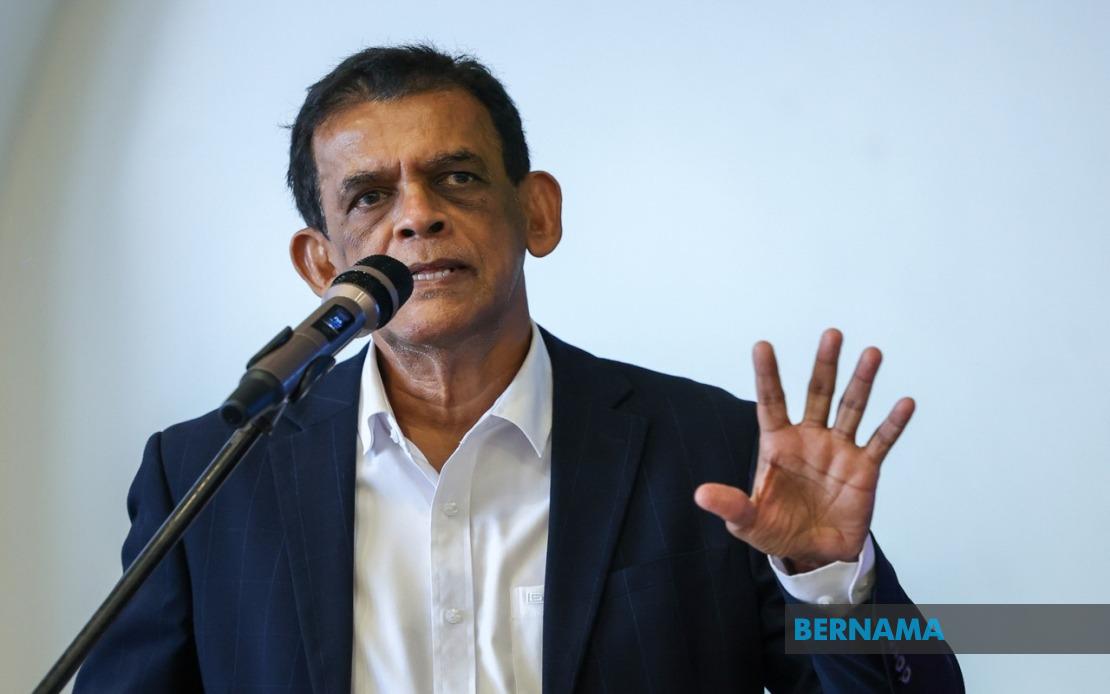
The Malaysian Artistes Association, known as Karyawan, has formally called on the government to take direct responsibility for managing the nation's music royalty collection and distribution infrastructure, citing persistent systemic failures that have undermined fair compensation for creators across more than two decades. Datuk Freddie Fernandez, the association's president, announced the proposal as part of several resolutions unanimously approved during the organisation's recent annual general meeting, signalling strong consensus within Malaysia's artiste community on the need for radical reform.
The current system has generated substantial revenue—public performance royalties alone approach RM200 million annually—yet has failed to ensure these funds reach their rightful recipients efficiently or transparently. Karyawan's diagnosis of the problem centres on structural weaknesses: fragmented collection mechanisms operated by multiple competing organisations, opaque administrative processes, high overhead costs that erode payouts, and ongoing disputes between collective management bodies over how royalties should be distributed among rights holders. These operational bottlenecks have created a credibility crisis within Malaysia's creative industries, with persistent complaints that the existing framework prioritises administrative interests over artist welfare.
The association has modelled its proposal on Indonesia's approach, where the National Collective Management Institution operates a centralised system under government oversight. That neighbouring country faced analogous challenges until decisive government intervention streamlined operations and eliminated the jurisdictional conflicts that previously characterised its royalty landscape. Fernandez cited this precedent as evidence that state-led reform can successfully address the institutional failures that plague regional music economies lacking unified governance structures. Indonesia's experience suggests that Malaysian policymakers need not develop entirely novel solutions, but rather could adapt proven mechanisms already operational in the region.
Karyawan's specific proposal centres on establishing a comprehensive digital platform operated under government supervision to consolidate music rights registration, usage monitoring, royalty calculation, and payment distribution into a single auditable system. This national music rights library would maintain verified records of every musical composition, sound recording, ownership structure, licensing agreement, usage report, collection activity, and distribution transaction, creating an immutable ledger accessible to all stakeholders. Such transparency would fundamentally alter the power dynamics within the industry, replacing opacity with verifiable data that artists, users, and government regulators could independently audit and analyse.
The automated matching capability embedded in this system represents a crucial innovation for Malaysian music administration. By correlating each song performance or streaming instance directly to registered rights holders, the platform would eliminate administrative discretion in royalty allocation, instead calculating and distributing payments based on objective usage data and verified ownership records. This mechanical approach to distribution would prevent the selective or discriminatory treatment of certain artists or rights holders, addressing one of the most corrosive complaints within the current system where subjective decisions by collection bodies have generated resentment and litigation.
Beyond immediate fairness concerns, Karyawan's proposal addresses emerging technological challenges that existing regulatory frameworks poorly accommodate. The association specifically highlighted artificial intelligence-generated music as a phenomenon requiring proactive governance before it becomes widespread enough to destabilise the industry entirely. A government-supervised digital platform could establish clear protocols for AI-generated content, preventing uncompensated machines from displacing human creators without explicit industry-wide agreement on how such innovations should be managed and monetised. Without intervention, Malaysia risks becoming a cautionary tale of creative destruction driven by technological disruption that domestic institutions proved too fragmented to regulate effectively.
The governance framework underpinning this proposal aligns with Malaysia's newly updated Copyright (Collective Management Organisation) Guidelines 2025, which emphasise institutional accountability, transparent record-keeping, and comprehensive reporting mechanisms that current arrangements demonstrably fail to satisfy. Government assumption of these functions would automatically establish compliance with elevated standards that the private and semi-private bodies currently managing royalties have struggled to implement, whether through resource constraints, institutional conflicts of interest, or deliberate resistance to oversight. This regulatory alignment suggests that Karyawan's proposal addresses not merely industry preference but documented governance deficiencies that Malaysia's own policy framework has now identified as unacceptable.
The association's intervention follows protracted tension between Karyawan, the Intellectual Property Corporation of Malaysia, the Ministry of Domestic Trade and Cost of Living, and the three existing royalty collection organisations—Music Authors' Copyright Protection, Public Performance Malaysia, and Recording Performers Malaysia—including legal actions that reflect deep institutional dysfunction. Rather than seeking incremental reform within the current system, Karyawan has concluded that restructuring proves impossible without fundamental reconfiguration of ownership and control. This represents not merely a policy recommendation but an implicit judgment that existing institutions have become obstacles rather than solutions to industry problems.
The human costs of current arrangements became starkly evident in the case of the late Malaysian music legend Sudirman Arshad, whose family waited years before finally receiving RM367,000 in accumulated royalties—a delayed settlement that should have reached the artist during his lifetime. This example exemplifies the system's failure at its most basic function: connecting creators with compensation owed them. Karyawan subsequently documented multiple members experiencing similar deprivation, with artists systematically underpaid or entirely unpaid by record labels and streaming platforms. The association is currently consolidating these complaints to pursue collective legal action, anticipating protracted litigation that governmental intervention might render unnecessary.
The technological and governance implications of centralised digital royalty management extend beyond immediate artist compensation to encompass broader economic restructuring within Malaysia's creative sector. A transparent, auditable system would facilitate more sophisticated economic analysis of music consumption patterns, allowing policymakers to identify underperforming sectors, emerging artist categories, and market dynamics invisible within the current fragmented structure. Investment decisions within the recording industry, talent development funding, and cultural policy formulation could all be informed by comprehensive data currently unavailable because collection mechanisms deliberately withhold information to preserve competitive advantages between rival management organisations.
For Malaysia's broader creative economy positioning within Southeast Asia, this reform effort signals determination to professionalise intellectual property administration according to international standards. The region's creative industries require institutional credibility to attract international investment, partnerships, and talent. A government-operated royalty system operating with transparency and efficiency comparable to developed economies would enhance Malaysia's reputation as a jurisdiction serious about protecting creative rights and ensuring fair compensation, potentially positioning the nation as a regional hub for music production and rights management services. Conversely, failure to reform risks further brain drain as Malaysian artists seek opportunities in jurisdictions offering superior administrative protection and compensation reliability.
The proposal's adoption by Karyawan represents genuine consensus building within Malaysia's artiste community, yet implementation requires political will from the government and acceptance from existing collection organisations whose institutional interests face displacement. The path forward demands careful negotiation addressing legitimate concerns from affected parties whilst maintaining focus on the ultimate objective: ensuring that Malaysia's creative workers receive fair, timely compensation for their intellectual output. Without decisive action, the music industry will continue generating substantial wealth that fails to reach its creators, perpetuating the dysfunction that has characterised this sector for two decades.

