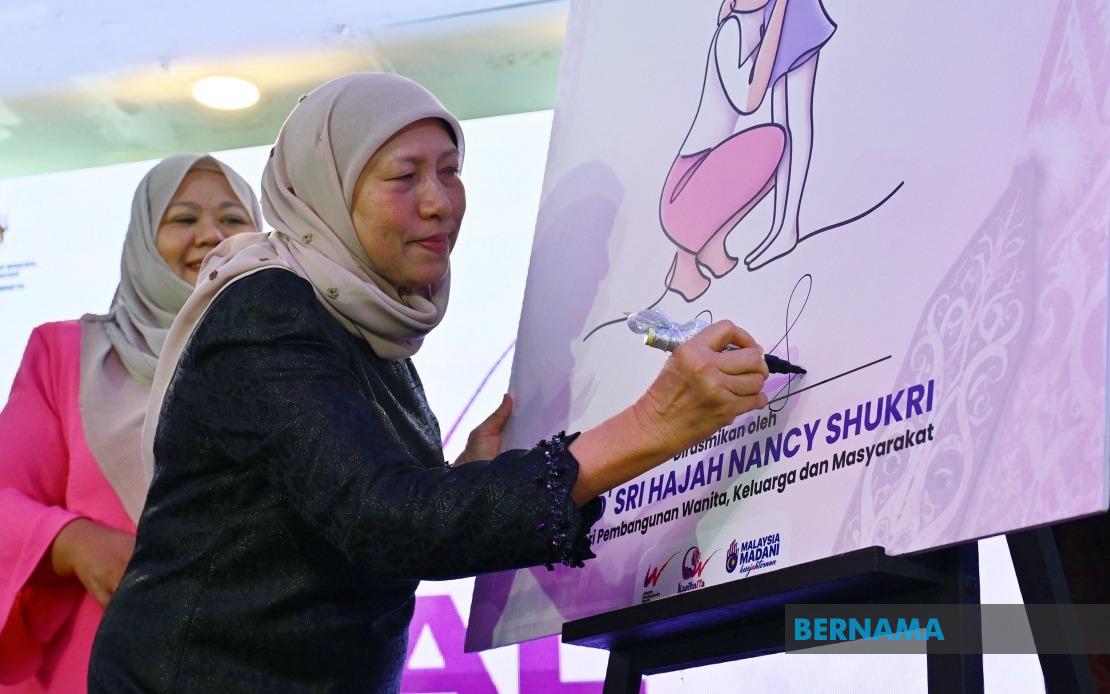
The Ministry of Women, Family and Community Development has expanded its Single Mothers Support programme, known as KasihnITa, to Sarawak, marking another phase in a nationwide rollout aimed at providing holistic support to one of Malaysia's most vulnerable demographics. Minister Datuk Seri Nancy Shukri inaugurated the Sarawak edition of KasihnITa 2026 this week, bringing together approximately 130 participants for a three-day intensive programme designed to equip single mothers with practical knowledge and access to critical support services.
The initiative reflects a strategic shift in how the government approaches social welfare for single mothers, moving beyond simple financial assistance towards a comprehensive ecosystem of support that addresses the multifaceted challenges these women face. By clustering multiple government agencies under one platform, KasihnITa creates a one-stop resource centre where single mothers can access information and guidance previously scattered across different departments. The programme brings together the Credit Counselling and Debt Management Agency, Bank Negara Malaysia, the Legal Aid Department, and the Syariah Judiciary Department, ensuring participants receive credible, authoritative information directly from the agencies responsible for implementing these services.
Sarawak's inclusion represents significant progress for a state where geographic challenges and dispersed populations often limit access to government support programmes. Following the initial rollout in Selangor, the expansion demonstrates the ministry's commitment to ensuring that support reaches beyond the peninsula's developed urban centres. This staged approach allows the ministry to refine programme delivery based on feedback from earlier locations while tailoring content to address region-specific concerns and needs that may differ between states.
A central pillar of KasihnITa is financial literacy and household economic management. Single mothers frequently struggle with budgeting, debt management, and investment decisions—challenges compounded by often being the sole income earner in their families. By equipping participants with financial management knowledge, the programme aims to help women make informed decisions about family finances, plan for their children's education, and build long-term financial resilience. This educational component addresses a root cause of poverty rather than merely treating symptoms through welfare payments.
The legal dimension of the programme addresses a particularly acute problem: child maintenance compliance. When ex-partners fail to fulfil court-ordered maintenance obligations, single mothers often lack knowledge of their options or the confidence to pursue legal remedies. By providing direct access to advice from the Legal Aid Department and Syariah Judiciary Department, KasihnITa empowers women to enforce their legal rights without fear or confusion about procedures. This is particularly significant in Malaysia's dual legal system, where family law matters are divided between civil and Islamic courts depending on the parties' religious affiliation.
Nancy emphasised that the programme's design reflects a commitment to inclusive policymaking, with the ministry actively seeking direct feedback from participants to inform future policy adjustments. This feedback mechanism represents a departure from top-down policy formulation, instead centring the voices and experiences of affected women in shaping support frameworks. The minister stressed that government support extends beyond financial aid to encompass legal assistance, recognising that comprehensive protection of children's rights requires both material support and legal enforcement mechanisms.
The programme also addresses the psychological and social dimensions of single motherhood, which are frequently overlooked in conventional welfare frameworks. By bringing together 130 women facing similar circumstances, KasihnITa creates space for peer support, experience-sharing, and mutual encouragement. This community-building aspect is significant, as single mothers frequently experience social stigma and isolation, particularly in more traditional communities. The solidarity generated through shared participation can strengthen women's confidence and resilience in navigating their circumstances.
For Malaysian policymakers, KasihnITa represents an evolving understanding of social protection that moves beyond charity towards empowerment. Rather than positioning single mothers as passive beneficiaries of government handouts, the programme treats them as active economic agents requiring knowledge, legal support, and institutional access to fulfil their roles as family providers and guardians of their children's interests. This philosophical shift has implications for how Malaysia approaches other vulnerable populations and social challenges.
The expansion to Sarawak also signals the ministry's recognition that single motherhood is a significant demographic phenomenon affecting households across Malaysia's diverse regions. Single mothers represent a substantial portion of the population, and many struggle without formal support systems or awareness of available assistance. By making support accessible and reducing barriers to accessing services, KasihnITa addresses a gap in Malaysia's social safety net that has often been inadequately served.
As the programme continues its nationwide expansion, its success will depend on sustained political commitment, adequate resourcing, and genuine inter-agency coordination. The initiative's value lies not merely in the services each agency provides independently, but in how effectively they are integrated and made accessible through a unified platform. For Malaysian readers, particularly those in Sarawak and other states where the programme will eventually reach, KasihnITa represents tangible evidence that government is actively working to address the specific challenges faced by single mothers, moving beyond rhetoric towards practical institutional support.

