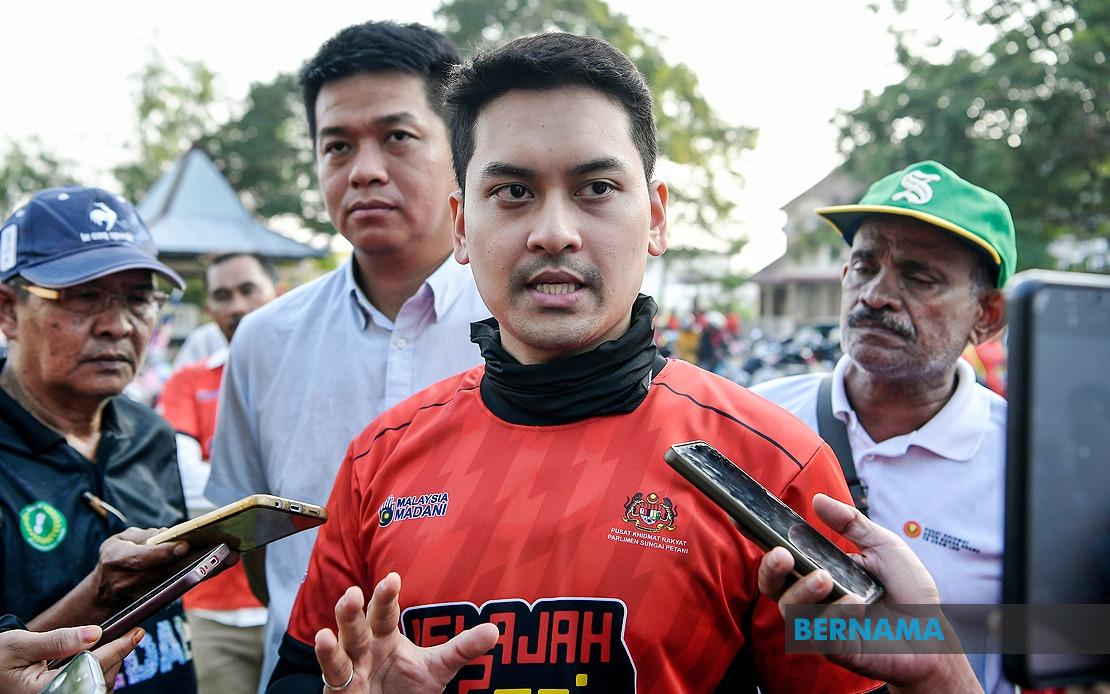
The Ministry of Youth and Sports has embarked on an ambitious nationwide consultation exercise designed to capture the voices and priorities of Malaysia's youth population ahead of the October 2027 budget announcement. Launching in the northern zone this week, the MADANI Youth Budget Tour represents a systematic effort to integrate grassroots youth perspectives into national financial planning, beginning with constituencies across Kedah, Penang, and Perlis before expanding to remaining states throughout the coming month.
Youth and Sports Minister Dr Mohammed Taufiq Johari framed the initiative as essential groundwork for meaningful policy formulation. Speaking at the Sahabat MADANI Merdeka Eve culminating event at Universiti Teknologi MARA (UiTM) Penang on Thursday, he explained that the six-zone structure would enable systematic coverage across the country, with collected feedback subsequently presented to Prime Minister Datuk Seri Anwar Ibrahim to inform budgetary priorities. The timing of the tour underscores the government's commitment to completing consultation phases well before the formal budget tabling, allowing sufficient opportunity for analysis and incorporation of youth-centred recommendations.
Central to this consultation model are town hall-style engagement sessions that position young Malaysians as active stakeholders rather than passive policy recipients. Dr Taufiq emphasised that contemporary youth demonstrate willingness to articulate their concerns and aspirations directly to government representatives, a dynamic shift in citizen participation that merits formal channels. By creating structured platforms for this dialogue, the ministry aims to ensure that youth priorities—whether pertaining to employment, education, skills development, or social services—receive direct consideration during budget deliberations rather than being filtered through intermediary layers.
The minister articulated a broader conception of youth involvement extending beyond narrow budgetary concerns. He positioned young people as essential bridges for national unity, tasking them with serving as advocates for mutual respect and cohesion across religious and ethnic boundaries. This framing reflects the government's recognition that sustained social harmony requires active youth participation in promoting inclusive values, particularly in a diverse society navigating complex demographic and ideological currents. By linking budget consultation to expectations around community stewardship, the initiative attempts to cultivate a generation invested in both personal advancement and collective stability.
The accompanying Sahabat MADANI programme represents the operational infrastructure supporting this broader engagement strategy. Since its national-level launch, the initiative has mobilised 11,060 volunteers across Malaysia dedicated to fostering community service and promoting mutual respect. This volunteer network effectively extends government reach into local communities, identifying grassroots concerns that might otherwise remain invisible to policymakers. For budget 2027, this distributed volunteer base can serve as a valuable feedback mechanism, ensuring that perspectives from diverse communities inform central planning.
For Malaysian readers, the implications of this approach warrant careful consideration. The systematic collection of youth input reflects a recognition that younger generations face distinct economic circumstances, labour market dynamics, and aspirational requirements compared to their predecessors. Budget 2027 could therefore address education-to-employment pathways, apprenticeship opportunities, startup ecosystem support, and digital skills development with particular intensity if youth consultation yields clear mandates in these areas. Similarly, if engagement sessions reveal widespread concerns about housing affordability, mental health services, or climate-related economic transitions, these issues may receive heightened budgetary attention.
The initiative also signals a potential recalibration of government communication strategy. Rather than presenting finished policies to youth populations, the consultation model implicitly acknowledges that young Malaysians possess valuable insights worthy of shaping initial policy architecture. This represents a departure from top-down governance approaches, though the extent to which collected feedback translates into actual budgetary amendments remains to be observed. The credibility of the exercise depends significantly on transparent reporting of how youth input influenced final allocations.
From a Southeast Asian perspective, Malaysia's structured youth consultation approach positions the country within broader regional trends toward participatory governance. Singapore and Indonesia have implemented various youth engagement mechanisms, though often with different institutional emphases. Malaysia's six-zone nationwide tour demonstrates commitment to geographic inclusivity, potentially addressing perceptions of Kuala Lumpur-centric policymaking by ensuring that youth in peripheral regions have equivalent opportunity to contribute feedback.
The timing of this initiative also merits examination. With Budget 2027 tabling scheduled for October—roughly two months after the tour's commencement—the government has allocated what appears to be a compressed timeframe for systematic feedback analysis and integration. Whether this timeline permits meaningful incorporation of suggestions or primarily serves a consultative legitimacy function remains unclear. Future communications regarding how many recommendations were adopted would substantially validate the initiative's substantive impact.
Prime Minister Anwar Ibrahim's presence at the launch event underscores the government's political investment in youth engagement. His attendance signals that budget 2027 carries particular significance for the current administration and that youth perspectives are deemed sufficiently important to warrant prime ministerial acknowledgment. This high-level visibility may encourage greater youth participation in consultation sessions while simultaneously raising expectations that their feedback will receive consequential consideration.
The broader institutional landscape suggests that this tour represents one component of a multi-faceted approach to youth policy development. The Sahabat MADANI programme, the ministry's engagement initiatives, and the formal budget consultation exercise together constitute an ecosystem designed to capture youth perspectives across multiple channels. Success hinges on whether these various mechanisms communicate effectively with one another and whether collected data ultimately informs policy substance rather than serving primarily symbolic functions.

