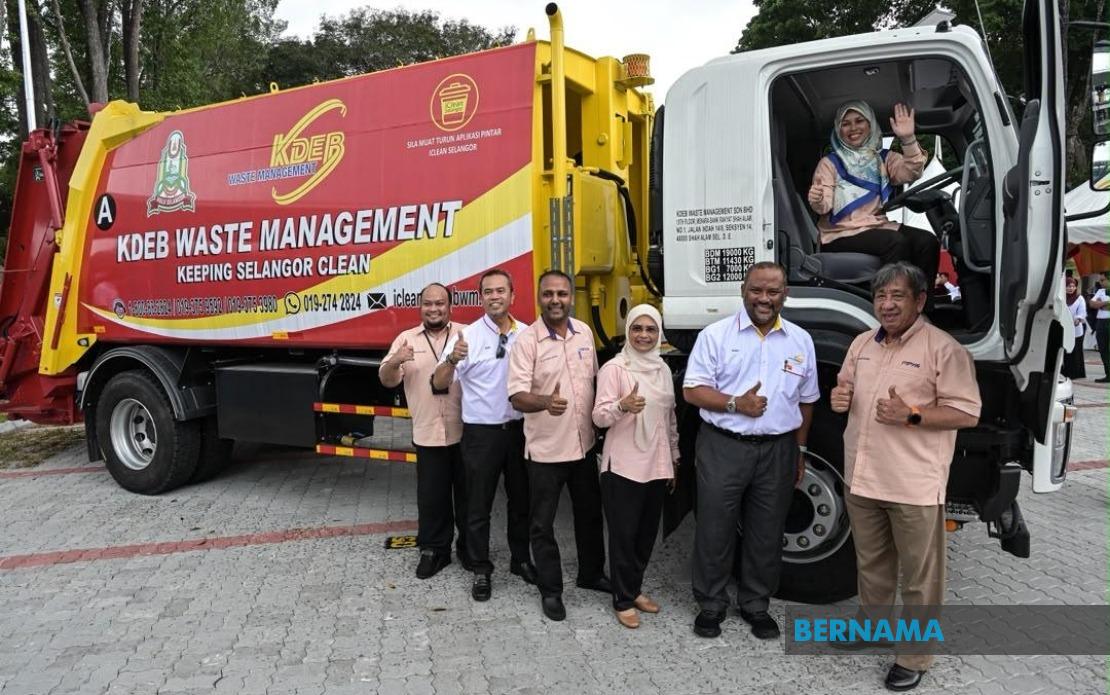
KDEB Waste Management (KDEBWM) has unveiled 33 newly acquired compactor lorries to enhance refuse collection across Hulu Selangor, marking the formal launch of its seven-year operational contract with the Hulu Selangor Municipal Council (MPHS) that commenced on July 1. The fleet comprises 18 Isuzu vehicles, five Mitsubishi Fuso trucks, and ten UD Trucks, each equipped with contemporary waste management technology designed to optimize collection efficiency and environmental standards throughout the district until June 30, 2033.
Datuk Ramli Mohd Tahir, managing director of KDEBWM, highlighted during the handover ceremony that the new equipment represents a significant advancement from the company's previous operational period. The organization secured a renewal of its waste services mandate following the expiration of its initial seven-year agreement with MPHS in June, underscoring the municipal council's confidence in its performance over the preceding contract cycle. This continuity in service delivery reflects growing recognition within local governance structures that consistent, long-term partnerships with specialized waste management operators can yield measurable improvements in urban sanitation.
The scale of waste collection in Hulu Selangor has expanded considerably, with Datuk Ramli noting that daily collection volumes have risen substantially from the 100 to 150 tonnes managed during the initial contract period to current levels fluctuating between 150 and 250 tonnes, with projections suggesting potential daily volumes could reach 300 tonnes. This escalation mirrors the demographic and economic growth experienced across the Selangor region, reflecting increased residential development and expanded commercial activity. The capacity enhancement through the new fleet acquisition directly addresses this trajectory, positioning KDEBWM to accommodate future expansion while maintaining service quality standards.
The partnership between MPHS and KDEBWM carries a financial commitment of RM117.2 million across the seven-year duration, translating to approximately RM16.7 million in annual expenditure from municipal coffers. This substantial investment reflects the municipality's prioritization of waste management infrastructure at a time when Malaysian urban centers grapple with escalating solid waste volumes. For ratepayers and residents, such financial allocation represents a significant component of municipal service delivery, making operational efficiency and transparency increasingly important factors in evaluating local government performance.
A key operational innovation accompanying the new contract represents a fundamental shift in collection methodology. MPHS president Julaiahah Jamaludin outlined the introduction of a door-to-door collection system effective from July 1, replacing the previous arrangement whereby residents deposited refuse in communal receptacles. Under this new framework, KDEBWM contractors now undertake scheduled visits to individual residences, collecting waste directly from household premises according to predetermined timetables. This approach seeks to enhance collection consistency while reducing the visual clutter and hygiene concerns associated with stationary bin storage in public spaces.
The transition to the new collection system requires residential adaptation and compliance with revised waste management protocols. The traditional leach bins previously utilized throughout the district have been phased out in favor of individual household containers meeting specified standards. Residents must now procure covered waste bins with a minimum capacity of 120 litres, clearly labeled with their residential address or lot number to facilitate accurate collection tracking and prevent misidentification. These seemingly granular requirements reflect the operational logic underlying modern waste management systems, where standardization and clear identification enable efficient routing and reduce collection errors.
Proper waste preparation represents another dimension of the revised collection framework. Households are instructed to place all domestic refuse into sealed plastic garbage bags before depositing them in their designated bins, with the crucial requirement that bin lids remain closed at all times. This layered containment strategy serves multiple purposes: it prevents scavenging by stray animals, reduces rainwater infiltration that complicates waste processing, minimizes odor emission during storage intervals between collection cycles, and maintains residential aesthetic standards. Compliance with these protocols ultimately determines the system's effectiveness in delivering the promised improvements in sanitation and environmental management.
MPHS has simultaneously developed initiatives addressing industrial and commercial waste streams within the district. Working in conjunction with KDEBWM, the municipal council has established arrangements whereby small and medium enterprises throughout Hulu Selangor can access industrial waste collection services via concession panel companies. This multi-tiered approach recognizes that residential and commercial waste streams possess differing characteristics, volumes, and handling requirements, necessitating specialized collection and processing protocols. The formalization of such arrangements under the broader municipal waste framework reflects maturation in how local authorities conceptualize comprehensive waste management across diverse economic sectors.
The KDEBWM contract renewal and fleet enhancement occur within a broader context of Malaysia's evolving approach to municipal services and urban governance. Across Selangor and other developed states, local authorities increasingly recognize that specialized service delivery through established operators can achieve superior outcomes compared to direct municipal provision. This contracting model creates accountability structures whereby performance metrics and service standards become contractually binding obligations, theoretically creating stronger incentives for operational excellence than hierarchical bureaucratic arrangements. However, such models simultaneously require robust municipal oversight mechanisms to ensure contractors maintain promised service levels throughout contractual periods.
The expansion of waste collection capacity in Hulu Selangor holds implications extending beyond local boundaries. As one of Selangor's fastest-growing districts, the region's urban development trajectory influences broader state-level waste management challenges. Cumulative waste volumes across the Klang Valley metropolitan region continue escalating as population concentrations and economic activity intensify, placing pressure on landfill facilities and necessitating investment in collection infrastructure. KDEBWM's expansion in Hulu Selangor exemplifies how peripheral municipal areas increasingly demand investment parity with established urban cores, reflecting demographic redistribution and suburban expansion patterns characteristic of contemporary Malaysian metropolitan development.
Residents adapting to the new collection system should recognize that such transitions, while occasionally inconvenient, typically generate long-term benefits through improved service consistency and reduced neighborhood environmental degradation. The comprehensive protocols outlined by MPHS—from bin specifications through waste preparation requirements—reflect international best practices in municipal solid waste management that have proven effective in reducing collection times, lowering operational costs per unit of waste collected, and minimizing environmental impacts. Early compliance with these standards facilitates smoother implementation while enabling contractors to establish efficient collection routes and schedules.
Looking forward, the seven-year contract through 2033 positions KDEBWM and MPHS to address anticipated waste growth in Hulu Selangor. Should demographic projections materialize, the district's waste volumes could increase substantially beyond current 300-tonne daily estimates, potentially necessitating further infrastructure enhancement before contract expiration. The current fleet deployment and operational framework establish a baseline from which future scaling can proceed, though this requires ongoing dialogue between the contractor, municipal authorities, and residents regarding system performance and emerging challenges. Success in implementing this contract renewal may influence MPHS and other Selangor municipalities' decisions regarding future waste management arrangements, potentially establishing KDEBWM as a preferred operational partner for similar services across the broader region.

