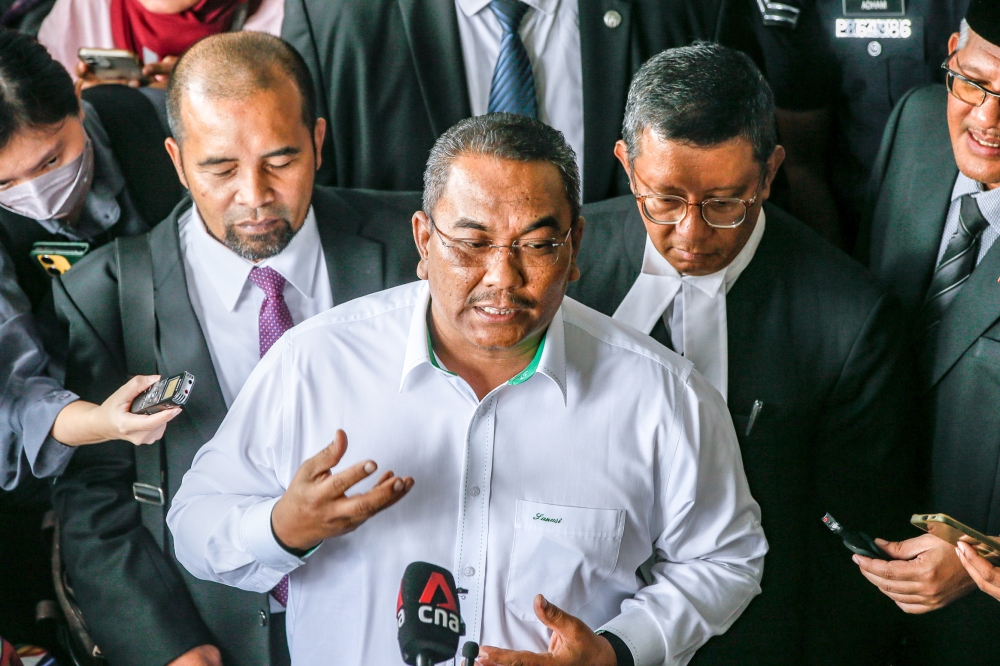
Kedah Menteri Besar Datuk Seri Muhammad Sanusi Md Nor has taken legal action against DAP politician Nga Kor Ming and two others, issuing letters of demand that accuse them of deliberately misrepresenting his statements to the media and public. The decision, announced in Alor Star on August 5, underscores the escalating friction between political figures within the ruling coalition, where disputes over messaging and attribution have increasingly become matters of formal legal contention rather than parliamentary or party-level resolution.
The letter of demand mechanism represents a preliminary legal warning that precedes formal defamation or libel proceedings in Malaysian civil courts. By issuing such demands, Sanusi has signalled his intention to pursue monetary compensation and a public retraction should the recipients not respond satisfactorily within the stipulated timeframe. In Malaysia's political context, such moves are typically employed when a public figure believes their reputation has been substantially damaged through false or misleading attribution of statements. The action raises questions about the state of inter-party relations within the governing coalition and whether disputes are being resolved through communication channels or through increasingly adversarial legal mechanisms.
Nga Kor Ming, who holds significant influence within the DAP's political apparatus, has been central to various coalition discussions and media engagements. His alleged misrepresentation of Sanusi's remarks appears to have centred on policy positions or statements made during official functions or media appearances. The specific nature of the disputed remarks has not been fully detailed in initial reporting, but the gravity of pursuing legal action suggests the distortion had material consequences for Sanusi's public standing or policy position. Such incidents, while seemingly administrative in nature, carry substantial weight in Malaysia's intensely scrutinised political environment where narrative control and accurate attribution of positions significantly influence voter perception and intra-coalition dynamics.
The involvement of two additional recipients of the letter of demand suggests this may not be a singular incident of misquotation but rather part of a broader pattern of alleged misrepresentation. This pattern-based approach to legal action indicates that Sanusi's office believes there has been a coordinated or systematic effort to distort his statements. Whether these other recipients are media personnel, fellow politicians, or party officials remains a critical distinction, as it would clarify whether the dispute involves direct political rivals or extends to media organisations accused of irresponsible reporting. In Malaysian media law, letters of demand to news outlets carry particular weight given the country's regulatory framework and the financial implications of defamation claims against publishing entities.
The timing of this action occurs within a broader context of coalition strain. Kedah represents a significant political prize in Malaysia's federal structure, with the state government holding considerable influence over development policies, resource allocation, and political symbolism for the ruling coalition. Tensions between coalition partners at the state level frequently reflect broader national disagreements over power-sharing arrangements, policy direction, and resource distribution. Sanusi's move to pursue legal remedies rather than manage the dispute through coalition channels suggests either that internal mechanisms for resolving such disputes have been exhausted or that the damage to his reputation was deemed too severe to address through diplomatic means alone.
For Malaysian and regional observers of political governance, this incident illustrates the increasingly litigious nature of contemporary politics in the country. Rather than relying on party discipline, media councils, or parliamentary mechanisms to address disputed statements, political figures are increasingly turning to the civil courts and the threat of expensive litigation as tools to enforce accountability. This trend has implications beyond the immediate dispute, as it may raise costs for political participation and media scrutiny while potentially chilling legitimate public discourse if figures become overly cautious about engaging with controversial policy positions.
The DAP, as a major component of the ruling coalition, has long positioned itself as a defender of democratic values and transparent governance. The allegation that party figures or those associated with the party have deliberately distorted another coalition member's remarks strikes at questions of political integrity and whether coalition partners genuinely operate within shared standards of good faith engagement. How the DAP responds—whether through internal discipline of Nga Kor Ming, through public clarification of the disputed remarks, or through contestation of Sanusi's allegations—will signal the party's commitment to maintaining coalition cohesion and institutional norms around accurate political communication.
From a Southeast Asian perspective, Malaysia's experience with managing multi-party coalitions remains instructive. Coalition governance inherently involves competing interests, policy disagreements, and struggles over credit for achievements. However, the escalation of such disputes into formal legal action suggests that Malaysia's political culture may be shifting toward more adversarial resolution mechanisms. This contrasts with earlier periods when coalition management involved more extensive negotiation and mediation, even when disagreements were substantial. The increasing resort to litigation may reflect deeper fragmentation within the coalition or a broader cultural shift toward legalism as a primary dispute-resolution tool.
Looking forward, the outcome of this dispute will carry significance beyond Kedah state politics. If Sanusi successfully pursues his claims through the courts, it may establish a precedent encouraging other political figures to pursue similar legal action when they believe their statements have been misrepresented. Conversely, should the letters of demand be withdrawn or the legal claims prove difficult to substantiate, it might reinforce expectations that political disputes should remain within the political sphere rather than migrate to the judiciary. Either trajectory reflects ongoing tensions about how Malaysia's political system manages disagreement, maintains accountability, and balances the rights of public figures to defend their reputation against the interests of free political discourse and coalition stability.

