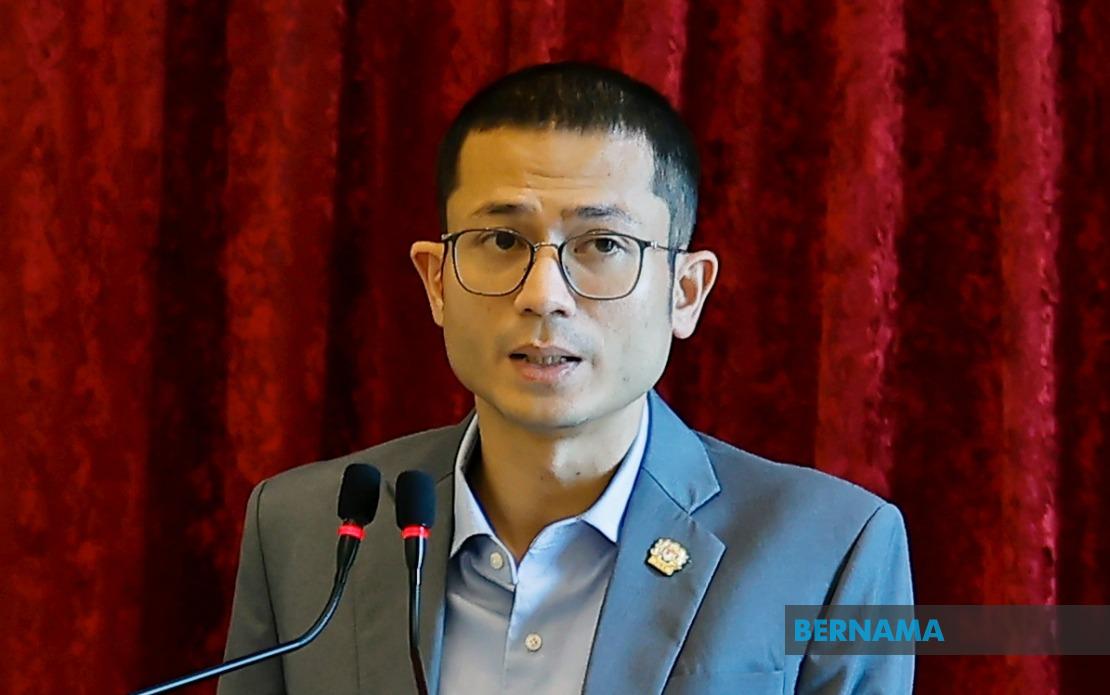
The Kedah branch of Parti Keadilan Rakyat has strongly rebuked Menteri Besar Datuk Seri Muhammad Sanusi Md Nor for allegedly making inflammatory comments directed at Prime Minister Datuk Seri Anwar Ibrahim concerning the contentious matter of gambling premises licences in the northern state. The condemnation came through Tunku Nashrul Abaidah, the State Leadership Council communications director, who issued a formal statement on Tuesday defending the Prime Minister and drawing attention to what he characterised as baseless accusations levelled by the state's chief executive.
At the centre of the dispute lies a legal battle over gambling licensing authority in Kedah. The Menteri Besar's administration had taken administrative action to restrict gambling premises operations, but that decision was subsequently overturned by the courts. Tunku Nashrul made explicit that the judicial system, operating independently from the executive branch, found the state administration's action to have overstepped its jurisdictional boundaries. Furthermore, when the state government sought leave to appeal the court's verdict to the Federal Court, that application was also rejected, effectively closing off legal avenues for reversing the decision.
Crucially, Tunku Nashrul emphasised that the Prime Minister bore no responsibility whatsoever for the court's ruling. He invoked Malaysia's constitutional framework of separation of powers, whereby the judiciary operates as an independent branch separate from both the legislature and executive. In this framework, the Menteri Besar cannot logically attribute the court's decision to the Prime Minister, as the judiciary makes determinations free from executive interference. This distinction between constitutional roles forms the crux of PKR's argument that accusations directed at the Prime Minister are fundamentally misdirected and unfounded.
The row originated when Sanusi's administration challenged gambling operators holding what it deemed unlawful licences. The operators, however, pursued legal recourse, and the courts sided with them, finding that Kedah's administrative apparatus lacked the authority to make such determinations unilaterally. Rather than accepting this outcome, Tunku Nashrul suggested, Sanusi has instead sought to redirect blame externally. This pattern of shifting responsibility, according to PKR's communications director, represents a failure of political leadership and an attempt to obscure administrative missteps through rhetorical attacks on national-level figures.
In a pointed counterargument, Tunku Nashrul drew attention to the contrasting gambling policies implemented under different administrations. When the Perikatan Nasional government held power, he noted, the PAS-led component in that coalition substantially expanded special lottery draws from eight times annually to twenty-two times yearly. This expansion, he implied, suggests that gambling liberalisation rather than prohibition has characterised certain conservative-led administrations. By contrast, when Anwar Ibrahim assumed his current dual role as Prime Minister and Finance Minister, one of his policy adjustments was to reverse this expansion, returning special draws to their original frequency of eight times per year. This historical record, Tunku Nashrul argued, undermines any moral authority Sanusi might claim on the gambling question.
The Menteri Besar's alleged remarks were reportedly delivered during a public forum titled "Penjelasan Isu Halangan Pengharaman Judi Di Kedah" (Clarification on Issues Obstructing the Gambling Ban in Kedah) held at Dewan Seri Mentaloon in Alor Setar on the preceding Tuesday evening. The gathering ostensibly aimed to explain obstacles encountered in implementing a state-level gambling prohibition. However, according to Tunku Nashrul's account, the event became a platform for launching personal attacks against the Prime Minister rather than substantively addressing the legal and administrative questions at stake.
The PKR official characterised the Menteri Besar's approach as fundamentally dishonest—an attempt to fabricate scapegoats for institutional failures rather than confront them directly. He suggested that Sanusi's strategy involves invoking irrelevant parties and manufacturing grievances to distract from his administration's inability to achieve its stated policy objectives. In Tunku Nashrul's assessment, this represents both political hypocrisy and an abdication of accountability. A leader accountable to constituents, he implied, should explain to them why judicial processes reached certain conclusions, rather than personalising those outcomes through attacks on national officials.
This confrontation reflects broader tensions within Malaysia's federal system regarding the distribution of powers between national and state authorities. Gambling regulation sits in a complex jurisdictional zone where state governments possess certain regulatory authority yet remain subject to constitutional limits and judicial oversight. The Kedah case illustrates how disagreements over these boundaries can escalate into inter-governmental disputes, particularly when state administrations believe their prerogatives have been circumscribed. Yet from PKR's perspective, accepting judicial decisions represents essential democratic governance rather than capitulation to centralised authority.
The incident also highlights the potency of gambling as a political issue in Malaysian states where Islamic conservatism holds sway. Menteri Besar Sanusi, as a PAS politician, has positioned himself as a defender of Islamic values against perceived liberal policies emanating from Putrajaya. The gambling licence controversy thus carries symbolic weight beyond the specific regulatory matter, functioning as a proxy for larger ideological contestations. By framing the issue as the Prime Minister obstructing state-level Islamic governance, Sanusi may be seeking to mobilise his political base, even though the judicial reality contradicts such framing.
From a governance perspective, the episode raises questions about how state and federal leaders should manage policy disagreements arising from court decisions. Tunku Nashrul's intervention suggests that PKR believes the Prime Minister deserves defence against what it views as unjustified criticism, particularly criticism that ignores constitutional realities. The party's response indicates that even among Putrajaya-aligned forces, there is sensitivity to accusations that the federal government improperly constrains state autonomy, hence the emphasis on the judiciary's independence and the absence of Prime Ministerial involvement in the decision.
Moving forward, this dispute demonstrates the friction points that persist within Malaysia's federal architecture. While Kedah remains under PAS governance and Putrajaya under PKR-led coalitions, managing state-federal relations requires both sides to acknowledge institutional boundaries and accept adverse judicial outcomes. Tunku Nashrul's statement serves as a reminder that in a constitutional democracy, political disputes cannot be resolved through rhetorical escalation alone; they must ultimately defer to lawful processes and the independent judgement of courts.

