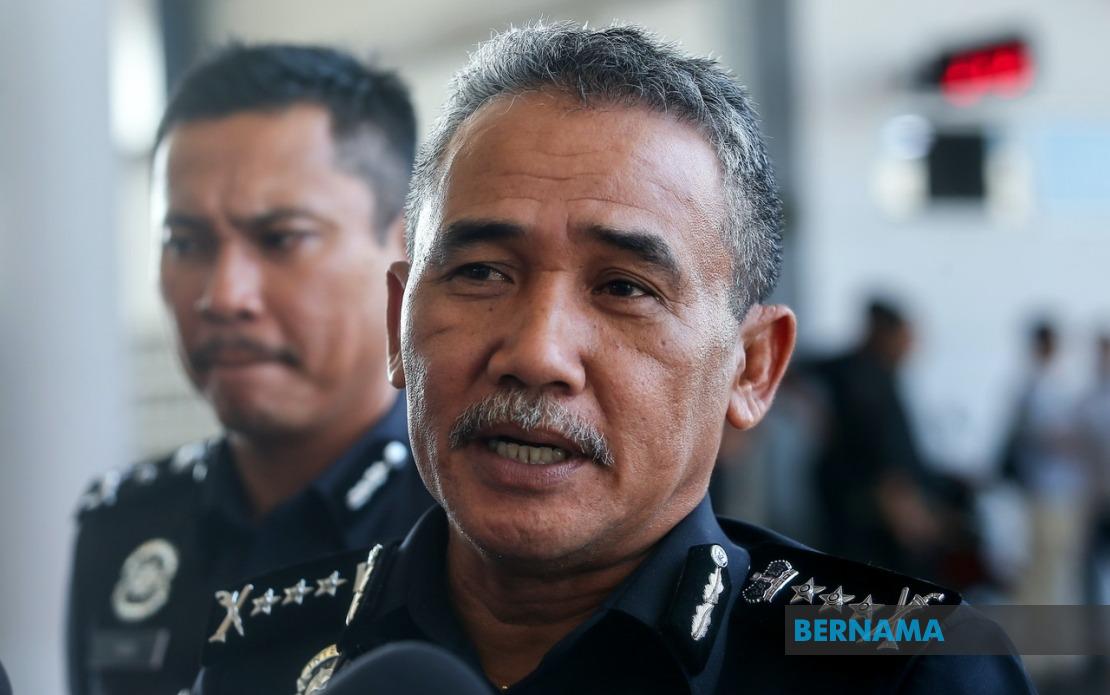
The Kedah Police Contingent has initiated 69 disciplinary investigation papers implicating 90 officers and staff members during the opening six months of this year, representing a notable reduction in the rate of internal misconduct cases compared to the previous twelve-month period. Kedah police chief Datuk Adzli Abu Shah disclosed the figures during a routine monthly assembly at the contingent headquarters in Alor Setar, underscoring what the force views as improved internal discipline and professional standards across its ranks in the northern state.
The composition of those under investigation reveals a mix of personnel spanning different ranks and administrative roles. Among the 90 individuals subjected to disciplinary proceedings, 11 occupy senior police officer positions, 76 serve as junior police officers, and three work as civilian staff attached to the force. This breakdown provides insight into where the department identifies systemic concerns, with junior ranks accounting for the overwhelming majority of cases. The wide distribution suggests that disciplinary challenges are not confined to a particular tier of the organisation but permeate multiple levels of the police hierarchy.
Comparison with the previous year's performance demonstrates a substantial improvement in the internal conduct metrics. During 2024, the Kedah police force processed 155 disciplinary investigation papers touching 294 individuals, a figure nearly double the current halfway mark. That earlier cohort included 39 senior police officers, 248 junior police officers, and seven civil servants. The drop from 294 to 90 individuals across the two periods, despite measuring different time spans, suggests either improved compliance among personnel or more selective investigation protocols implemented by management. For Malaysian readers accustomed to viewing police accountability with some scepticism, such figures warrant careful interpretation regarding whether they reflect genuine behavioural improvement or changes in enforcement methodology.
The nature of disciplinary violations recorded from January through June spans a broad spectrum of criminal and administrative breaches. Among documented offences are three cases involving violations of Islamic law, four commercial crime matters, and seven instances of suspected corruption—a category that typically commands the most public concern regarding police integrity. Traffic-related breaches account for 11 cases, while drug-related violations comprise 24 investigations. The largest category, criminal offences, encompasses 33 separate cases, whereas 142 miscellaneous disciplinary infractions complete the breakdown. This distribution pattern indicates that the police force encounters challenges across virtually every operational domain, from frontline law enforcement to administrative compliance.
Datuk Adzli emphasised that the police force maintains an uncompromising stance toward personnel who undermine institutional credibility, rejecting any suggestion that the organisation shields officers from accountability. He acknowledged public perception that police departments typically protect their own members, a widespread belief rooted in historical cases where misconduct appeared to receive lenient treatment. The chief stated categorically that the force has taken stringent measures including detention, suspension, and termination of those substantively found to have breached conduct regulations. Such public assertions of accountability carry particular resonance in Malaysia, where trust in police institutions has historically fluctuated based on high-profile misconduct cases and perceived inconsistency in enforcement.
A critical clarification offered by the police chief concerns the distinction between suspension and punishment, a distinction that often escapes public understanding. When officers are suspended pending investigation outcomes, management described the action not as punitive but as a preventive measure designed to interrupt patterns of misconduct and protect the public interest. The chief provided a concrete example: an officer engaged in robbery and extortion activities would be reassigned immediately to a role without community access, thereby preventing continuation of the alleged offence while investigations proceed. This operational philosophy reflects an attempt to balance due process against immediate risk mitigation, though the distinction may prove difficult for citizens to appreciate in practice.
The sequential investigation process, as outlined by police management, continues beyond the suspension phase. Even as officers remain removed from their regular posts, investigative work proceeds toward determining appropriate final action. This may result in formal dismissal, reassignment, demotion, or other disciplinary outcomes depending on investigation findings. The extended timeline between initial suspension and final resolution can span considerable periods, during which the status of the implicated officer remains ambiguous both to the force and to the public. For Malaysian police reform advocates, such transparent articulation of investigative procedures represents a step toward institutional accountability, yet full implementation remains subject to verification through actual case outcomes.
Beyond formal disciplinary proceedings, the Kedah police force has been responding to community concerns regarding unusual disturbances affecting multiple residential areas within Kota Setar district. Residents reported mysterious knocking noises causing alarm and disrupting sleep patterns in several neighbourhoods. In response, police management acknowledged the residents' apprehension and committed to enhanced patrol coverage in affected zones. The deployment decision reflects a community policing philosophy recognising that public confidence depends not solely on internal accountability mechanisms but on visible protective presence addressing residents' immediate security concerns.
The decline in disciplinary cases, should it sustain across subsequent reporting periods, would represent meaningful progress in police institutional health within Kedah. For the broader Malaysian context, where questions about police conduct quality and accountability persist nationally, performance metrics from individual contingents provide regional benchmarks. The figures suggest that intensive management focus on discipline, combined with transparent public communication about investigation processes and outcomes, may contribute to improved professional standards. Nevertheless, Malaysian observers remain appropriately cautious about interpreting statistics in isolation, recognising that genuine accountability requires sustained commitment to investigation rigour, equitable application of disciplinary consequences across ranks, and measurable improvements in public confidence metrics beyond internal case numbers alone.

