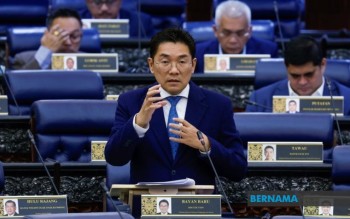
Kedah has secured RM1.4 billion in approved investments across 50 projects during the opening quarter of 2026, signalling continued momentum in the northern region's industrial transformation. Deputy Investment, Trade and Industry Minister Sim Tze Tzin disclosed this figure during parliamentary question-and-answer proceedings, highlighting the state's growing appeal to both domestic and international investors seeking manufacturing and industrial opportunities in Malaysia's competitive landscape.
The investment influx reflects a deliberate government strategy to activate and leverage flagship industrial precincts that have been developed to anchor economic growth across the north. Kulim Hi-Tech Park, Kedah Rubber City, and the Kerian Integrated Green Industrial Park are positioned as economic nuclei designed to attract capital-intensive projects and create high-value employment. These zones represent the backbone of efforts to position Kedah as a serious contender for advanced manufacturing, technology, and specialised industrial investment in the region.
Critically, the government has articulated an intention to ensure that prosperity flowing from these industrial centres radiates outward to less urbanised areas. Ahmad Tarmizi Sulaiman, the Member of Parliament for Sik, pressed the government on mechanisms to channel high-income employment and vendor development opportunities into peripheral districts including Sik, Baling, and Padang Terap. These communities, historically dependent on agriculture and traditional industries, stand to benefit substantially if industrial spillover effects are deliberately cultivated rather than left to chance.
Sim acknowledged that surrounding areas possess distinct comparative advantages aligned with government priority sectors. Baling, Sik, and Padang Terap are recognised strongholds for agriculture-based industries, particularly food processing and agro-industrial operations that serve both domestic consumption and export markets. Rather than attempting to replicate high-technology manufacturing clusters in every location, the government is pursuing a complementary development model whereby different districts specialise according to their natural resources, labour availability, and existing industrial capabilities.
Infrastructure enhancement is fundamental to enabling this geographic dispersion of economic opportunity. The government is widening Federal Route FT004, extending from the Kulim Hi-Tech Park interchange to Bukit Karangan, a project anticipated for completion by April 2028. Improved road connectivity directly reduces logistics costs and travel times, making inland rural areas more accessible to supply chains anchored in major industrial zones. This physical connection transforms what might otherwise remain isolated pockets into integrated segments of broader production networks.
Once the FT004 expansion concludes, planners anticipate industrial spillover reaching into Baling, where food processing and agro-industrial enterprises can integrate into supply chains serving larger manufacturers based in Kulim and surrounding areas. Rural factories producing agricultural commodities or intermediate food products can then supply downstream processing facilities, creating employment across the value chain. The infrastructure investment thus serves as a catalyst for the voluntary diffusion of industrial activity beyond primary development nodes.
A new policy framework unveiled in March 2026 represents another instrument for incentivising local participation in investment-driven growth. The New Incentive Framework, or NIF, explicitly rewards foreign investors who commit to deepening localisation within their operations. Companies that expand procurement from local vendors and increase sourcing of domestically manufactured components become eligible for enhanced government incentives, creating financial pressure to integrate Malaysian suppliers into their supply chains rather than relying entirely on imported inputs or overseas partners.
This approach addresses a longstanding concern in Malaysia's industrialisation experience: the risk that foreign direct investment generates enclaves of high-value activity isolated from the broader economy. By tying incentive generosity to localisation commitments, the government attempts to ensure that multinational enterprises operating in Kulim and similar parks actively develop relationships with Malaysian small and medium enterprises, transferring knowledge and capability in the process. Technology transfer and skills upgrading occur not through formal training programmes alone but through repeated commercial interaction between foreign investors and local suppliers.
The cumulative effect of these interlocking policies—industrial zone development, infrastructure connectivity, sectoral specialisation, and incentive restructuring—represents a more sophisticated regional development approach than simply concentrating investment in major urban centres. By deliberately cultivating complementary development across geographic and sectoral dimensions, the government seeks to ensure that RM1.4 billion in new investment generates multiplier effects extending well beyond the immediate project locations.
For Malaysian policymakers and investors, the Kedah experience offers insights into managing unequal geographic development in a middle-income economy increasingly dependent on technology and capital-intensive industries. The challenge lies in ensuring that prosperity clustering in high-tech parks translates into genuine employment and income gains for residents in agricultural hinterlands. Success requires not merely attracting investment but architecting the physical, regulatory, and incentive environments that enable that investment to interact productively with surrounding communities.
The scale of investment—RM1.4 billion in a single quarter—demonstrates continued investor confidence in Malaysia's institutional frameworks and market prospects even amid regional competition from Vietnam, Thailand, and Indonesia. Kedah's ability to capture this capital suggests that industrial zones offer genuine value propositions attracting international operators. However, sustained competitiveness will depend on whether the state and federal governments successfully implement the infrastructure upgrades and incentive reforms that remain incomplete. Implementation delays or policy inconsistency could erode investor momentum.

