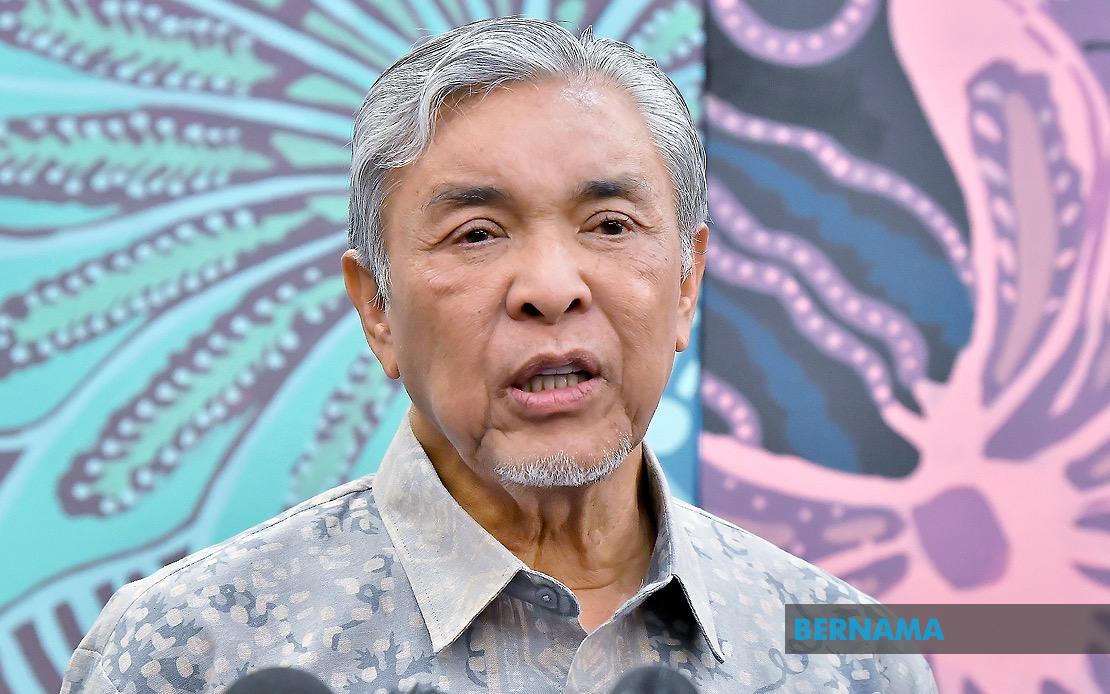
Deputy Prime Minister Datuk Seri Dr Ahmad Zahid Hamidi has moved to quell public concerns about the proposed expansion of the South East Johor Development Authority (KEJORA), emphasising that the initiative represents a coordination mechanism for development across the region rather than a land acquisition scheme. Speaking at the KEJORA 2025 Excellent Service Awards and Appreciation Ceremony in Kota Tinggi on July 2, Ahmad Zahid, who also serves as Rural and Regional Development Minister, sought to address misconceptions surrounding the agency's intentions in the affected districts, clarifying that ownership of land would not pass to KEJORA under the expansion framework.
The distinction between coordination and acquisition represents a significant clarification for stakeholders across southeastern Johor, particularly in areas like Pengerang where rapid development has sparked questions about governance structures and land administration. Ahmad Zahid's emphasis on the coordination function suggests that KEJORA's expanded remit would streamline planning and implementation of projects across multiple districts while respecting existing land tenure arrangements. This approach aligns with broader patterns in Malaysian development policy, where oversight agencies work within existing administrative frameworks rather than assuming direct land control, a matter of considerable sensitivity in Malaysia's federal-state power dynamics.
The government has underpinned its confidence in the expansion proposal with reference to KEJORA's demonstrated performance record. The authority has achieved a 98.3 per cent success rate across its implemented projects, a metric that officials contend justifies the expansion and extended coordination authority. This performance benchmark forms the cornerstone of the government's case to regional communities and stakeholders who may harbour reservations about expanding any agency's operational scope. The track record encompasses infrastructure, economic development, and service delivery initiatives across KEJORA's current jurisdiction, suggesting that extending such coordination to adjacent areas could replicate proven models of development management.
Public sentiment appears receptive to the proposal. A feedback study commissioned by KEJORA found that 96 per cent of surveyed respondents supported the expansion initiative, a figure that Ahmad Zahid highlighted to demonstrate broad-based acceptance of the direction. Such survey results, if methodologically sound, would suggest that local communities and stakeholders recognise potential benefits from enhanced coordination and development support, though the specific composition of respondents and survey methodology remain undisclosed. Public endorsement at this level would provide the government with political confidence to proceed with implementation.
However, the expansion remains contingent upon constitutional approval. Ahmad Zahid stressed that implementation depends on the consent of His Majesty Sultan Ibrahim, the Yang di-Pertuan Agong, and Tunku Mahkota Ismail, the Regent of Johor. This constitutional requirement reflects Malaysia's federal structure, where state-level development authorities require approval from both the reigning monarch and state regent for significant expansions of authority or jurisdiction. The emphasis on this requirement underscores the government's respect for constitutional processes and the involvement of the Crown in matters affecting state administration and development governance.
The fiscal commitment underlying KEJORA's operations and expansion plans appears substantial. The Rural and Regional Development Ministry has allocated approximately RM138 million to KEJORA for development projects across the region. This allocation encompasses 107 programmes already implemented, with approximately 350 smaller projects scheduled for execution under the funding envelope. The scale of investment reflects the government's determination to leverage KEJORA as a vehicle for infrastructure development, economic diversification, and service delivery enhancement across southeastern Johor, a region that has experienced uneven development compared to other parts of the state.
Pengerang district has emerged as a particular focus for development initiatives and administrative restructuring. The town's rapid growth, fuelled by mega-projects and tourism sector development, has created administrative pressures and prompted discussions about governance reform. Ahmad Zahid voiced support for a proposal from Minister in the Prime Minister's Department (Law and Institutional Reform) Datuk Seri Azalina Othman Said to elevate Pengerang to district status. Azalina, who represents Pengerang in Parliament, has advocated for this administrative upgrade to better reflect and accommodate the area's population growth and economic significance. The government has also signalled support for constructing a new hospital in Pengerang to serve its expanding population, recognising that infrastructure development must keep pace with demographic and economic changes.
The broader context for KEJORA's expansion involves regional development dynamics across southeastern Johor. The area encompasses several districts at varying stages of economic development, with some experiencing rapid industrialisation and urbanisation while others remain more traditionally oriented. Enhanced coordination through KEJORA could help ensure that development benefits reach across the region equitably and that infrastructure investments follow strategic priorities rather than market forces alone. This becomes particularly important as Pengerang and adjacent areas experience growth driven by major capital projects and tourism development.
For Malaysian observers and policymakers, the KEJORA expansion represents a test case in how development authorities can operate within federal-state constitutional arrangements while maintaining accountability and community support. The emphasis on coordination rather than land acquisition reflects sensitivity to federal-state relationships and local land administration systems. As Malaysia continues to grapple with balancing regional development needs with governance efficiency and constitutional propriety, the mechanisms adopted for KEJORA's expansion will likely inform approaches to development coordination in other regions facing similar pressures for rapid, coordinated growth. The initiative also demonstrates how development authorities can evolve beyond their original mandates to address emerging regional challenges, provided that constitutional safeguards and public confidence are maintained throughout the process.

